If there is a gun in act one, there had better be someone getting shot in act two. And if there’s unexpected gifts of jewelry in act one, there’s going to be a golden calf in act two. Just wait until Act three! 

In Torah, after nine deadly plagues, Moses receives God’s instruction to have the Israelites “borrow” gold and finery from the Egyptians. Here’s the text (Exodus 11:2): “Tell the people to borrow, each man from his neighbor and each woman from hers, objects of silver and gold.”

The Egyptians are on the ropes.  They endured plagues that denuded the land and faced starvation. Then the Hebrews came a-knocking, asking may I have your jewelry (as they might be borrowing a cup of sugar)? The Hebrew God has destroyed Egypt.  How would we expect them to answer? The text suggests another divine intervention in the next verse.

“The LORD disposed the Egyptians favorably toward the people. Moreover, Moses himself was much esteemed in the land of Egypt, among Pharaoh’s courtiers and among the people.” God had the power to both end slavery and convince the masters to provide parting gifts.

With good feelings for Moses in their hearts, the Egyptians gladly lent their finery to his people. There is no mention in the text of any sort of loan document, bailment, or date of return, because, as we know, the jewelry won’t ever be returned. Some commentators opine that the jewelry received was not borrowed but rather paid in recompense for enslavement.

At Sinai, in Act Two, that same jewelry was melted to form a golden calf.  This is the most shameful episode in Torah. The people lost faith and debauchery ensued.

Then came Act Three. The Israelites brought contributions to build the mishkan. Unlike the disgraceful golden calf, the mishkan was a place for God’s presence to be manifest on earth. The Egyptian finery was sufficient to make an idolatrous calf with enough left over to decorate the mishkan


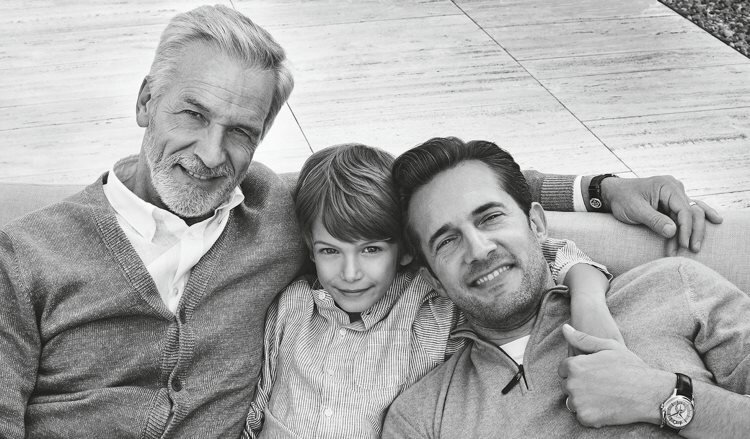
Patek-Philippe-Grandfather-Father-Son-Generations.jpg

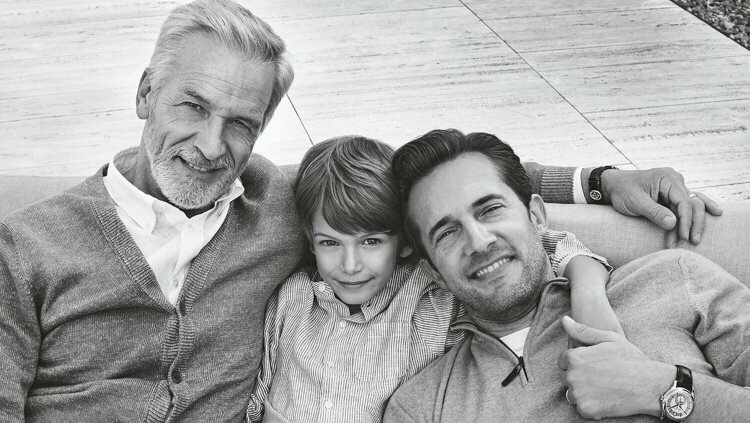
This play has many more acts, some canonized and others yet to be written. It begs us to consider what will we do with the treasures of the past? We might learn from the marketing for Patek Phillipe watches. “You never actually own a Patek Philippe, you merely look after it for the next generation.”

Our society is far too attached to possessions. I know this because my millenial children tell me so; a fact I remembered while admiring the new Tiffany’s store in town. Absent a gun pointed at our heads, we hold tight to jewelry, wallets and most especially our iPhones. Torah not only encourages us to share our wealth, but to do so with holy intention.

Do we form unholy attachments to possessions and worship our chattel? What motivates us to part with these borrowed valuables? Is it guilt, like the motivation for making reparations? Is it faithlessness that compels us to create idols? Or is it to welcome the Divine presence?

Our finest possessions are just borrowed for a short while. Ownership is transitory.  Giving is transformative.  The next act of the Jewish people is dependent upon how we share what is borrowed from the past to create a better future. When sharing our wealth, let’s ask, are we paying for golden calves or building modern mishkans?

R’ Evan J. Krame
When I am feeling deeply stressed, I might find my breath is cut short. Moreover, listening becomes difficult. Even if encouraging or hopeful words are offered, I retreat into my state of distress. Understanding my own reactions to distress, I can better appreciate how those in great pain or subjected to oppression can be both short of breath and short of spirit. Torah teaches this “short” lesson.

After Moses’ divine encounter at the burning bush, he returns to Egypt to share God’s promised redemption with the enslaved Hebrews. Moses invokes the names of the ancestors and their covenant with God.  He assures them of God’s plan to rescue them from their enslavement.  Thereafter, the people are told that God will return them to the Promised Land.

The Israelites did not listen. Perhaps, they could not listen because they were short of spirit. Like a person short of breath after strenuous activity, the slaves were struggling to catch their soul. In Hebrew, the phrase “short of spirit” is Meektzor Ruach,  מִקֹּ֣צֶר ר֔וּחַ .

The root of the word for short, K-Tz-R, also means to reap or harvest. The word Ruach alternatively means breath, blow, wind, spirit or soul. This word pair might seem idiomatic. In the context of enslavement, the words expand upon their plain meaning, suggesting that the Egyptians had cut down these people both physically and spiritually.  The slaves could neither catch their breath nor their spirit.

Along came Moses, urging these people to anticipate redemption by an unseen, unheard redeemer. Multiple miracles will be necessary for these slaves to reclaim their ability to believe and restore their Ruach.

The distress of oppression is disabling and not easily reversed. The remedy offered by our tradition is to recall the outstretched arm that freed these slaves. Accordingly, we bless God each day as the redeemer of Israel. We celebrate Passover by retelling the story of our redemption. But, like the ancient ones, we are challenged to have faith in future Divine redemptions when God has withdrawn God’s presence from our sight and hearing.

The Torah I learn is that we should not wait around for miracles when people are in peril. Encouraging words are not enough, even when coming from Moses. Modern miracles are created when we extend ourselves in solidarity, advocate for human rights, protect the environment and rise against tyranny. God made us in the Divine image so that we too could act as a redeemer. The first step is to restore hope with our advocacy because the time is short.

R’ Evan J. Krame

A family joke about my late Uncle Hymie was that he started every story in the beginning, meaning with Adam and Eve. While our patience may have been tested, there is a wonderful logic in starting a story at its first instance.  I applied that logic to the story of the Exodus from Egypt and found a compelling lesson about fear as a foundation for oppression.

A Pharaoh who does not know Joseph rises to power noting that the Hebrews have multiplied greatly. Pharaoh has the unsubstantiated fear that the Hebrews could align with Egypt’s enemies. Enslavement begins when Pharaoh is motivated by that irrational fear. In turn, the Hebrews feared for their lives, subjugated to the whims of an irrational Pharaoh.

Fear is critical to any system of oppression. Not only does fear motivate the oppressor but also the oppressor uses fear to dehumanize those enslaved. But the system of fear doesn’t end with a time of emancipation. When slavery ended in the United States, the white supremacists painted themselves as victims and used fear of violence as their motivation. The absurdity is that African Americans were generally poorer, often disenfranchised, and less well educated, posing no real risk at all to the white majority.


hunger fear.jpg

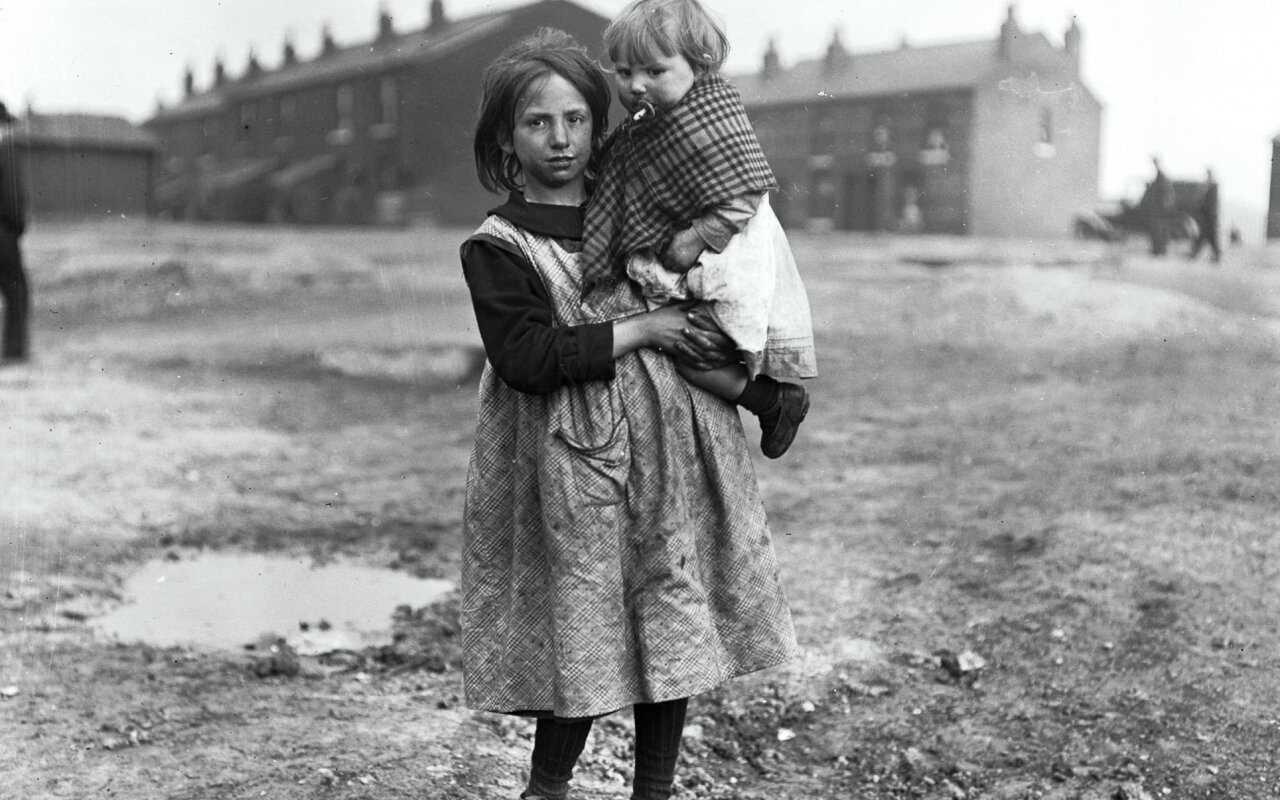
When modern day Pharaohs accede to power, they invoke the tropes of fear.  Foreigners are a threat.  Immigrants are a danger.  Refugees are sub-humans bringing violence and disease. 

I have a different sort of fear. My fear is that hatred has been unleashed sufficient to undermine our democracy as it metastasizes and leads the nation into a state of tyranny. Congress and the President are now debating the limits of an Executive who operates through constructs of fear and expands his use of presidential power. Commentators wonder, are we ambling toward the death of democracy? 


Statue-Of-Liberty-At-Night-Photos-images.jpg

In an autocratic system, power is secured by offering protection to the power elites while disadvantaged groups are the subjects of scapegoating. Whether the Jews of Europe or the immigrants from Central America, protectionists and supremacists will demonize minority groups by citing fear of their increasing numbers and claiming a predilection to violence.

To counter this trend, we might focus our attention on making positive use of this fear that our Country is turning to despotism. We must recall the beginning of the story of America. This country was created as an answer to tyranny, as an inclusive haven for oppressed people, and as a safe harbor against religious discrimination. Yet, the founding fathers drafted a Constitution which considered African Americans no more than 3/5 a person. Women were (and may still be) denied equal rights. The fight for human rights continues. That ongoing struggle is what calls us to create a more perfect union.

And that struggle continues. Prejudice is persistent. Hatred is stubborn. Today, we must reject fear-induced factionalism. In any system where hate is given legitimacy every one of us is endangered. In any government where protection is offered to supremacists all of us are potential victims.

Efforts to curtail immigration to the United States should remind us of the irrational fears that supported the passage of laws in 1924 keeping foreigners and particularly, Jews, from disembarking on these shores. An irrational fear of Jews gave rise to restrictive land covenants and exclusive institutions that rejected Jewish participation. The anti-Semites forgot the beginning of our collective story when America was to be a haven for religious groups. How about today? Are we to be a welcoming America or a fear-laden fortress?

By going back to the beginning of the story, we learn the full extent of the danger we confront. Fear mongers and power abusers must be countered by those who derive their values from a full knowledge of history and a higher source of inspiration.

R’ Evan J. Krame

As people live longer there may come a time when the adult child will assume the role of a parent’s caretaker. For this role reversal to be successful, parent and child must reengage with caring and faith.

The first such example in Torah of this role reversal is that of Jacob as an elderly man. His world is upended with a move to Egypt in a time of famine, ceding leadership of the clan to his second youngest son, Joseph.

This episode brings to mind the contemporary issue of an elderly parent moving to a new residence for safety and health care reasons. Such relocation is similar to the exigency and challenge Jacob felt moving from his expansive home near Beersheba to the restricted but “safer” land of Goshen in Egypt. In that repositioning, the parent may seek favors and promises from a child who now commands the relationship.

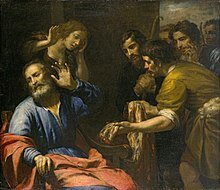
Then as now, the child may be in charge and the parent compelled to elicit promises. As we read: “when the days of Jacob’s life will soon end, he called to Joseph, his son, and said to him, ‘If I have found favor in your eyes, please place your hand under my thigh and perform for me this demonstration of your steadfast loyalty; please don’t bury me in Egypt.’” Gen. 47:29.

וַיִּקְרְב֣וּ יְמֵֽי־יִשְׂרָאֵ֘ל לָמוּת֒ וַיִּקְרָ֣א ׀ לִבְנ֣וֹ לְיוֹסֵ֗ף וַיֹּ֤אמֶר לוֹ֙ אִם־נָ֨א מָצָ֤אתִי חֵן֙ בְּעֵינֶ֔יךָ שִֽׂים־נָ֥א יָדְךָ֖ תַּ֣חַת יְרֵכִ֑י וְעָשִׂ֤יתָ עִמָּדִי֙ חֶ֣סֶד וֶאֱמֶ֔ת אַל־נָ֥א תִקְבְּרֵ֖נִי בְּמִצְרָֽיִם׃

You might note that Jacob is extremely solicitous, using pleading and passionate vocabulary.  Jacob knew his request for burial in Canaan is not easy for Joseph to affirm. There was a great physical distance to traverse from Egypt to Canaan to complete the burial. Discussing death with his father is emotional for Joseph. Moreover, Joseph represents Egypt as second in command to Pharaoh. The polity would expect him to follow Egyptian burial customs for his family. Yet, Abraham’s faith ties this family to God’s plans for this clan to live and be buried in the Promised Land. Jacob’s concern is by whose rules will the much-assimilated Joseph abide, the customs of Egypt or the heritage of the Hebrews?

Jacob appeals to Joseph by alluding to the filial relationship, the duty of honoring a parent, and the spiritual heritage that ties this family to the Promised Land. Jacob speculates that his solicitation and consequential empowerment of his son will secure burial indicative of their heritage, thus enabling the role reversal.

A successful role reversal can be the determinative factor in preserving religious tradition. The first step is to recognize that the “parentification” of the child when a parent is elderly, presents logistical, emotional and spiritual challenges. The adult child may have their own obligations of child-rearing, career building, and community leadership.

Accordingly, Jacob was solicitous of his son, which some commentators attribute to the need to be deferential to Joseph’s leadership role in Egypt. I find something more compelling.

Jacob sets an example of how best to engage the deep emotional and spiritual connection between parent and child. First, Jacob recognizes that Joseph has multiple loyalties. Accordingly, he elicits the burial promise with a respectful and earnest appeal to his son. Second, both men have experienced their lives in the context of God’s planning. Guided by faith, both men are better able to navigate the role reversal.  Third, Jacob and Joseph were able to re-establish intimacy in this final stage of their relationship. This renewal of the parent-child relationship is carefully recounted in Torah.

Torah sets an example of how to guarantee the next generations will sustain our Jewish legacy.  We best entrust the future to our children in relationships that recognizes both the challenges of modern life and the rewards of living in a faith filled tradition. When we as parents and children honor each other appropriately at all stages of life we expand holiness.

The evolving relationship between parent and child requires rejiggering as we age. The successful transition includes appropriate deference and caring natures. Moreover, the reconstituted devotion between aging parent and adult child represents a way to connect with God and fulfill our Jewish legacy.

R’ Evan J. Krame

Pick two words to describe your life.  Try to do it quickly without much thought.  What words came to mind?

This important exercise comes to us courtesy of the Torah. Joseph introduces his father Jacob to Pharaoh.  Pharaoh asks Jacob how old he is.  And Jacob answered Pharaoh, “The years of my sojourn [on earth] are one hundred and thirty. Few and hard have been the years of my life, nor do they come up to the life spans of my fathers during their sojourns.” Genesis 47:9.

If we knew nothing more about Jacob, nothing about his vision of angels or conversations with God, his travels and travails, we would believe that he is despondent.  He believes that his life is shorter and less fulfilling than the lives of his father and grandfather: years few and hard.

So how does your life measure up?  What might you learn about yourself by being asked to condense the meaning of your life in just a few or even just two words? When life presented challenges did you describe yourself more often as victim or survivor? When relationships didn’t work out, do you understand yourself to have been devastated or resilient?

If the words you used to describe yourself are not satisfying, you always have the chance to reimagine the quality of your time on earth. It takes is some self-awareness and motivation for change. These are not always easy mental tasks.

So let me pose a slightly different question to help you start again.  What two words would you want to be used to describe your life? How will your life be described by those who know you well? Hear those words and try to live your life as described. All you really need to do is take a daily journey through the existence that is yours.

Rabbi Evan Krame

The fine art of snarkiness has ancient roots. Take a look at the Torah portion, Miketz. I think I found there a Torah of snark.

There is a time of famine in Canaan. Egypt is buffered from the hunger by the careful planning of Joseph as Pharaoh’s second in command. Jacob has “heard” that there is food available in Egypt. 

An elderly Jacob remains the strong but irascible patriarch of the family. At Genesis 42:1 we read: “Jacob saw that there were food rations to be had in Egypt, he said to his sons, why are you [just] looking at one another?” It reminds me of the absurd line in Alice in Wonderland, when the white rabbit turns to a flummoxed Alice and says: “don’t just do something, stand there!” Snark at its finest has both a crudely critical tone with a dash of absurdity. But can it serve a spiritual purpose?


Jacob and his sons.

Jacob and his sons.

Let’s look at the words. לָ֖מָּה תִּתְרָאֽוּ lama titraoo. The word titraoo is a reflexive form of the verb to see, conveying that the action is directed internally. Rambam expands the phrase to mean: “Why are you looking at one another as if each one of you hopes that another one would go to buy food?” We don’t have such a rich and complex verb form in English. In a single word, the Hebrew expresses the passivity that comes when a group despairs. Finding no motivation to act within themselves, each one keeps looking to the others. Ultimately, none know what action to take. Here, the word underscores Jacob’s annoyance with the family inactivity in the plural.

Why are they passive? These are the sons who threw their brother Joseph in a pit and sold him into slavery. These are the sons who attacked Shechem and killed its residents. But, when confronted with an existential challenge like famine, each one just looks to the next. None step forward, even when the family is imperiled. The disease of immorality has an outward trajectory. With a hollow core, positive action is impeded.

Jacob was different than his sons in both his wisdom and faith. And here’s the juicy bit of Torah to share with you. The verse begins, “Jacob saw that there was food in Egypt.” Without a smart phone, television or binoculars, Jacob could not have seen Egypt no less its food supplies. Obviously, Jacob heard this news from travelers or traders. Perhaps the Torah’s use of the verb “to see” has double duty here. First, it indicates that Jacob is prescient. After all, this is the Jacob who wrestled with angels and spoke with God. His “seeing” Egypt is a foreshadowing of the chapters to come, more than just noting a source of food. Upon seeing that food was available in Egypt, it was obvious to Jacob that his sons must make the journey to purchase food (where they will again meet Joseph).

The other deployment of the word “to see” is the contrast to the second use of the verb in the same sentence. While the spiritually advanced Jacob can see the bigger picture and know what action to take, his morally lacking sons can’t see beyond themselves. These sons lack Jacob’s spirit, confidence and gumption.  Instead of being resourceful, they are indolent.

Jacob’s snarkiness underscores the peril of being spiritually lacking. Jacob is not only asking why haven’t you gone to get food. He is also chiding his sons to wonder what is lacking in their character. People of poor moral character don’t take responsibility in times of challenge, they look to blame others. The caustic quality of the snarky remark highlights ethical depravity.

Please don’t take this as a license to be sarcastic or obnoxious yourselves.  Better that we ask ourselves why we are just standing there when there are perilous times ahead for our country, our planet, and us. Hear Jacob’s snarkiness as a call to be our best selves and act on the moral imperatives of the day.

Rabbi Evan Krame

The sexually aggressive woman as archetype makes a debut in the Torah this week.  She begs, pleads and cajoles her putative lover. By contrast the virtuous male, refuses and refuses and refuses her advances. The first male to transcend toxic sexuality sets a high standard for generations to come.  Sadly, people will sometimes fail to follow our hero’s example.

In parshat Vayehsev, Joseph was thrown into a pit by his hate-filled brothers, sold to merchant Ishmaelites, and resold into slavery.  Joseph became a servant of Potiphar, a high official in Pharaoh’s court. When Potiphar was away at work, his wife attempted to lure Joseph into a lurid affair. So honorable is Joseph that he resisted the temptress.

He has proved himself tone-deaf to the arrogance of sharing dreams of dominion over his family.  He has proved himself a stoolie who reports on his brothers’ deficiencies.  But Joseph can hoist himself by his breeches and stay chaste.  This is a turning point in Joseph’s character development. Joseph stays honorable despite his travails and enslavement, which could easily have clouded judgment or placed Joseph in danger in this situation of power imbalance.

Joseph’s legacy is his righteousness, here fully on display.  He resists temptation and remains uncorrupted.  In the wake of #metoo movement, Joseph’s example teaches about the spirituality of appropriate sexual intimacy. Whether the aggressor is male or female, sexual coupling is to be reserved for two consenting adults. Joseph’s righteousness keeps him on the proper path.

Notice your reaction to this narrative.  What emotions might shift were this a story of a young woman resisting the advances of an aggressive married man.  The seemingly farcical nature of the temptress pursuing Joseph likely pales in comparison to the outrage we feel upon hearing a tale of powerful men pursuing the compliant female. The difference in attitude is part of the challenge in overcoming disparities in how men and women are perceived. And with society opening to greater gender and sexual identities, we have to learn to view all sexual aggressiveness with the same derision.

The Jewish calendar year 5780 should be the year of Joseph as the male role model demonstrating that forceful sexual approaches are always reprehensible. So let’s hear it for the boy – an inspiration to set higher standards of interpersonal behavior for all people.

R’ Evan.

Which biblical character do you most resemble? Sounds like one of those Internet quizzes that pop up on your Facebook feed. Yet, I’ve given this some thought, as one biblical character often reminds me of me. That would be Jacob, the younger twin son of Isaac, who schemes and skedaddles, woos and wiles, dreams and designs. What attracts me most to Jacob? Jacob draws my attention as he is deeply flawed and yet highly regarded.

Jacob is perhaps best known from the stories in which he is the clever actor and the heavenly dreamer. The earlier glimpses of Jacob show his wily side; tricking his brother, Esau, and father, Isaac, to dislodge the inheritance due the first-born. Yet, the rabbinic tradition understands Jacob differently. Jacob is the tent dweller, presumed to be studious. When compared to Esau who is vulturine, Jacob seems virtuous. I want to believe that Jacob’s positive qualities, as discerned by the rabbis, outweigh the scheming characteristics described in the Torah. I am inspired by the elevation of a rule breaker to the status of righteous patriarch. Jewish tradition allows for imperfect humans to yet achieve great prestige and veneration.

As to the dreamer, I understand Jacob as a romantic who has visions of the spiritual realm. As he flees from Esau’s wrath on his rocky trek to Haran, Jacob opens to greater consciousness. Jacob dreams of a ladder reaching to heaven with angels ascending and descending. His nighttime revelation gives him strength and hope, allowing him to persevere.

The dreams I remember having are far more pedestrian than those of Jacob. Yet, in my waking hours, I can envision myself as if on the celestial ladder, moving heavenward yet remaining earthbound. Jacob teaches me that the troubled soul can reach sky-high even as the body is alighted. The concept of seeking and soaring is by itself transformative, as the prospect of ascent brings hopefulness to mind. Even when life is so discomforting that there are only rocks for pillows, we can dream of something sublime. As Carl Sandburg wrote, “nothing happens unless first a dream.”

Jacob is not quite my hero. His flaws are too numerous to make him an idol or champion. But I respect his ability to persist and I admire how his legacy transcended troubling imperfections. For endurance, I align well with Jacob. For reputation, I aspire to a hint of his stature. From Jacob’s lifetime of conflicts, travails and unrequited desires, we learn that perfection is not needed to guarantee a legacy of good repute. I hope that my many flaws are superseded in memory by the fruits of my aspirations.

R’ Evan J. Krame

Season two of Succession on HBO, pitted four scions of a billionaire against one another. Three of the siblings are vying for their father’s anointment as the successor CEO; the siblings alternatively create alliances and undermine each other. One sibling seems not to care at all about succession. One might think such coarse drama is outside the four corners of Torah; that is until you reach parshat Toldot.

Isaac’s favorite to succeed his patriarchal role is Esau. Rebekah’s meddling upends the family dynamic.  Ultimately, the tensions destroy the relationship between Esau and Jacob. At first glace, the tension among children seems wrong, unless we believe that it serves a greater purpose.  Or perhaps there was a way to enable and encourage both Esau and Jacob?

Isaac has a favorite son in Esau.  Rebekah favors Jacob.  Neither son is perfect. Esau is uncultivated.  Jacob is insolent.  While Isaac’s vision dims, Rebekah has insight.  She understands that Jacob is the son to set the direction of the family’s future.  Setting aside tradition and filial loyalties, Rebekah engineers Jacob receiving the blessing due to the first born Esau. Upon discovery of the treachery, Esau “comforts” himself by plotting to kill Jacob after the death of Isaac.

This is a timeless story, reenacted in families for millennia to come. Esau’s leadership track is derailed in favor of Jacob.  But there is a hitch.  To protect his life, Jacob is sent off to Haran.  With Rebekah’s vision and Isaac’s instruction, Jacob will find a mate (or two) among the extended family.  The Jewish future depends upon it.

Rebekah planned for a Jewish future utterly beyond her comprehension.  There was no Torah, no Jewish law, and no rules of Jewish ritual . . . not yet. But she understood that the choice of leader was critical to the enterprise. She believed that the temperament and intellect of Jacob was more suited to the role.

Do we need to make daring choices to shape a Jewish future that we cannot yet envision or comprehend?  The leadership options today are far more expansive.  Thank God at last women have undertaken professional roles in progressive and even open Orthodoxy. Many rabbis are shifting career focus so as to be spiritual leaders in political and social organizations.  New organizations are supporting unstructured and open Jewish spaces empowering lay individuals to engage in a values oriented and deeply personal religious experience.

From among our Jewish choices, we need not play favorites. We must support and defend the ever-growing variety of Judaisms and expressions of Judaism.  In one such dynamic, our tribe has moved from shtetl to cities to suburbs, and then from suburbs back to gentrified neighborhoods.  Pockets of Jewish life are reemerging in previously abandoned neighborhoods of South Philly, Brooklyn, and Shaw in DC.  Jewish community life is being reimagined around dining room tables and in beer halls.

Those of us still in the suburbs may be willing to admit to displeasure with the current Jewish smorgasbord.  That is the testimony of declining membership numbers and non-profit financial struggles.  The challenge is to engage adults in meaningful Jewish experiences; disconnection is NOT OK Boomer.

Little changes in may be highly significant. Can we create our own rituals? Are we willing to see the Godliness in every other person we meet? Can we create the Jewish future we dreamt about?

At the Jewish Studio’s upcoming Shabbat experience, December 6 – 7, we will present innovative spiritual activists from across the Jewish spectrum.  We will not ask them to compete for dominance but rather connection in affective ways.  Their Torah(s) incorporates human rights and the divine feminine, the Jewish imagination and the lure of belonging. Through the shared Shabbat experience, we hope to glimpse the Judaism that will be. Together we can renew Rebekah’s faith in the Jewish future, encouraging the next Judaism to emerge.

Rabbi Evan J. Krame

Some Jewish rituals rebalance our lives. These practices are often directional, completing an upward motion. The act of rising is symbolic of our dedication to the potentiality of an evolving world, even as we mourn the losses suffered.

After washing before a meal, the blessing we say is on “the lifting” of our hands as a demonstration that our actions should be holy. In Leviticus we are instructed to rise before our elders as an act of respect and deference. Similarly, at the end of shiva, the mourner rises up and takes a walk to rejoin community after a period of withdrawal. This tradition comes to us from Genesis.

In Torah portion Chaye Sarah, we are told that Sarah was 127 years old when she died. Abraham mourned her. “Then Abraham rose up from before his dead.” Rising up, Abraham goes out to procure a burial plot for his wife. He engages in a sensitive business transaction, negotiating a land purchase with strangers.

Rising up, Abraham balances time to grieve with time for hope. Abraham negotiates with antagonistic neighbors to acquire the needed land. He concludes the transaction and buries Sarah.  Soon after, the centenarian Abraham remarries Keturah and has more children. As we might now say, he rises to the occasion.

Resilience begins with the act of rising up.  If we feel beaten down, if we are feeling low, the counter balance is to elevate our selves. The test of resilience is not that we rise once in the wake of a tragedy, as did Abraham. Rather, resilience is the ability to rise up when life or God presents us with new troubles and struggles. In fact the lesson of resilience is learned every day.

Just as we are to teach Torah to our children when we rise up and when we lie down each day, so we learn the Torah of resistance. Perhaps it is a spiritual dementia that requires us to learn and relearn this lesson of getting back up. The Torah of resilience is elevating ourselves when we are low, negotiating our way back into the world, and creating something new. And we must learn this Torah every day of our lives.

Some of us are mourning the seemingly slow death of this planet. The time to rise up is now – to call upon our communities and political leaders to take action now.

Some of us are mourning the seeming death of democracy in the United States. The time to rise is now – to call upon our legislators to restore democratic values to our governmental institutions.

I close with the end of Maya Angelous poem, Still I rise:

Leaving behind nights of terror and fear

I rise

Into a daybreak that’s wondrously clear

I rise

Bringing the gifts that my ancestors gave,

I am the dream and the hope of the slave.

I rise

I rise

I rise.

Rabbi Evan J. Krame