
Passover is a holiday of leadership. Yes, to themes of redemption, freedom, matzo and springtime. At this time in history, the story is most important as a tale of leadership of Moses bringing the people out of Egypt, through the sea and onward to Sinai. The story continues to be about whether the people would learn to put their faith in God or in men. This is a perfect time for us to learn the lessons of leadership and faith.

Despite Moses’ unprecedented leadership skills, Moses balks time and again. The first time was at the burning bush. Another time was  at Sinai. It was after the debacle of the golden calf and after Moses smashed the first tablets. To retrieve a second set Moses ascends the mountain again. There, Moses asks God to take the lead (sort of like Carrie Underwood’s song “Jesus Take the Wheel”). God replied, “I will go in the lead and I will lighten your burden.”

Not yet satisfied, Moses asks to see God. That request is denied, but for a fleeting glance of God’s back/essence passing by. But, of course!  If God takes the lead, then the best we will see of God is God’s posterior. Some understand this as God’s goodness.

In a fascinating parallel, when Moses descended Sinai his skin was radiant. He spoke to the leaders and the people and then draped a veil over his face. The radiance was so bright as to be frightening. From then on, only when alone and speaking directly to God did Moses remove the veil allowing his radiance to shine. Moses’s leadership, like God’s was obscured.

Lessons for the leadership of today abound.  Stated simply:

1.            Be humble like Moses; don’t presume you have all the skills necessary to lead.

2.            Accept responsibility when you fail to control your own emotions – if you smash tablets when upset be prepared to humble yourself.

3.            Have faith. God leads us from far ahead, representing the infinite possibility of what may be.

4.            Notice the goodness left in God’s wake, along with the painful and the shattered.

5.            Successful leadership is not required to show their face except when they are in true pursuit of goodness. Otherwise the face of leadership is blemished by vanity.

In a time of pandemic, just as in plagues, wars and disasters of the past, endurance requires moral guidance and divine encouragement. A pandemic is precisely the time to have faith. If we have no faith, then we are merely living in shadows rather than in the light. Faithless leadership darkens our future.

We are living in a time of faithless and failed leadership. Our coinage says, “in God we trust” because Americans should have a government guided by godly principles of honesty, decency, humility, caring and hope. Make this Passover a holiday of dedication – to securing leadership that serves the principles we learn from Torah.

R’ Evan J. Krame

Has a virus dissembled Judaism? Social distancing has confounded the traditional prayer protocol of a prayer minyan. Life cycle gatherings are restricted or postponed. Shabbat observance embraced the electronic information age. While the changes are significant, Judaism’s essence not only persists but may shine more brightly.

Judaism is the oft-changing religion. When confronted with its undoing, Judaism morphs into a better version of itself.

The first Jewish paradigm was land-based, focused on a promised land with a holy temple at its epicenter. With the Roman destruction of an independent Jewish nation in the first and second centuries, CE came the ascendance of rabbinic Judaism. The priestly cult of the Temple cult was replaced. The second paradigm redesigned Judaism around rituals of time – daily prayer, weekly rest, seasonal holidays, and life cycle events.

Many theologians and religious leaders have predicted a third Jewish paradigm. Its’ focus is on the soul from where significance and purpose. The poignancy comes from focusing on values and morality.

We desire connection but can’t congregate physically, so we move to virtual formats. Legitimate prayer services are held on Facebook. Even a funeral or shiva minyan can bring comfort while on Zoom. The essence of a gathering is in the connection even if cybernetic. What is unacceptable in this time is a close gathering of community, such as for funeral services.

We crave a meaningful community but must stay separate, so we focus on the purpose of our activity. For example, B’nai mitzvah remains significant even when the participants are in their respective homes, with the rabbi in his study and the bat mitzvah in her living room. The principle is achieved by marking the entry into adulthood. Profane at this time is a large celebratory party.

We value the time-out from work but are constrained in how we share the oneg/delight of the day. So we learn to reprogram around refreshing our souls. Shabbat for the next Judaism might focus more on what is gained from a work respite more than what tasks are prohibited. What is unholy now is to gather ten men into a small prayer space. True prayers rise whether or not emanating from within synagogue walls.

The upshot is that this time should be a testament to the interminable values espoused by our religion. In this week’s Torah reading, Tzav, we learn at Leviticus 6:6 that a perpetual fire shall be kept burning on the altar and shall not go out.

אֵ֗שׁ תָּמִ֛יד תּוּקַ֥ד עַל־הַמִּזְבֵּ֖חַ לֹ֥א תִכְבֶֽה

The offerings change, from bulls to birds to bread, but the fire is eternal.  This seems to me to be symbolic of the essence of Judaism. Whether the offerings are animals sacrificed, timely observances, or soulful expressions of divine connection, the Divine fire that consumes offerings can continue to blaze. The offerings must be in service of the highest good for all people.

The eternal fire burns because we keep it lit. By virtue of sustaining that fire, divine energy continues to flow through us. Our obligation is to keep that fire burning forever as a testament to an authentic relationship with God. To do so in Judaism 3.0, we will focus on our values and bring meaningful offerings from sources in our souls.

R’ Evan Krame

Another day, another hundred emails. One from the Jewish Community Council asked that we write to the Senate leaders to request economic relief for non-profit organizations.  I found this to be novel as I had only thought of bailouts being for industry.  Then I remembered that in the great recession of 2008 – 2009 donations declined dramatically and the non-profit world suffered. Accordingly, I wrote a Jeremiad to my Senators.

I wrote that non-profit organizations are the moral spine of our nation. Their efforts are an integral part of our economy too.

I did some research. According to the Urban Institute, the nonprofit sector contributed an estimated $985.4 billion to the US economy in 2015, composing 5.4 percent of the country’s gross domestic product. By comparison, the cruise ship industry contributed a much smaller amount to the economy in 2018, just $52.7 billion according to the Cruise Lines International Association.

The President has spoken about bail outs for cruise ships and hotels. Lobbyists for the casino industry are pressing Congress for relief.  Our leadership’s values are perverted if not profane if the United States Government gives preference to the luxury travel and gambling industries.

Our task is to advocate for Jewish values which focus first on the needs of the widow and the orphan and the stranger. Giving is essential to Jewish identity and religious life and should comport with values of honoring each person as a precious gift from God.

The non-profit organizations help sustain the societal structures that keep our nation-state functioning, democratic and civilized. And these not for profit organizations are important components of our now fragile economy.

Here’s an email for you to send – fill up the inboxes of the Senators who would dare consider bailouts for cruise ships and casinos before taking care of laid off workers and people sick with virus. Call out in a prophetic voice, like Jeremiah, speaking of the immorality that infests leadership. Tell it to your friends on the phone and in your tweets. Share it with your children and your neighbors. We must demand moral government that honors the ethic of charitable giving, long an essential part of Jewish tradition.

R’ Evan J. Krame

By definition, sacrifices are a pursuit of a holy objective. In this time of pandemic, we are making many sacrifices. I believe that we are expanding holiness through sacrifice to preserve life.

In biblical terms, sacrifice was the slaughter of an animal or offering of quality produce. In modern times, when we make a commodity out of our time and space, we speak of sacrificing time or space. Now we are being asked to sacrifice time and space in the cause of containing a viral plague. Some wisdom from this week’s Torah reading can offer guidance.

In the opening of parshat vayikhal, we learn this law of shabbat: “On six days work may be done, but on the seventh day you shall have a sabbath of complete rest, holy to the LORD; whoever does any work on it shall be put to death. (Followed by verse 3)  לֹא־תְבַעֲר֣וּ אֵ֔שׁ בְּכֹ֖ל מֹשְׁבֹֽתֵיכֶ֑ם בְּי֖וֹם הַשַּׁבָּֽת׃  You shall kindle no fire throughout your settlements on the sabbath day.”

No sacrifices were offered on the sabbath, as sacrifice was an act of burning and no fires could be lit.  The day was dedicated to rest. In modern times, some believe keeping shabbat feels like a sacrifice of time as we give up the time to work. What constitutes and defines work? The sages said we should learn from the actions needed to construct the holy mishkan, a travelling home for God. Of particular interest, among those acts of building, was the act of carrying.

The prohibition of carrying on shabbat entailed moving an item from the private domain to the public domain (and vice versa). The formula was to lift, carry and set an item in a new place; an action when completed constitutes a prohibited transfer. Focused on prohibiting transfers, Governments have instituted unprecedented restrictions to contain the transfer of Covid-19 by those who carry the virus.  Viewed this way, there is a holy shabbat-like quality to the containment efforts.


read-a-book-on-the-front.jpg

We are all being asked to make “sacrifices” at this time. The sacrifices may be physical isolation, limiting time in public and reducing the spaces we occupy. The ultimate purpose is a holy endeavor.  Our collective goal is to keep us safe, to limit the spread of illness and to save lives.

As a counter to the adverse financial and psychological impact of self-containment, our sacrifice is also the pursuit of holiness. Perhaps we can think of these weeks as a sabbath, an opportunity to recharge, to study and read, and engage in more physical exercise. Perhaps this viral plague will bring greater perspective on what matters most in our lives. And our world may also find improvement in the reduction of pollution attendant to this reduction of activity.

By staying at home, we are tamping down the fire of Covid-19.  We can learn from the construct of Shabbat, that refraining from engagement is also an opportunity for expanding holiness.

From R’ Zalman Schachter-Shalomi’s interpretation of Psalm 27:

Only one thing do I ask of You, Yah,
Just this alone do I seek:
I want to be at home with You, Yah,

R’ Evan J. Krame

The year of counting people is here. When counting people we should remember that while numbers matter, people matter more. 2020 is the year to learn and relearn that lesson.

The United States Census begins in March, 2020. Every ten years our government collects data to determine the size of our population. The quality of the information is critical to providing services to the public.

The country will also vote for a new president in 2020. And one-third of the Senate stands for election. The entire House of Representatives stands before the electorate. Votes will be counted. More importantly, people’s dreams and concerns, hopes and fears will be reckoned.

Counting is highly figurative in Torah. God promised Abraham that his descendants would be as numerous as the stars in heaven, too numerous to number. The count of future generations was immeasurable. The stars in heaven are unique and luminous, as each of us was created to be. As my friend the physicist would say, each of us is an exquisitely unique composite of atoms never before assembled and not likely to be replicated.

Later, God directed an orderly counting of the Hebrews who left Egypt. In Torah this week, parshat Ki Tisa, we begin with that census. However, Moses did not count the people directly. When people were counted in Torah bad things happened, like plagues. Instead, Moses counted the coins provided by people. As Torah instructed: “when you take a census of the Israelite people according to their enrollment, each shall pay the LORD a ransom for himself on being enrolled, that no plague may come upon them through their being enrolled.” Exodus 30:12. Counting people reduces them to mere numbers and diminishes the value of a human life. Moses used a coin substitute to indicate the holy and unique nature of each person.

The ancient Hebrews did not abstain from the census. All participated. The information was critical to the enterprise of creating a nation. But the quality of that nation, a holy nation, came not from sheer numbers but from honoring the individual.

When we take a census of Americans, our purpose is more than a count. We should honor each individual. Similarly, when we count the votes cast in elections we should celebrate the electoral process so as to dignify each persons’ intentions in this struggling democracy.

There is another count happening now. We are counting the numbers of those who are sick and those who have died from COVID-19. They are not merely numbers. We recall the words of Sanhedrin 4:5, reflecting that with the loss of just one life a universe has been extinguished.

It is a Jewish value to participate in the census. It is a mitzvah to vote in this coming election. It is a duty to honor those who are stricken with illness. We don’t just count numbers, we honor people. We recall souls as if each is a named star in the heavens; irreplaceable, unique and glowing.

Rabbi Evan J. Krame

Chinese food fascinated the first and second-generation Jews coming to America in the 20th century. Chop suey was so exotic that it defied being overtly “trayf.” Moreover, Chinese food appealed because it was generally an inexpensive alternative to other cuisines, especially for frugal Jews unaccustomed to eating out. As many American Jews moved away from strict observance (like kashrut), they also sought greater meaning and relevance from religious traditions. The challenge for Judaism was that our liberal and open society offered seekers a sampling of many religions, with the exotic Asian religions seeming most delectable.

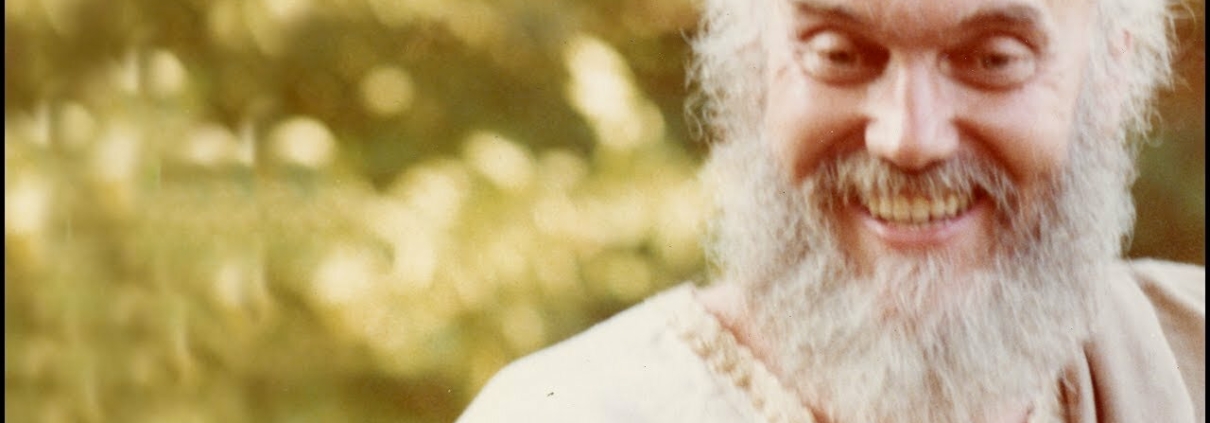
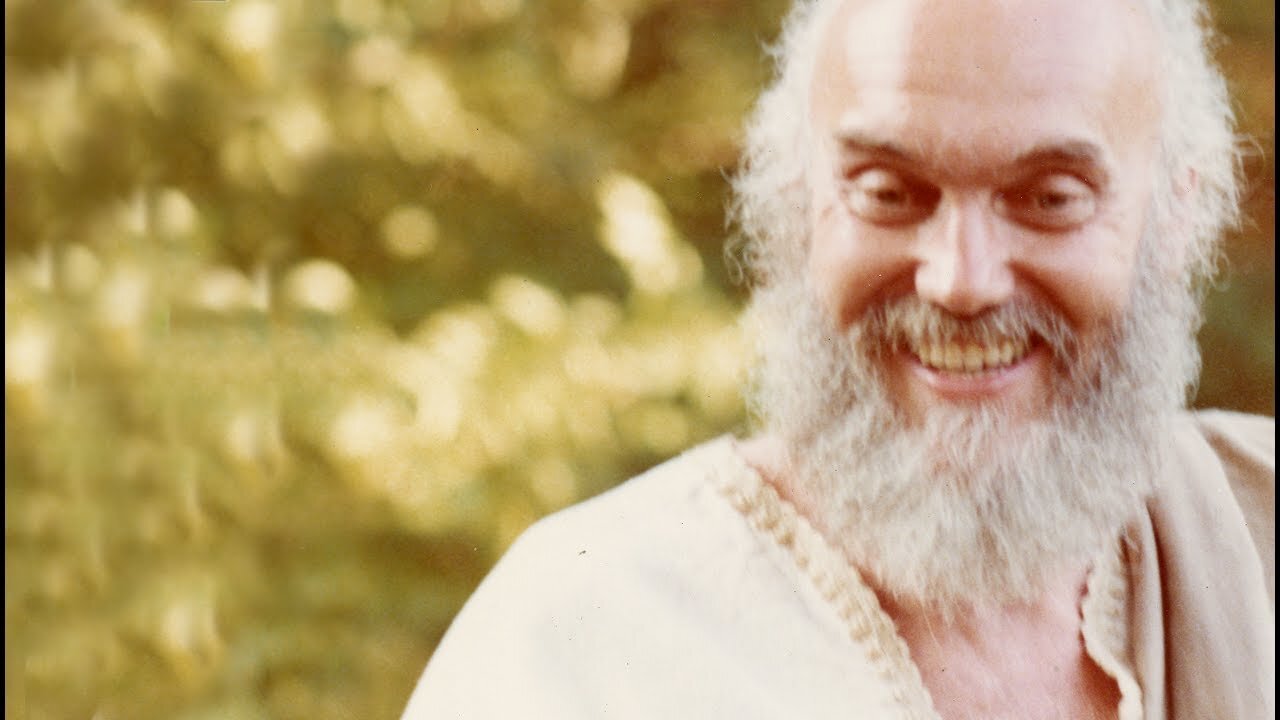
Buddhism, like Chinese food, fascinated many American Jews beginning in the 1960s. The term JuBu was a popularized designation for this cohort. For example, Richard Albert, son of a founder of Brandeis University, later became known as Baba Ram Das who died in 2019.  Sometimes donning simple robes, Ram Das was a Buddhist teacher and author of the best selling “Be Here Now.” He was revered as a sort of high priest of American Buddhists, along with other well-known Jewish born Buddhists such as Sylvia Boorstin, Alan Ginsberg, and Jack Kornfield.


Ram Das

Ram Das

What was attractive about Buddhism to American Jews? One appealing tenet of Buddhism is the “middle way.” The spiritual path to attain your best self is through moderation and tolerance.  The middle way is a practical approach to life, avoiding extremes as a path to contentment. And like egg foo young, Buddhism is exotic enough to avoid the shtetl born “feh” factor that was associated with Christianity. Moreover, Buddhist teachings are an economical approach to spirituality – far less taxing than Talmud study in a yeshiva, 613 mitzvot to observe, and intolerably long prayer services.

Judaism, by contrast to the middle way, focuses upon the existential extremes.  Life is to be cherished. Death is unwelcome. If one is observant of mitzvot the rewards are bounteous and life is given. If one is a rasha, evil person, then punishment (if not death) awaits. No middle way is offered. No econo-fare Judaism is at hand.


Imagining the pomegranate and bell design

Imagining the pomegranate and bell design

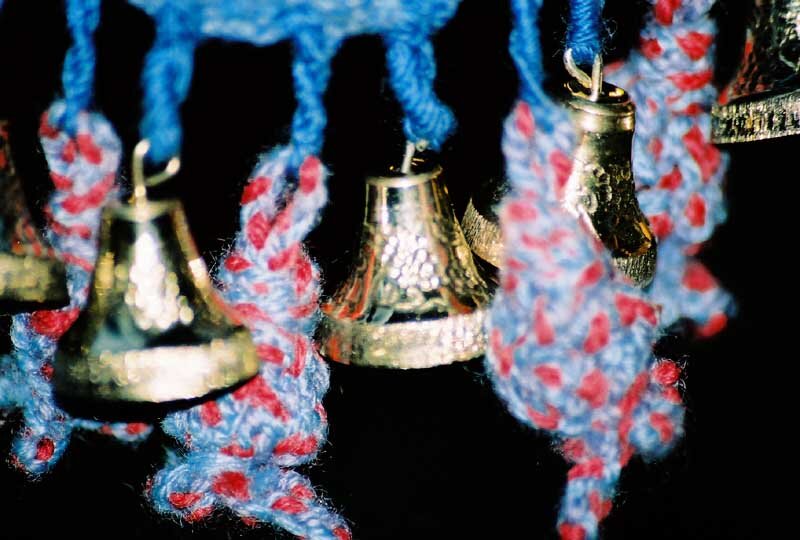
There is a beautiful insight into Judaisms’ fundamentalist approach in Torah portion Tezaveh, as the adornment of the High Priest is described. The Priest wears a long robe with bells and pomegranates attached to the hem, one bell, one pomegranate, and so on. The pomegranates are a symbol of life and fertility. The fruit is filled with seeds! The bell, on the other hand, tolls death.  It serves either as a warning of death or commemoration for one who died.

The ringing of bells was used to alert God, lest the High Priest comes into the presence of the King abruptly or without permission. The penalty for incorrectly coming before God was death, even as the High Priest entered the Holy of Holies on Yom Kippur to atone and pray for the lives of the Israelite people. In this way, life and death were the chief decorative elements of the High Priest’s garment; an appropriate reminder of and poignant metaphor for Jewish theology. 

Once Jews left the constraints of kosher cooking for moo goo gai pan, the next step on the road to foodie-ism was soon to follow. American Jews gained in economic wherewithal and many shifted from life and death worries related to observance over to personal satisfaction and the comforts of consumerism. Some veered from a religious construct of pomegranates and golden bells to acai berry smoothies and Gucci buckles. 

Nonetheless, the pomegranates and bells approach continues to sustain a more modern Jewish identity, that of advocacy. Jews are highly involved in the life and death issues of climate change, immigration, gun control, and human rights. Symbols of life and death are emblazoned on the hems of our Jewish soul. They are as beacons of light, markers of devotion, and symbols of godliness. 

The sidestep to Buddhism by some Jews was a wake-up call for us all. The search for meaning can take us to other religious traditions or allow us to refocus on what is meaningful in Judaism. Our ancient religion remains relevant precisely because of its focus on the extreme contrasts of life and death. Judaism compels us to address the existential issues of our time. Jews are active in politics and advocacy as an expression of Judaism. Whether or not those Jews are now eating pork Hunan, the essence of their Jewish identity comes from the life-affirming ideals of Judaism.

I’m not settling on Judaism lacking in observance but rather I’m celebrating a Judaism inspiring godliness. In a world of choices and middle ways, I pick the religion that compels me to protect and preserve all life.

R’ Evan J. Krame

Responses to the presidential debates often focus on individual performances. The pundits focus on the candidates’ pithiness and well-crafted punch lines. Our conversations recap the body blows and knock downs. I believe something critical is lacking – let’s call it an ethics of elections. These ethical problems arise from a hyper focus on the individual.

Strong individuals attract our notice by their brave spirit and convincing self-expression. Aggressive and critical declarations receive the most applause in the debates. That kind of approbation got the current President elected. And then the vitriol deepened the partisanship in our country. There is a danger in the adoration of tough personalities.

Torah offers a contrasting approach. 

Moses, our greatest Jewish leader, was the humblest of men and wasn’t even an adept speaker.

And there’s something more. We also learn from Torah that great leaders inspire us to come together, setting aside the primacy of the individual. In parshat Terumah, God instructed Moses to tell the people to build a sanctuary so that God can dwell among them. (Exodus 25:9) The Hebrew people came forward with exceeding generosity to build a place for God’s presence, a mishkan. This construction project emphasized bringing God into the community and brought out the generosity in each individual.


america .jpeg

Who calls us together today for the collective good? Perhaps we should save our applause for the leaders who channel the godly quality of devotion to community above the promotion of self.

British politician David Blunkett summarized the tension of “balancing the common good with the freedom and liberty to exercise that individuality [which] has been and remains a challenge for those committed to democracy.” In other words, the future of our democracy rests in the hands of the voters whose attraction to individuality might exceed their appreciation of service to the community.

Approval of bold personalities fits neatly in a society that keenly focuses on the individual. Perhaps the dysfunction in our democracy reflects our preoccupation with individualism. I suspect we are in an era when many focus more on their unique concerns rather than the collective needs of America (if not the world). Could it be that Americans are making election choices merely by asking, “what does it mean for me?”


donald-trump2.jpg

We are lacking in a morality of choosing leadership. An ethics of elections would carefully and consciously balance the needs of the collective against our personal preferences. When we are lacking in a spirituality of electoral participation, we are wooed by egotistical characters and wind up with leaders who are grandiloquent. There is danger in our admiration of the live wire, the quick-witted, and the bombast.

What appeals to us in the egotist? Perhaps, in their distinctive and strong personality, we see a representation of what our own individuality could be. Perhaps, we wish we too could have the perfect comeback, the confidence of conviction and the demeanor of success. The power of the pompous is no longer derided. We have confused amusing communicators with dutiful leaders. Individuality is on a steroidal trajectory.

The better alternative, says the Jewish tradition, is to seek humility in our leaders, generosity in our hearts, and godliness dwelling among us. Tell me which of the presidential candidates brings forward these qualities and I’ll tell you who I am supporting for President.

R’ Evan J. Krame


A fair and functioning judicial system reflects how we value human life. Justice reigns when clear standards of jurisprudence balance individual rights with protection for society. Yet, sometimes, justice must bend with changes in civilized society. Where can we learn this? Check out the laws regarding a goring ox in Torah.

“When an ox gores a man or a woman to death, the ox shall be stoned and its flesh shall not be eaten, but the owner of the ox is not to be punished.” Exodus 21:28.  An ox, which has killed a person, might do so again. For safety reasons the animal is put to death but its human owner is absolved.

“If, however, that ox has been in the habit of goring, and its owner, though warned, has failed to guard it, and it kills a man or a woman—the ox shall be stoned and its owner, too, shall be put to death.” Exodus 21:29. The owner is responsible because they knew or should have known the ox was deadly. Here the owner’s punishment is death!

We see from this example that personal responsibility and promoting the protection of the people are two hallmarks of a working system of justice. However, the implementation of these standards is not so clear. In fact, this death sentence was not likely formally instituted at any time in recorded history. The ancient Israelites were not necessarily inclined to stone their neighbor to death. The Talmud, reflecting Rabbinic times, reports an opinion (Makkot 7a) that a court that sentenced someone to death more than once in 70 years was a bloody court.

The juridical principals have held firm. The offense of reckless negligence remains. However, the punishment mandated by Torah is an anomaly in any civilization that supremely values human life. An eye for an eye? Not so much.


seminative.jpg

When, if ever, is the death penalty a proper punishment? The question is posed at a time when our citizenry is debating the value of human life; whether an embryo is a living being, the use of targeted drone strikes when people are collateral damage, instituting restrictions on gun ownership that might save lives, etc.

Torah also demands that we choose life. We cherish life. We even say L’chayim when we toast. Therefore, capital punishment is unreasonable (if not barbaric) as a standard whether against the owner of a goring ox or any criminal.

The recently released movie “Just Mercy” exposes the inhumanity of the death sentence. Its hero, Bryan Stevenson, demonstrates that putting people to death damages the entirety of our society. Yet, the practice continues.

In 1976 the US Supreme Court reinstated the death penalty. Since then 1,512 people have been executed and 166 death row exonerations (as of December 2019). 22 people were executed in the United States in 2019 alone, with an additional 34 death sentences imposed. Capital punishment is legal in 29 US states. There are 2,656 people on death row in the United States as of July 1, 2019, according to the NAACP. Oklahoma after botching two lethal injections announced a resumption of the protocol. Since 1973, more than 165 people have been released from death row with evidence of their innocence. These aren’t merely statistics; they are human lives no matter how culpable or depraved.

Recalling the words of Martin Luther King, Jr., the arc of a moral universe bends toward justice.  My Jewish moral compass tells me that we should advocate against capital punishment. If we truly value human life, we should never take life as punishment, whether the owner of a goring ox or otherwise. 

Rabbi Evan J. Krame

Torah’s most thought-provoking characters are not always “members of the tribe.” Consider, Jethro, father-in-law of Moses, who was a priest of Midian. Important lessons come from a few verses about this celebrant of another faith.

By virtue of his priestly status, Jethro had a god or gods whom he served. Yet, his reverence for divinity was not limited. After Jethro heard what God did for the Israelites, he traveled to meet Moses. Moses told him of the miracles performed by God. Jethro then said; “Now I know that the Lord is greater than all gods.”

Jethro was captivated by the news of God’s miracles and yet he was compelled to travel to learn more. In a world without internet or newspapers, Jethro’s information came by word of mouth to his desert outpost. The spoken transfer of information is an unreliable mode of communication. Yet, Jethro deemed the word of caravaneers or traders or Bedouins compelling enough to explore whether another God might be worthy of his adoration. The conversational “Godcast” was compelling but was not sufficiently reliable. Accordingly, Jethro sought verification from Moses before he declared the Lord’s superior status.

Jethro harbored no prejudice preventing his acceptance of another deity’s authority. He was either open to serving multiple gods or willing to switch ecclesiastical teams, so to speak. I admire his sincerity and accepting nature.

In what ways should we be more like Jethro? He teaches us that to have respect for people with other beliefs demonstrates reverence for God. Note that Jethro’s appreciation of God does not compel him to abandon his faith and join the Hebrews. He reveres God, rescuer of the Hebrews from slavery.

How can we understand God’s relationship to people of other faiths? In my rabbinic studies we learned that God could be compared to an aquifer; a single pervasive source of water. Each religion digs its own wells in an attempt to access God’s great sustenance; a spiritual hydrology. The Jewish well remains unique to us and sustains our people.

God who brought the Hebrews through the sea is also the God of Abraham’s wells, and the God of Eden with its four rivers. God is One, our Creator and the source of all things, all peoples and all faiths. God intended for different faith traditions to access God in different ways.


Sisters of Salaam Shalom

Sisters of Salaam Shalom

Just like Jethro, we can expand our appreciation of God and God’s creation through the flow of dialogue with people of different beliefs. I am reminded of the Sisterhood of Salaam Shalom. This interfaith group grows relationships between Muslim and Jewish women, building bridges and fighting hatred. They demonstrate that the legatees of Jethro and the legatees of Moses should continue to meet in appreciation of each other’s faiths. Perhaps there is no more Godly endeavor than the pursuit of peace through dialogue.

Jethro and Moses showed us how to change the world, one connection at a time. If we emulate them, then how wonderful this world could be!

R’ Evan Krame

Ancestry.com sends me an email when there is new information to be reviewed relating to my family.  Most of it is irrelevant. Once in a while there is a document with helpful information, and the bones of my family surface.

Recently, I explored my maternal grandfather’s life. I found the name and address of the orphanage where my grandfather grew up in Pittsburgh.  The orphanage records also gave me the names of my great-grandparents, his parents.

My most recent discovery was about his discharge from the Army.  I remembered him telling me that he was bald because of the mustard gas on the battlefield in France during World War I.  While I am not sure about the cause of his baldness, his discharge record proved that he fought in France.

This story of abandonment and then service to our country is a legacy to carry forward.  I want my children and grandchildren to know about the hardship our ancestors endured and the contributions they made.

The discovery of these details seems to me to be my grandfather calling out to be remembered.

In Torah, Exodus 13:20 we read “And Moses took with him the bones of Joseph, who had exacted an oath from the children of Israel, saying, “God will be sure to take notice of you: then you shall carry up my bones from here with you.”  In the crush of the exodus, Moses kept an oath made by his ancestors to carry forward Joseph’s bones. Certainly, the promise was exacted because Joseph wanted his remains to be carried back to Canaan.

The story reminds us that reclaiming legacy is a Jewish value. Legacy offers perspective and, subsequently, appreciation. Reflecting on my grandfather’s hardship as an orphan and his service in the army, I better appreciate the sacrifices made so that I could enjoy a more comfortable life and the continuing love of family.

Until writing this, I thought of Ancestry.com as a sort of family trivia game.  Now I understand it as a holy endeavor, keeping an oath to the past to carry up the bones of our family.

R’ Evan J. Krame