Sometimes the words we need to say have been written for us. Emma Lazarus wrote the New Colossus in 1883. The loyalty of American Jews has come into question by the President of the United States and so the words I share with you are the words just written by my amazing friend, Irwin Keller, once a lawyer, well known performer, spiritual leader and soon to be Rabbi.

Oath of Disloyalty

I am a disloyal Jew.

I am not loyal to a political party.

Nor will I be loyal to dictators and mad kings.

I am not loyal to walls or cages.

I am not loyal to taunts or tweets.

I am not loyal to hatred, to Jew-baiting, to the gloating connivings of white supremacy.

I am a disloyal Jew.

I am not loyal to any foreign power.

Nor to abuse of power at home.

I am not loyal to a legacy of conquest, erasure and exploitation.

I am not loyal to stories that tell me who I should hate.

I am a loyal Jew.

I am loyal to the inconveniences of kindness.

I am loyal to the dream of justice.

I am loyal to this suffering Earth

And to all life.

I am not loyal to any founding fathers.

But I am loyal to the children who will come

And to the quality of world we leave them.

I am not loyal to what America has become.

But I am loyal to what America could be.

I am loyal to Emma Lazarus. To huddled masses.

To freedom and welcome,

Holiness, hope and love.

Irwin Keller

August 21, 2019

#loyaljew #disloyaljew


flags merge.jpeg

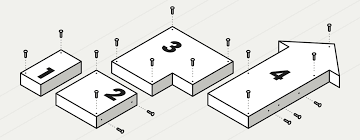
I’m a stereotype. Like many people (and especially some men), I have an aversion to following written instructions. I tend to believe that I can figure things out and build things all on my own instinct and intuition. Ikea furniture assembly instructions were for other people.

On my better days, my spiritual self knew how wrong I was.

Among Jewish tradition’s many wisdom teachings is that sometimes we need instructions. Instructions don’t suggest that any of us individually lack intelligence or creativity. Rather, instructions are important because individual intelligence and creativity aren’t enough for a diverse collective to build and maintain a thriving community.

This week’s Torah portion (Eikev) records Moses telling all of Israel on God’s behalf: “You must faithfully observe all the instruction that I command you today, so that you will thrive…” (Deut. 8:1). This teaching is directed both to the individual and the community. When we follow these Divine instructions individually, the collective prospers. This is a crucial concept of Judaism. Our individual actions should reflect our responsibility to uplift other members of the community.

Maybe this communitarian approach wasn’t obvious to our spiritual ancestors. Accordingly, Torah offered both carrots and sticks as incentive to follow God’s instructions – “blessings” of peace and prosperity if we followed those instructions, “curses” of strife and want if we didn’t.

On the “blessings” side, probably none of us can claim enough individual intelligence and creativity to promote a good life of prosperity, justice and security for all. Torah and spiritual wisdom traditions offer the time-tested expertise that our collective needs to build the most fair, safe and just world possible. On the “curses” side, we needn’t lay society’s ills at the proverbial feet of a retributive God: if only we’d followed instructions for building a fair, safe, just world!

Torah does require observance of some rules that are beyond our comprehension. Jews merit Torah because of our willingness to naaseh v’nishmah, to do and then listen. This reflects our faith that the objective of Torah is to construct a fair, safe and just world.


Ikea hieroglyphics

Ikea hieroglyphics

There are times when Ikea instructions reminded me of Egyptian hieroglyphics and with, at best, an implied promise of only a slightly wobbly bedroom set. Ikea instructions didn’t explicitly lay out “blessings” of compliance and “curses” so I proceeded by building on my own intuition rather than following directions. Even so, I should have followed those instructions as best I could: it would have saved me hours of frustration.

Moses knew that we might prefer to follow our own designs rather than following instructions. He knew that we might get comfortable in our homes and lives, prideful in our capacity to pursue wealth and power on our own. In Torah’s words, we’d forget God and God’s instructions (Deut. 8:15-17).

Remember mom’s advice to hold onto the instruction manuals for kitchen appliances and home furnishings? Mom was right, and so is Torah. When things break, instruction manuals can help. When the world feels broken, the instruction manual we call Torah can help guide repairs: feed orphans, care for widows, befriend strangers, protect the land, nourish justice. Teach children these instructions so their wisdom may endure for all.

One more thing: instructions are important, but it’s about the building. We can’t sleep on an Ikea bed assembly instruction manual: we actually have to build the bed. Same with Torah. The world can’t thrive on study and spiritual aphorisms alone: we actually have to build the world that Torah’s instruction manual envisions.

Instructions don’t guarantee perfection: bad things happen to good people, and even the most dogged and diligent build-it-yourselfer might end up with a rickety bookcase. And instructions don’t ask us to ignore our intelligence and creativity: society needs more out-of-the-box thinkers and courageous people marching to the beat of their own drummers. But Torah’s tried and true spiritual designs have proved their worth over time – if only we’d follow the instructions.

Rabbi Evan J. Krame

Attracted by a 30% off sale sign, I walked into a small sporting goods store. On a stack of T-shirts was one that said, “Life is good.” Luckily, my size was on top. I took it as an omen and I bought it quickly. This will be a reminder to stay positive, I thought. Sometimes life is not so good.

There are times when life seems unfair. Some of us suffer disease. Others are casualties of injustice. When the world is harsh we might feel wronged. Along with the temporal pain we may also feel diminished as a person, rejected by God and angry at the world. How we manage our reaction is the key. Will I be a victim or a survivor? We might not have chosen to be harmed but we can chose how we respond.


Moses strikes the rock at Meribah

Moses strikes the rock at Meribah

Moses, the great leader, nearly fell into a state of victimhood. God responded with dogmatism and intemperance to Moses’ disobedience at the rock of Meribah. Moses was instructed to speak to the rock to produce water. Instead, Moses raised his voice and his arm, striking the rock to cause water to flow. God refused to allow Moses to enter the Promised Land. In his last days, Moses stood before all the people, reflected on his life, and blamed the Israelites for his punishment. Deut. 4:21.

Moses had been a great and inspired leader taking his people from bondage in Egypt. His accomplishments surpassed rescuing the Israelites. He brought the law down from Sinai, provided governance and delivered military leadership for 40 years. How unfair it seems that one moment of pique would bring an end to the fulfillment of Moses’ journey. By virtue of the harsh decree on Moses, Torah invites us to question how we can feel hopeful and secure when the universe or God can seem to be so unjust.

One reaction to life’s brutal episodes is self-pity. Self-pity is part of the grieving process. With adversity may come feelings of helplessness, shame, pessimism or despair. Moses may have been undergoing such an episode of defeatism and self-indulgence. No one needs permission to feel badly about his or her predicament.


Overcome with despair

Overcome with despair

We typically have a hard time accepting what we cannot control. We might expect life to be fair and in truth life is neither fair nor unfair. Life just happens. When the unexpected struggle occurs, our sense of security and hopefulness is tested.  In such times it is easier to blame and be a victim. Blaming is a distraction. Victimhood is insulation.

When self-pity is untamed it morphs into victimhood. Victimhood seems quite natural in such circumstances and manifests in various ways. The victim understands their fate as resulting from the harmful action of others. Victimhood impedes us from taking on personal responsibility for our role in unfortunate circumstances.

There is psychological and even theological value in self-pity as long as we limit the flow of energy to desist from feelings of victimization. With victimhood we create more suffering over our suffering.

We can anticipate that taking on the role of victim inhibits us from realizing our full human potential.  As author Paulo Coelho wrote: “You can either be a victim of the world or an adventurer in search of treasure. It all depends on how you view your life.”

Moses was 120 when he pointed fingers at his stiff-necked followers. While his journey was not completed, Moses’ path was nearly at an end. His outburst of blame was an ungracious attempt at reconciliation with his fate. But he remained a leader and not a victim.

For Moses’ this is a moment of self-pity but not of diminishment or powerlessness. Even as his remaining days dwindled, Moses delivers long and powerful messages to shape the future and guide the people. His selfless and caring nature bursts forth in speeches of chiding and compassion, law giving and wisdom.

There is a counter balance to victimhood. Take ownership of your actions when you can.  Seek the lesson in life’s challenges great and small. Uncover the teaching moments and share your wisdom. And learn a lesson from Moses. With your perfect imperfections in mind, broaden your view to see the range of goodness that you bring to this world.

Rabbi Evan Krame

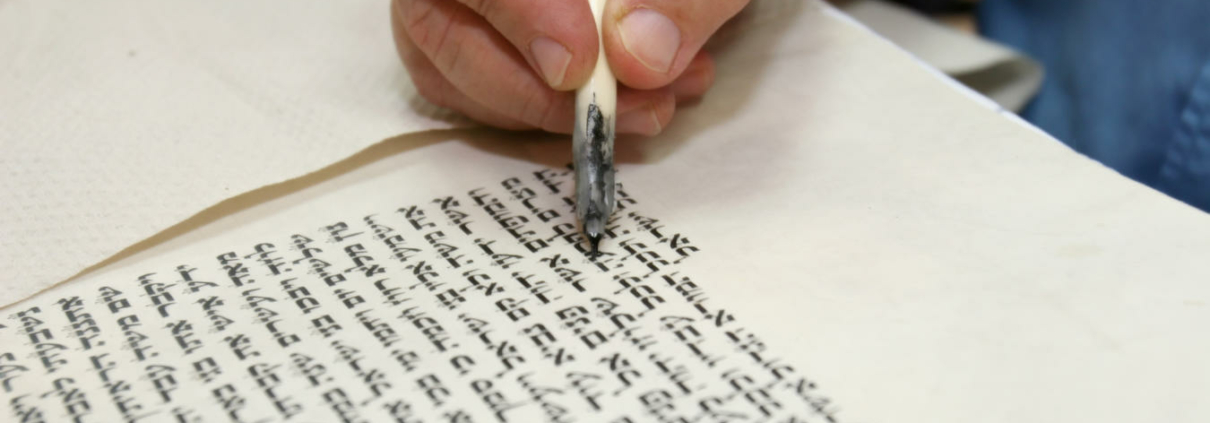
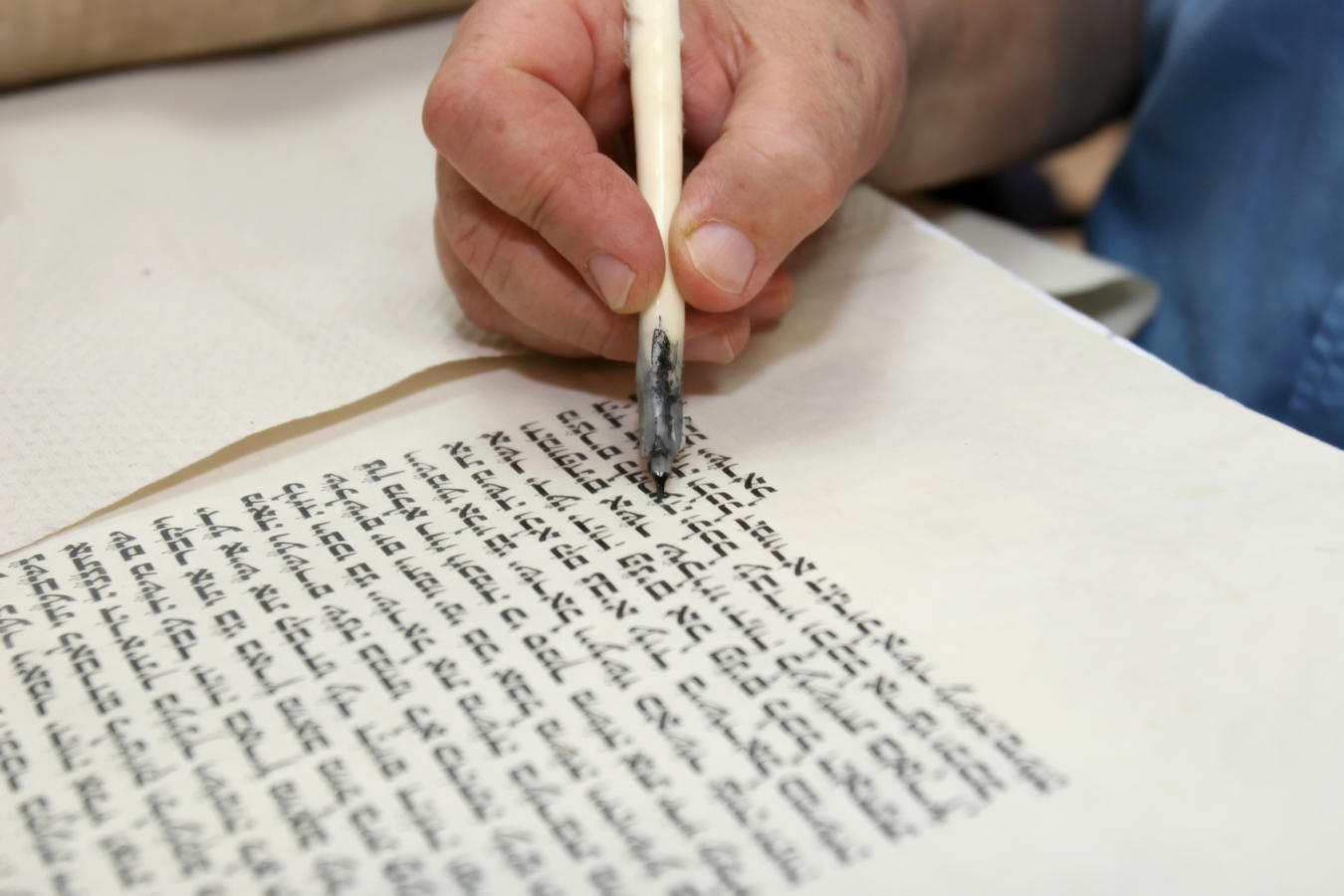
I’ve completed four decades of adulthood. Those four decades are like four books of Torah: my growth, my exodus, my immersion in law, and my journeys through difficult times. I’ve got my very own personal sized torah to share.

These are the books of Evan. Genesis is a tale of growing up and expanding family. In my torah, I begin with the sacrifices of ancestors who fled pogroms to the safety of America. I recall the stories of poverty and pain adjusting to this new world. I appreciate the hard work of my parents who enabled me to have a career and comfortable life.

Exodus is traveling a new path. I had my departure from home, which then felt like a tight squeeze. I left for Washington, DC where I found independence and responsibility. I settled into a city of promise, a place for justice, and a home of freedom. Capitol Hill was my mountain for revelation.

Leviticus is a deep dive into law. Washington is where I learned the law. I developed a law practice. I advocated for better laws. And when I could, I learned Jewish law. I enhanced my Jewish practices. I advocated for a better Judaism.


writing a Torah scroll

writing a Torah scroll

Numbers is an experiment challenged. Expectations for a good life weren’t always realized. Sometimes blessings seemed to fall from the sky and other times challenges plagued me. My process of maturing continues to be managing disappointments and accepting limitations.

After four books of Torah are completed, Deuteronomy is offered. Deuteronomy comes from the Greek meaning a second telling. In Hebrew Deuteronomy is known as devarim translated as “words.” Devarim is Moses’ end of life review rife with acrimony and disappointment. Moses tells us what “really” happened, even if the facts shift as readily as desert sand.

The book of Deuteronomy opens with “these are the words that were spoken on the other side of the Jordan.” When we get farther from the time that events occurred and memory is tainted by emotions, the words spoken are like those reported from the other side of the Jordan. This is a metaphor for the way in which time and perception morphs truth into truthiness. The other side of the Jordan is where faith faltered amid setbacks and mistakes. The retelling is a cautionary tale and not a history book.

After forty years of adulthood, I too will speak words from the other side of the Jordan. Will I recall the details exactly as they occurred? Probably not. Will I let emotion color the narrative, with pique and disappointment just in the way Moses did? Probably so.

As I get older, the details are fading and the emotions are flooding. I am mindful of Moses’ example in Deuteronomy. Narrative is a powerful tool for teaching, even when memory is imperfect. Facts may be servants to the master story. Emotions compel us to cherry-pick the truths that best serve the account we wish to share.

Even as my memory is dulled, I will transcribe my history. The records of my life have previously been started in crayon or pen or typewriter. Now I report more methodically on a keyboard with shift and edit functions; sometimes aching to hit the delete key and often struggling to find the button for reveal codes.

In between the scurrying and schlepping, the over scheduled days, the emails unanswered and meetings unending, I am recording my thoughts and sharing them with you. I am writing the personal sized torah of me.

I’m on the other side of the Jordan and I’ve got a fifth book to finish writing. I shall try to write with skill using a program called Word, having abandoned Word Perfect.

Rabbi Evan J. Krame

There are promises made tacitly or implicitly which are elevated to the realm of commitment. We can disappoint others, often without saying a word. When we feel that pledges have been broken, our stomachs turn sour and our driving can be distracted.

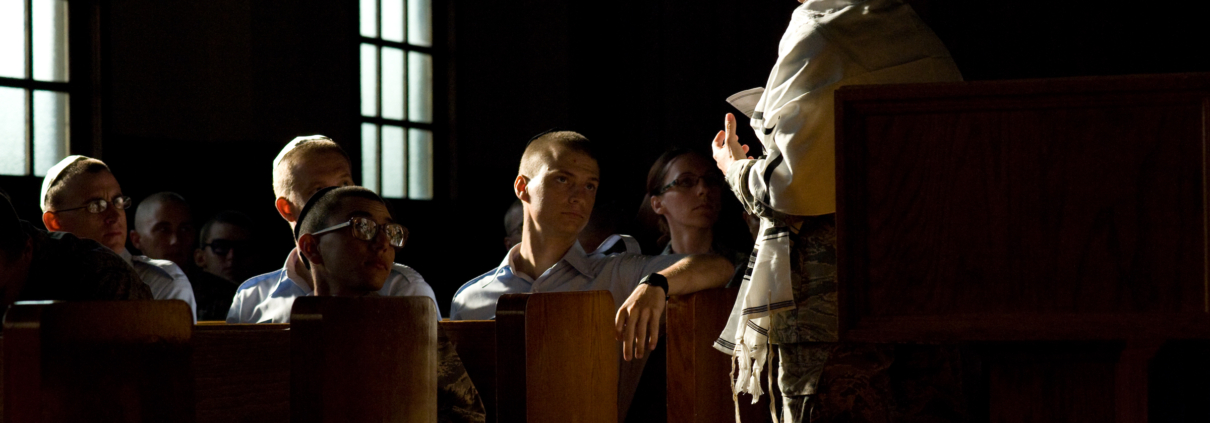
How can I make a promise without saying a word? Each of us has roles in life that create an expectation. Such promises become an obligation almost without perceivable limits. These promises are communicated merely by status without the explicit statement of a pledge. We expect doctors to not only heal but offer compassion. We expect judges and lawyers to not only be proficient in the law but also exhibit high ethical standards. We expect parents to be caretakers and set aside self-interest. Dare I ask what we think politicians have pledged upon taking the oath of office? Becoming a Rabbi, I am expected not only to be a spiritual leader but also to be an exemplary person. Oy!

I pondered this issue as I read Torah for this week. Torah begins: “If a man makes a vow to the LORD or takes an oath imposing an obligation on himself, he shall not break his pledge; he must carry out all that has crossed his lips.” Numbers 30:3.

There are two elements to this pasuk. The first element is a clear directive not to forego an obligation made. The expectation that promises will be kept is essential to the proper functioning of any society, economy or political entity. Failing to keep a promise, communicates that you don’t value the person to whom it was made. The offended person might assume that your self-interest was more important than your commitment. Relationships are subsequently damaged when trust is broken.

The second element of this pasuk is a limitation. The requirement not to break a promise arises when the pledge is made verbally. I’ll offer that promises made in writing, by email, or otherwise communicated, are the equivalent of the spoken word for these purposes. But what of the promises made that are not uttered at all. These unspoken pledges by virtue of one’s role vis a vis another may seem as tangible if not more compelling than a pledge reduced to word or writing.


airforce rabbi.jpeg

The implied promise created by our status or role in this world does create an expectation. It is a precarious situation for any of us.

The best we can do when we believe that another has broken their word is to address one another in our truth. When expressing our disappointment we can leave space for discussion. Most often there is hope for a better relationship with transparency and commitment. All of this is much preferred to the offended person remaining silent. Without sharing with each other the way in which we are perceived, there is no possibility for improvement and only the likelihood of further disenchantment.

Perhaps with this understanding of unspoken promises there will be less upset stomachs and distracted driving for everyone.

Rabbi Evan J. Krame

I was watching the Great British Baking Show late one night. I learned some baking techniques for building a multi-layered French cake: the key skill was pressing down on the layers to build up the dessert.

Turns out that this baking skill also can build leadership in communities.

Here’s what caught my attention. The baker was pushing layers of biscuit down into pastry cream. It required a deft hand and carefully balanced ingredients. With too much pressure or too much cream, confection would ooze out and layers would collapse. With too little pressure, the cake wouldn’t adhere. With too much crust or not enough cream, the cake would be dry.

In Jewish terms, the cake’s solidity is gevurah (strength, limits, boundaries). The sweet cream is chesed (love, kindness). A good cake needs both and must balance both. So does a good leader, and so does a good community leadership system.

Parshat Pinchas confirms these ideas. “God answered Moses: take Joshua son of Nun, a man that has spirit in him, and lay your hands on him” (Numbers 27:18). With these few words, Torah offers tools of successful leadership development. 

Before priest and community, Moses invested some of his authority in Joshua – building up a leader by literally pressing down, just like the baker. The laying of hands was an important first step in raising up a leader.

Pressing down symbolized the weightiness of role. Pressure and responsibility weigh on any leader: a leader who doesn’t feel it isn’t really leading. In that spirit, I imagine Moses looking Joshua in the eye, the palms of Moses’ hands digging into Joshua’s shoulders. Moses might have whispered to Joshua, “This is a tough job, kid! Stand tall and stay strong!  Don’t lose your cool when they kvetch. Be their advocate even when they act poorly. Love them with chesed, and be strong with gevurah.”


barmitzvah_scroll.jpg

The moment also represented an exquisite act of right-timed planning. In the language of modern organizational theory, Moses (or maybe God) showed keen succession planning skills by choosing that moment to press down on Joshua to build him up. Well before Moses breathed his last, a successor was selected and invested. Power and responsibility then began to flow – in front of the entire community – both to groom the successor and to prepare the community for a future without Moses.

Not to exhaust the metaphor, but a good baker also must be a good planner –   accurately measuring, carefully placing utensils, keenly sensing when each step must occur and in what sequence. Maybe Moses would have been a great baker if only he had more than manna and water in the desert!

And also like good baking, effective leadership depends on pace. Some acts must happen quickly and at fixed times; others must wait for their time. A wise leader knows when to push forward, when to speed up, when to wait and when to stop. As with laying hands, wise use of time calibrates the pressure of pushing down just enough to build up in real time.

It’s much the same for the substance of leadership. Just as a good cake must balance “dry” and “wet” ingredients, effective leadership must balance the seemingly “dry” ingredients of structure (e.g. legal matters, budgets, agendas, goals, boundaries, accountability reviews, ethics systems) with the “wet” ingredients of emotion (e.g. inspiration, empathy, compassion, love). Too much of the first is like a dry and crumbly biscuit. Too much of the second is a gooey mush and the structure can’t hold.

Notice the repeated theme of balance: pushing down to lift up, both structure and filling, both individual and community, not too fast and not too slow. Wise building – whether a cake, a leader or a community – requires this balance at every level. Without this balance, the result is dry or gooey, or topples over.

In every age, problems press down on the shoulders of leaders. In turn, leaders must stand both solid and soft, and so must the communities they lead. That’s the path of balance, wisdom, sweetness and good cakes.

By Rabbi Evan J. Krame. Sketchnote by Steve Silbert.
I delayed visiting the Western Wall in the Old City of Jerusalem until the last day of my journey. What used to be a much-anticipated moment now seemed an obligatory stop during our trip. Why the ambivalence? The exclamation point of past Israel trips had yielded to question marks.

In Torah this week, a visitor from Moab is awe-struck by the encampment of the Israelites. The foreign prophet, Bilaam, remarked, Mah Tovu Ohalecha Yaakov, “how good are your dwellings Israel!” No question mark, his observation was all about praise.


fender sticker.jpeg

Rather, than offering admiration upon entering Israel, I had questions. My bond with Israel had been tested by corrupt politics, ultra-orthodox condescension and expanding settlements. As we got into our cab, I noticed the bumper sticker asking: איך הנהיגה שלי – How’s my driving? The bumper sticker was on most every truck, bus and cab. The slogan is part of a campaign to reduce road fatalities. Yet, to me it seemed as if all Israel was asking a much larger question.

Israelis don’t have a reputation for inviting questions. Israelis are a people of opinions and exclamation points. We are the start-up nation! The borders are too porous! Religious fanatics are destroying democracy! Jews must make aliyah!

I was focused on my questions. How can it be that Israel’s leadership is craven and corrupt? How can the divides between Haredi (ultra-orthodox) and Hiloni (secular) be bridged? How can there be peace and prosperity for both Israelis and Palestinians? How can I sustain my deep love for Israel when plagued by these questions?

I feel as if I am a passenger on the Zion ride. Israel is my crazy cab driver: driving aggressively and defending each bit of space when navigating traffic. While squawking at other drivers he is on the phone making family dinner plans. I have entrusted this driver to get us to our destination. I applaud the deft ways he speeds past other cars even as they curse him. As a Zionist I engage the driver even when I don’t like his driving. And after a short while, I alight the cab.

Within days and a few cab rides later, my questions straighten into exclamation points! How beautiful are the white buildings draped in sun and seared limestone! How amazing are the lush vineyards in the dry Jerusalem hills! How packed are the study halls at universities and yeshivas! How lovely is the Israeli designed jewelry in the shops! How good-looking is the Ethiopian born soldier positioned at the intersection!

I feel genuine here. I am proud to walk on the street with my head covered. I need no reminder to bless my bread in the restaurant. I play street sign Jeopardy as I try to recall each hero for whom streets are named. Israel eases my Jewish soul back into its frame.

On our last afternoon, I visited the wall. I touched the smooth stones. A surge of energy seemed to lift me from my stance. I prayed for health, protection, guidance and peace. My questions had become prayers.

Jerusalem, I won’t forget you as a source of joy and inspiration. I won’t forget you even with my discomfort in your entanglements and estrangements. If I forget you, I would never know which way to pray.

How is your driving, O Israel? Uneven until now so I’m praying for a smoother ride.

Evan J. Krame

There is a theory that there was once more than five books of Moses. The supposition is based upon a phrase in the book of Numbers. In the middle of wandering and kvetching, we find this curious phrase “Therefore the Book of Wars speaks of . . .” A total non sequitur! There is no trace of the aforementioned Book of Wars. Yet, history has recorded additional chapters about the conflicts that beleaguered the Jewish people.

Writing this from Hungary, and having just toured the Czech Republic and Slovakia, I am acutely aware of what a modern book of wars might recount. A common refrain in Central and Eastern Europe is what the Nazis didn’t destroy, the Russians took. The worst was reserved for Europe’s Jews. In our travels we viewed synagogues that are now museums and cemeteries that are the last traces of Jewish communities.

What books should one read on such a trip? I brought Deborah Lipstadt’s book Antisemitism Here and Now, and the Holocaust novel, We Were the Lucky Ones. My intent was not to obsess on the past but to be sufficiently informed to move forward. As Reb Zalman Schachter-Shalomi taught, we do not discard our past but we cannot live the future of Judaism by looking only through the rear view mirror.

I am conflicted. I yearn to share Judaism that is joyful in its effect and progressive in its content. All the while, I’m carrying recent chapters of the Book of Wars in my backpack and my brain. How do we acknowledge the tortuous Jewish past while creating a better Jewish future? This question arose for me recently.

With a crisis on the U.S. Mexican border, many Jewish leaders, particularly those who identify as progressive, used Holocaust imagery in their rhetoric. I am disturbed by what I see as a betrayal of the memory of the six million Jews killed. The Shoah was not a universal phenomenon but a unique result of two millennia of anti-Jewish insolences. Concentration camps were built specifically to eradicate the Jewish people. We can and must decry the horror of detention centers. We should do so without invoking the language of the Shoah.

Why this concern with language? Because I fear that the last chapter of the Book of Wars has not yet been written for the Jewish people. With Survivors’ numbers dwindling and anti-semitism rising, the world still needs a reminder of how Jews were irrationally singled out for destruction.

Here in Hungary, President Viktor Orban uses anti-semitic imagery to establish himself as a populist. Jewish philanthropist George Soros, whose funding sent Orban to college, is accused of leading an international conspiracy. Sound familiar? All the while, these European nations struggle with the Shoah narrative, some exculpating their own people and pointing fingers at Nazis and Communists. The problem is that the complicity and silence of the citizenry are excused in biased historical representations. Thus, we imperil our future if the Holocaust becomes generic for all acts of oppression. The Shoah was specific to Jewish history and its lessons are sidestepped by on going anti-semitism.

For our own sake, I believe we should jealously and vigorously guard not just the memory but also the exceptionality of the Holocaust. The English language is more than adequate to otherwise describe the horrific conditions of detention and internment.

While the Book of Wars is lost, accounts of violence against Jews continues. Our obligation is to bring forward that legacy in a way that no such books need ever be written.

Rabbi Evan J. Krame

Rebellion is often a single dissatisfaction away. Frustration and agitation are precursors to political and societal upheaval. The act of rebellion requires a disappointment that triggers grief into action. In a world of challenges and conflicts, rebellion is at the door. The question is whether or not rebellion will be holy as it is conceived and as it is waged.

In the Torah, Korach and his followers give us an example of rebellion. Theirs was not a righteous operation. Their failing was to focus on their own disappointment but not on the greater good to be garnered by disobedience. Their uprising was short lived as the earth swallowed them up.

I am writing 50 years after the Stonewall riots. That was a rebellion by gay and trans folk against undeserved and brutal police harassment. Protecting the dignity of human beings is always a holy endeavor. Taking to the streets and raising voices in defiance is holy too.


extinction-rebellion-hero_b.jpg

While individual rights still require our advocacy, 50 years ago few understood the dire threat of climate change. Another wave of protests is now being waged to save our planet. At the forefront in England is a group called the Extinction Rebellion. If international climate agreements and local governments can’t curtail the burning of our planet’s life force, then rebellion is holy and necessary.

Rebellion is not always bad and is not always massive in scale. Sometimes change can happen because of a few dedicated people. Rebellion is more than opposition to a policy or law. Rather, the focus of rebellion is upending a system that is despoiling our society or planet.

Given the grave concern most of us share for civil rights, immigrants denied safe passage, unabated gun violence and the rising seas of climate change, I wonder why so few of us take to the streets in rebellion. Is it because we have benefitted from the courage of small groups who have previously brought about great change? Or haven’t we sufficient personal dissatisfaction to forego Netflix and get out into the streets?

I don’t pretend to speak for anyone but myself. I am frustrated and I am agitated but I am not a leader of rebellion, yet. Perhaps I am too comfortable and too far from the tipping point of dissatisfaction that would propel me into action.

This I know. On the High Holidays, I’ll have to atone for the rebellion I did not wage. The final stage of full atonement is to return to the situation in which the sinful behavior occurred and act more appropriately. Which means next year, should be a year in which I join the rebellion. In this case, unless we act resolutely, the earth will swallow us up for our failure to be good advocates.

R’ Evan J. Krame.

I’m environmentally panicked. I keep talking and thinking about the recent predictions by Australian climate change experts of imminent cataclysmic environmental damage . The report says the existential threat to human beings will begin in 2050. Eventually, the planet will be a wilderness. We are currently reading in the Torah cycle the middle of the book of Numbers, known in Hebrew as Bamidbar (“wilderness”). Mere coincidence or call to action?

In the reading from parshat Shelach, Moses sends one scout from each tribe out from the wilderness to view Canaan, the Promised Land. The scouts are instructed to view its vegetation and its inhabitants. Moses asks them to report on the land, its soil, trees, and fruits as well as the people who dwell there.


Our planet is in mortal danger.

Our planet is in mortal danger.

In the 21st Century we have the reverse. People have taken a verdant and fruitful planet and brought it to the brink of desolation. All we need do is scout out the future. Based upon the trajectories of deforestation, carbon dioxide level increases, surging methane emissions, and rising sea levels we are turning earth into a wilderness.

In the Torah, ten of the twelve scouts were frightened by the people they saw and the fortified cities in which they dwelled. Only two had the vision to understand that the future could be suitably formed. They had faith – in themselves, in God and in the future. A time tested truth is that only a few of us will have sufficient faith to keep our eyes opened to possibilities.

Today, the vast majority is either ignoring the danger or afraid to make the necessary changes to rescue our planet. It is easier to believe that scientists will invent miracle fixes or contend that climate change is part of a natural cycle for the earth. What appears difficult for us to do is institute the necessary life style changes to reverse the destruction and demand that climate change be treated as the primary threat to the United States far beyond illegal immigration or global market share.

If Judaism has any purpose in the 21st century at all, it has to teach the lesson of saving life in the wake of an assault on the environment. If God’s creation is to be treasured and preserved, then earth must be tended to as if each and every creature and plant is as precious as those in the Garden of Eden.

Here’s what the brave and wise scouts of the future are asking you to do. Cut back on your meat consumption. Both you and the planet will be healthier. Waste less – less paper, less plastic, less food. Recycling is not enough, because we just consume too much. Sign up with solar and wind power suppliers. And don’t be afraid to share this aspiration for a healthier planet with everyone you know.

Love this planet. Put your heart into the matter. May these values remind you of the Godliness that is protecting our environment. Speak of it as you walk along the supermarket aisles and when you pay your electric bill. Teach it to your children and their children, so that they may know that we tried.

Don’t let this planet go from Promised Land to wasted land.

R’ Evan J. Krame