Our brains perceive a threat, and we feel fear. Fear is a primary emotion with tremendous motivational power. It plays a vital role in shaping our actions and decisions, especially those related to survival and threat response. But fear does more than protect—it also distorts. It can cloud our judgment, fuel prejudice, and lead us to act against our best interests.

This psychological truth is deeply embedded in Jewish history and offers insight into the roots of prejudice and antisemitism.

As the Israelites neared the end of their journey through the wilderness, they entered the land of the Amorites—territory the Amorites had themselves taken from the Moabites. Although the Israelites requested peaceful passage, the Amorites attacked, and the Israelites were victorious.

Next, the Israelites camped on the border of Moab. King Balak, witnessing the vast multitude of Israelites, grew fearful. As the Torah recounts:

“Moab was alarmed because that people was so numerous. Moab dreaded the Israelites, and Moab said to the elders of Midian, ‘Now this horde will lick clean all that is about us as an ox licks up the grass of the field.’”
Numbers 22:2–3

The Israelites had no plans to invade Moab or seize its land. Yet, just like the Amorites before them, the Moabites rejected the request for safe passage. Rather than seeking dialogue or coexistence, they prepared for war.

[Note to self: Why does this story repeat throughout Jewish history?]

King Balak and his people succumbed to fear. Instead of looking clearly at the situation, they allowed anxiety to override reason. Fear, while a natural defense mechanism, often twists reality.

Psychologist Todd Pressman writes:

“Fear manipulates our perception, distorting the objective truth of things. In so doing, it throws fantastic images before our eyes and otherwise twists our understanding of who we are and what the world is all about.”

Fear is a master illusionist. It commands our attention and narrows our focus to what might go wrong, often ignoring what might go right.

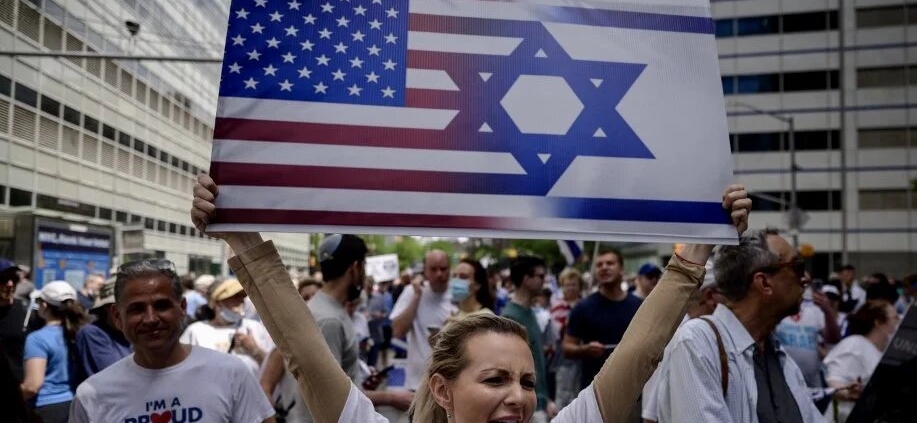
Perhaps fear is also at the root of antisemitism. Fear breeds suspicion—especially of the unfamiliar. To those who view Jews as a “foreign nation,” fear can become fertile ground for stereotypes and conspiracies, fueling an “us vs. them” narrative.

Fear often leads to anger. That anger can manifest as resentment, hostility, or moral condemnation. Antisemitic tropes, many of which are centuries old, often package fear into accusations—of control, conspiracy, or corruption.

The Jewish narrative, told over millennia, is one of asking the world for safe passage—and being seen instead as a threat. The image of a “horde that will lick clean all” echoes painfully in both ancient scripture and modern experience.

In the Torah, the Israelites rise in defense and, with divine support, overcome their enemies. God is praised as redeemer and “Lord of Hosts.” Today, that story is more complex.

As Dr. Yehuda Kurtzer has observed, Jews today are either warriors or worriers. In Israel, the Jewish people are again warriors, responding forcefully to threats and those who deny the possibility of peace. In the diaspora, Jews like me are the worriers—concerned about the rising tide of antisemitism and the fear and anger that fuel it.

Somewhere between the warrior and the worrier, we must find a new path—one rooted in coexistence, not conflict. May we, one day, be neither the army nor the alarmed, but builders of peace.

Rabbi Evan J. Krame

Magicians rely on misdirection—the art of drawing attention away from what truly matters to achieve a predetermined, surprising outcome. Emotionally, we often do the same. Instead of confronting what truly troubles us—grief, fear, sadness—we redirect our discomfort elsewhere, sometimes lashing out at those closest to us. This ancient tactic is not only psychological but spiritual, woven into the very fabric of our sacred texts.

In Parshat Chukat, we read of the death of Miriam. Her passing is marked briefly with mourning, but almost immediately the people’s sorrow turns to unrest and anger. Their lament is not just for Miriam but for the loss of something deeper—their spiritual sustenance. According to the Talmud, one of the miracles created on the sixth day of creation was a well of water that followed the Israelites throughout their journey, so long as Miriam lived. When she died, the water dried up.

Miriam was more than a prophetess. She was the soulful heart of the people—the one who led song and celebration after the crossing of the Red Sea. Her presence embodied nurturing and emotional strength. Her death created not only a physical void but a spiritual one. Rather than facing that deep sense of loss, the people turned on Moses. They complained and accused, not because Moses had failed, but because their faith had faltered.

This episode reveals how grief and disappointment can quickly morph into blame. A singular event—whether the loss of a loved one, a setback, or a miscommunication—can rupture relationships. What appears to be a sudden shift from harmony to conflict often has deeper roots. The anger, accusations, and division are misdirections—emotional maneuvers that obscure the true source of pain.

In those moments when we are on the receiving end of such misdirected emotions, it is tempting to take it personally. But perhaps we should instead recognize that we are witnessing a projection of inner turmoil, not a reflection of our own actions. As the modern sage Mel Robbins reminds us, when people behave irrationally, emotionally, or unfairly, we might simply “let them.” Let them reveal their own struggles. Let them show their grief, their fear, or their faithlessness—not as an indictment of us, but as a glimpse into their own unresolved pain.

The lesson embedded in this parashah is subtle but powerful. Between Miriam’s death and the people’s insurrection lies only a small textual space—but within it, a universe of emotional truth. People do not usually break in an instant. Often, the emotional crack was already there, waiting for a moment to split wide open.

When we encounter misdirection—whether in the Torah or in life—we are called not to react but to reflect. Not every outburst or betrayal is about us. Sometimes it is simply a symptom of another’s sorrow.

By Rabbi Evan J. Krame

The actor Mark Ruffalo joined the demonstrators this past Saturday, declaring, “We see a president who has made himself a king and dictator.” Across the country, millions marched under the rallying cry: No Kings. For many, these protests were a vital expression of democratic dissent. For others, the movement lacked the clarity or unity to earn their full support.

Rebellion is nothing new. In this week’s Torah portion, we read of another uprising—one not against a president, but a prophet. Korach, a Levite and member of the priestly clan, rose up against Moses. He was not alone. “With him were two hundred and fifty chieftains of the community, chosen in the assembly, men of repute” (Numbers 16). These were not agitators on the fringe. They were the respected leadership class.

Yet the Torah casts their revolt as unholy. Unlike modern narratives of righteous protest, Korach’s challenge was met with divine judgment. Moses confronts the rebels with a spiritual test—and the earth swallows them whole.

What made Korach’s rebellion so problematic? Was it his message or his method?

Korach argued for a more egalitarian model of leadership. “All the community are holy,” he declared. The sentiment might resonate with democratic ideals. But the Torah suggests that righteous ends do not justify self-serving or destructive means. Ego and ambition may have driven Korach’s confrontation, not a higher moral calling. His advocacy lacked both humility and context.

One telling aspect of the story is who didn’t participate. The masses, often quick to grumble and complain during the wilderness journey, stayed home. This revolt was led by elites, not embraced by the people. Did the public sense something profane in Korach’s cause? Or were they simply excluded from a power struggle among leaders?

Today, as in biblical times, we are often caught between charismatic challengers and flawed incumbents. The story of Korach cautions us not to confuse power or passion with righteousness. It reminds us to question both our leaders and their critics.

In moments of political crisis, we must not abdicate our moral judgment. We cannot rely solely on public figures, no matter how revered or influential. Our duty is to discern the difference between holy dissent and hollow ambition. We must seek out truth, remain grounded in justice, and ensure that our protests are infused not just with fury—but with holiness.

Rabbi Evan J. Krame

Americans are facing a crisis of aging. While retirement is often romanticized, the reality is that many will not have the resources or support they need in their later years. Jewish tradition offers a moral and spiritual framework for how we should support our elders—not just as individuals, but as a society.

The Torah introduces the concept of retirement in Numbers 8:25: “At the age of fifty, they shall retire from the workforce and shall serve no more.” This directive regarding the Levites illustrates an early form of mandatory retirement, grounded in respect for the aging body. Without pensions or Social Security, these elders likely survived on community support—perhaps a share of the offerings brought to the Temple.

Later Jewish texts affirm both the value of planning and the importance of collective responsibility. Proverbs 21:5 teaches, “The plans of the diligent lead to profit,” encouraging foresight and preparation. Maimonides wrote in Mishneh Torah, Gifts to the Poor, that a person should not make himself a burden on others. Yet, Judaism also tempers that message. The Talmud (Sotah 48b) reminds us: “Whoever has bread in his basket and says, ‘What will I eat tomorrow?’ is of little faith.” This tension between faith and planning mirrors the struggle many face when preparing for retirement.

Jewish law is clear: we must support those in need. Leviticus 25:35 commands, “You shall support the person, the stranger, the resident, and they shall live among you.” While individual generosity is a start, families and communities must be part of the safety net—especially for aging parents.

The fifth commandment demands that we “honor your father and mother.” The Talmudic sages explained what this means: “giving them food and drink, dressing them and covering them, bringing them in and out” (Kiddushin 31b). As age reverses the dependency between parent and child, adult children become caretakers, fulfilling a mitzvah.

Yet this obligation extends beyond family. Leviticus 19:32 teaches, “Stand up in the presence of the aged and show respect for the elderly.” The Talmud explains that this mitzvah applies to all elders, not just one’s parents. Greeting the elderly is likened to welcoming the Divine.

In this spirit, Jewish values clearly support government-backed programs that ensure security and dignity in old age. The U.S. Social Security system, created in 1935, and Medicare, established in 1965, are practical manifestations of these values. These programs reflect society’s recognition that aging is a shared journey, not an individual burden.

Yet these essential supports are at risk. Recent legislation in the House of Representatives proposes deep cuts to federal spending—threatening Medicaid, Medicare, and Social Security. This endangers the very fabric of our communal responsibility.

Retirement today brings new challenges. Seniors face rising healthcare costs, a shortage of qualified caregivers, and the high price of assisted living. Many will outlive their savings. Long-term care insurance remains costly and limited, and Medicaid only steps in once other resources are depleted. Without government programs, many elderly Americans would be left without support.

Our tradition compels us to act. Jewish values demand we honor and care for the elderly—not only our parents, but also our neighbors and strangers. To do so, we must safeguard and strengthen the programs that support their well-being. Honoring the retiree is no different from honoring God.

Torah commands not just that we respect our elders but to ensure they live with dignity. That obligation doesn’t stop at the edge of our family—it extends to the policies and priorities of our nation.

Rabbi Evan J. Krame

Twelve spies returned from scouting the Promised Land. Two—Caleb and Joshua—saw a land flowing with milk and honey, full of potential and Divine promise. But ten others, faithless spies, came back afraid. “The land devours its inhabitants,” they cried (Numbers 13:32), sowing panic and rebellion among the Israelites. Their lack of faith doomed an entire generation to wander the wilderness for 38 more years.

Two were Zionists in spirit, seeking a Jewish future in a promised land. Ten were fearful. And their faithlessness — more than the might of Canaan’s cities — endangered the nation.

Caleb and Joshua embodied the dream of Zion. Even as they saw danger ahead, they held onto hope. I, too, recognize Israel’s imperfections and acknowledge the suffering, and still, I have faith. Those who are like Caleb and Joshua understand that the road to Zion is not easy, and struggle is sometimes necessary.

But around us—and sometimes within our communities—are voices echoing the ten spies: full of fear, doubt, and disavowal. Their faithlessness is not benign. It weakens the Jewish people. It places us all in danger.

We see the consequences unfolding before our eyes. Jews have long aligned, and should align, with American progressivism when advocating for justice and equality. Yet many of our progressive allies now turn on Israel with hostility, and by extension, on Jews, whatever their relationship to the Jewish state.

Vitriol against Israel knows no limit, and in too many places, it’s open season on Zionists.

Anti-Zionism has long been a mask for anti-Semitism, with roots in the 1975 UN Resolution sponsored by the Soviet Union, declaring Zionism to be racism. The legacy of that resolution endures.

Today, on college campuses, Jewish students are vilified and harassed while Jewish faculty face intimidation. The campus movements that demanded safe spaces for students now permit—even praise—rhetoric and actions that threaten Jewish lives. The violence reaches beyond the quad.

Yaron and Sarah were killed on the steps of the Capitol Jewish Museum. Although both worked at the Israeli Embassy, the attacker could neither identify them as Israeli nor Zionist — they were murdered for being Jewish. The killer yelled, “Free Palestine.” In Boulder, incendiaries were thrown at a march to remember the hostages, injuring twelve people. The attacker said he wanted to “kill all Zionist people.” The danger of anti-Zionism is not theoretical.
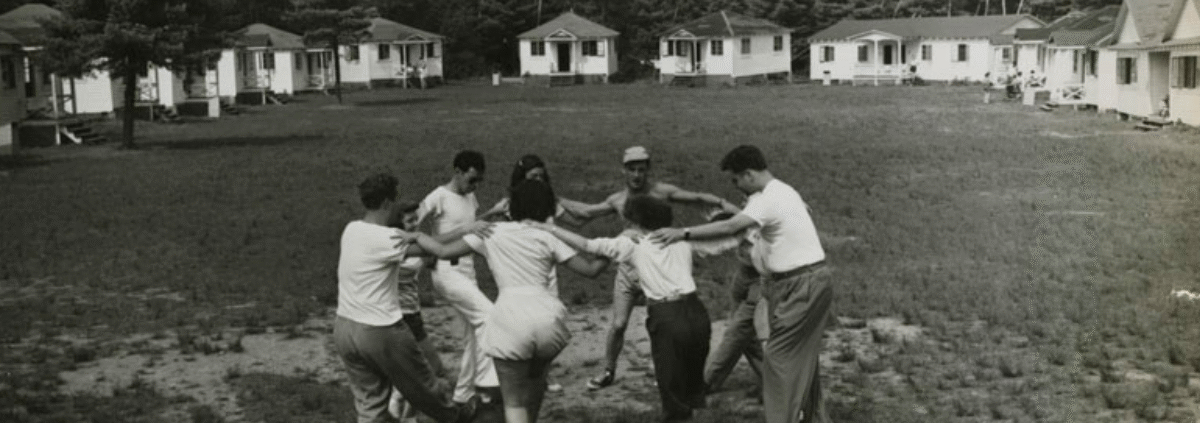

I am not calling for blind allegiance to the Israeli government or its policies. I am calling for vision—for the courage to see Israel’s essence amid complexity. Caleb and Joshua were not naïve. They saw the challenges. But they also saw the future—and chose to believe in it.

Faithlessness destroys community. That was the lesson of the spies. And it remains true today.

For my grandparents, America was the new Promised Land. But the hope of Zion—of a Jewish homeland—never dimmed. Zion remained in their prayers and our dreams. After pogroms, the Shoah, and exile, the establishment of Israel is the miracle of return, the haven for a people too often without shelter.

Now is not the time to waver. We must speak clearly and courageously: anti-Semitism, from left or right, is unacceptable. The Jewish people cannot shrink from our heritage, our identity, or our connection to Israel. Accordingly, when we abandon Zion, we leave all Jews vulnerable. When we defend Zion — even as we criticize Israel’s government, we yet stand in the tradition of those who believed in a safe homeland for Jews.

Let us not be counted among those who faltered. Let us rise like Caleb and Joshua—resolute, faithful, and unafraid. Our collective future may depend upon it.

Rabbi Evan J. Krame

There is an affliction in the camp.

Jews today are facing threats from anti-Semites across the political spectrum—left and right alike. But just as troubling is a rift within our own people. Factions are demanding ideological purity, casting out those who do not conform. The rhetoric may be different, but the result feels the same: exclusion. We may not physically eject one another, but zealotry and cancel culture amount to a symbolic expulsion—placing fellow Jews outside the camp.

In conversations with colleagues, I hear the strain. Rabbis are navigating polarized opinions surrounding Israel’s war. Some have built communities rooted in unwavering Zionism or firm anti-Zionism. Others lead congregations deeply divided. They walk a tightrope, trying to hold their communities together—sometimes just to hold on to their jobs.

These divisions defy easy explanation. They are not strictly generational. They do not follow lines of wealth or geography. Sometimes, they tear families apart.

In the Torah, at Numbers 5, those sent outside the camp are the ones with visible eruptions, discharges, or who have had contact with a corpse. Yet Torah also implies reintegration: when the affliction ends, the person returns. There is no ceremony of return, no formal acceptance—just the assumption that healing invites welcome.

Rashi, the medieval commentator, saw in this structure a hierarchy of camps: the Israelite camp, the camp of the Levites, and the innermost camp of the Shekhina—the Divine Presence. The one with a visible illness, like leprosy, was sent away from all three. The one with a less contagious condition, only from the Levite and divine spaces. And the one who merely came into contact with the dead was excluded only from the sacred center.

Rashi offers us a model of proportionate response. Not every form of impurity results in total exile. Only those whose presence poses real danger are fully removed. Others—those less threatening—are kept close, excluded only from the holiest spaces, not from community.

This ancient wisdom should guide us now. Despite our passionate disagreements over Israel, we must strive to remain in the same camp. We should exclude only those ideologies—or actions—that incite violence or endanger lives. But those who disagree, even strongly, should not be cast out. We should ask them only to express their views with the dignity and integrity befitting a people of Torah.

Judaism teaches two powerful values here. First, that community—remaining in the camp—is paramount. And second, that we must doubt our own certainty. The belief in one’s own ideological purity is its own danger. It leads to the exclusion of others who might, in truth, be equally striving toward holiness—just on a different path.

Let us stay together. Whether in disagreement, in pain, or in uncertainty. The camp is sacred not because we all agree, but because we all belong.

Rabbi Evan Krame

American culture has long romanticized the wilderness. We see untamed landscapes as places of retreat from the pressures of urban life, sources of spiritual renewal, and reflections of national identity. This idealization of nature gave rise to modern environmentalism and deepened our reverence for the natural world and its creatures.

Yet, the idea of wilderness carries a darker side. Time spent in the wilderness—whether physical or metaphorical—can diminish our sense of community, shared responsibility, and enlightened norms. At its core, “wilderness” contains the word “wild”—a concept that, as a verb, connotes unruly, sometimes destructive behavior, and as a noun, suggests uncultivated, unmanaged space.

The American experience of wilderness spilled over into the myth of the Wild West. There, we lionized rugged individualism and glorified the unconstrained spirit. But this cultural ideal, once held up as bold and aspirational, now feels like regression. We are retreating into a wilderness of misplaced romanticism, where personal advancement is prized over collective care.

By contrast, the Torah, in the book of Numbers, offers a radically different view of wilderness. In biblical tradition, the wilderness was not an escape from responsibility but a crucible for moral growth. There, stripped of stability, the Israelites discovered their identity. In a desolate land, they learned that survival depended not on individualism but on mutual support. In the wilderness, compassion was learned and community made sacred. The goal was never to remain in the wild but to journey toward a promised land—one that honored the stranger, protected the widow and the orphan, forgave debts, and mandated generosity from all.

America once had its own version of that promise. But from its wilderness emerged a different dream—one of conquest and domination. Rugged individualism fueled the displacement and destruction of Native Americans, the subjugation of immigrants, and the enshrinement of the White Anglo-Saxon Protestant male as the ideal citizen. The myth of the Wild West became a justification for exclusion and aggression.

Today’s political culture has returned to that myth. The current administration clings to a narrative of conquest, self-interest, and limited government. It is a story more about taking than building, more about retreat than redemption.

But there is another American story worth remembering—a story of emerging from wilderness toward justice and solidarity. It is the America that raised the Statue of Liberty to welcome the world’s tired and poor. It is the America of the New Deal and the Great Society, where government took responsibility for the wellbeing of its people, creating safety nets for those in need and dignity for those in despair.

Now, however, we are witnessing a retreat—not just from government responsibility, but from the very idea of covenantal society. As jobs disappear and health care becomes more elusive, as rule of law is undermined and public trust erodes, America is dissolving into a wilderness not of growth but of neglect. Where once the wilderness symbolized a necessary passage on the road to community, it is now becoming the destination itself—pushed by plutocrats who preach rugged individualism and govern with indifference.

We stand again at the edge of the wilderness. But this time, we did not choose to journey there in pursuit of freedom. We are pushed back to the wild by a vision that exalts isolation over connection. The question before us is whether we will remain in this barren place—or, like those who came before us, seek the promised land of a just, caring, and compassionate society.

Rabbi Evan Krame

I burst into tears watching Edan Alexander reunite with his mother. In that moment, Edan was not a soldier or a political symbol—he was her child. To his family, he was the most important person in the world. And I found myself asking: How do we ascribe value to a human life?

That question has become harder to answer. In a world shaped by politics, conflict, and economic calculations, we struggle to define the worth of an individual. When considering hostages, consider what price is paid for the release? In this regard, Edan’s release from captivity was extraordinary. In past exchanges, Israel released Palestinian prisoners in return for hostages. But this time, Edan was freed in exchange for vague diplomatic promises—unspoken vows, perhaps, from the United States. We don’t know the price that was paid, only the depth of the relief that came with his return.

The ambiguity of that exchange made me think about how we quantify human life—how we decide whose life is worth what. This is not a modern dilemma. The Talmud confronts it head-on in Horayot 13. The sages ask to whom are you obligated when choosing among captives: parents over teachers, Torah scholars over kings, Priests over prophets. These debates reflect an ancient effort to create a moral hierarchy, even amid tragedy. The debate also includes how much is a human life worth? A limitation on redemption of captives is mandated in the Talmud. At Gittin 45a:13 we learn that captives are not redeemed for more than their actual value, for the sake of the betterment of the world.

This tension between intrinsic worth and assigned value also appears in the Torah. In Leviticus 27, as a person vows themselves to God, their value is translated into silver: fifty shekels for a man, thirty for a woman. The inequality is stark, but the concept itself is striking. Is our worth somehow clarified in the context of devotion, of sacred commitment? Or are we simply trying to find language—however flawed—for life’s inestimable value.

History offers chilling reminders of how life has been reduced to numbers. Rabbi Yitz Greenberg described how the Nazis calculated the cost of killing a Jew to the fraction of a pfennig—the price of the Zyklon B gas used in extermination. To save money, they used less of it, accepting greater suffering as a trade-off. Even as they declared some lives “unworthy of living,” they still assigned them monetary value. A life reduced to arithmetic, stripped of dignity.

Our emotional responses resist logic, but our ethical obligations demand a more expansive approach. We cry for one boy’s return, for one mother’s relief. But our compassion falters as we zoom out. We struggle to hold the pain of communities—Ukrainians killed in war, Nigerian schoolgirls abducted, refugees lost in crossing. The farther from our personal experience, the more abstract the suffering becomes.

Still, these questions of value reach far beyond conflict zones. They are at the heart of domestic policy, too. Every time the U.S. government weighs public health against economic growth, it makes decisions about the worth of a life. Many are trapped in poverty, limited by disabilities, or displaced by conflict. So, we must ask: if we still believe each life holds sacred value, how must we act according to that tenet?

The Torah never questions whether human life matters. It assumes it does. The real question is what we are willing to do—to give, to risk, to change—in order to honor that value. What are we willing to pay, protect, or sacrifice to preserve life, especially when the person is unknown to us? How does that obligation translate into public policy and government action? And whose lives are most valuable?

When there are hostages, we must advocate for each one. When lives are lost, we must mourn them, even if we do not know their names. But most of all, we must expand our capacity for empathy. Our times demand not only that we feel for the individual, but that we learn to feel for the many—to widen our hearts, to deepen our resolve, and to become unwavering champions of human dignity.

Our challenge is to extend our empathy beyond individuals whose stories touch us personally. We must expand our awareness, deepen our compassion, and become champions for preserving all human life—regardless of nationality, faith, or circumstance.

Last week, I attended a conference focused on building a more inclusive and welcoming Judaism. One session, in particular, stood out — finding the source for a “Torah of Safety, Respect and Equity.” The idea feels inherently Jewish: that we are called to care for all, to embrace one another fully. But I found myself wondering—where does Judaism actually teach us to do that?

This week, I searched for a Torah of inclusion, convinced that the Torah is infused with God’s enduring plea for us to treat each other with respect and dignity. But then I encountered a troubling passage in this week’s parsha, Emor, that challenges that very belief.

In Leviticus 21, the Torah prohibits priests with physical “defects” from offering sacrifices. A priest with a limb too long or too short? Prohibited. A hunchback, a dwarf, or someone with a broken arm? Also disqualified. Even a stye in the eye was enough to render a priest unfit for service. Reading this list, one wonders how any priest could meet the Torah’s standards.

Some commentators suggest these restrictions are meant to avoid distractions. If a priest’s body was not “perfect,” people might focus on the priest’s appearance rather than the holiness of the offering. But the rabbis of the Talmud provide a powerful counterpoint.

In Megillah 29a, Bar Kappara teaches on the verse: “Why look askance, you mountains of peaks, at the mountain God desired for His dwelling?” (Psalm 68:17). A heavenly voice responds: “Why do you look down on Mount Sinai? You, too, are full of blemishes.” The word “peaks” is linguistically linked to the same terms used in Leviticus—hunchbacked or dwarf. Rabbi Ashi then comments: “If a person is arrogant, that is a blemish.” In other words, our judgment of others—our failure to embrace their differences—is the true flaw.

Through rabbinic interpretation, we begin to uncover a Torah of inclusion: not despite our differences, but through them. Numbers Rabbah (Naso 7:1), teaches that when the Israelites left Egypt, “almost all of them were disabled.” Years of brutal labor—climbing buildings, lifting heavy materials, suffering injuries—left its mark. The people God chose to receive the Torah were far from physically whole.

Rabbi Marc Margolis offers a paradoxical interpretation: perhaps by establishing seemingly impossible standards of physical perfection for priests, the Torah ultimately teaches that Jewish communal life should never exclude anyone based on human limitations.

Rabbi Lauren Tuchman, who is blind, encourages us to move beyond discomfort with these ancient prohibitions by recognizing their historical context. The priestly class described in Leviticus no longer fulfills the same role in contemporary Judaism.

Let’s begin, then, with this foundational truth: all human beings are created b’tzelem Elohim, in the image of God. This includes every person with a physical, emotional, or mental difference. No condition, diagnosis, or visible mark makes us less a reflection of the Divine.

Ultimately, we must understand the laws of the Torah in the broader context of human dignity. The Torah is our guidebook—but the essential story is the sacred value of every person.

Rabbi Evan J. Krame

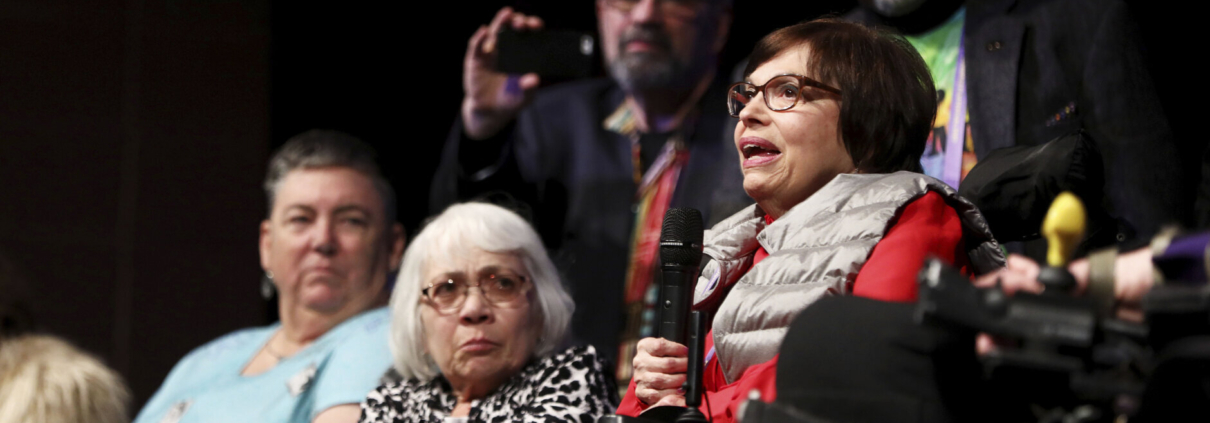
Dedicated to the memory of Judith Heumann, champion of human dignity.

“Purge the holy place from impurity.” – Leviticus 16:16

Arriving in New York, my grandparents and great-grandparents discovered a new holiness.  American idealism supplanted Shtetl Judaism. The Mezuzah at the doorpost was the Statue of Liberty. Their new Torah was the Constitution. Election day was a sacred gathering. The geographic center of the universe was Washington, D.C., their new Jerusalem. The holy place stretched from the Lincoln Memorial to the United States Capitol. Now the shrines are defiled and impure.

Leviticus reminds us: When the people sin, the holy space becomes defiled. The sanctuary itself—be it Temple or Republic—must be purged. The Jewish texts created rituals to clear our holy places of iniquity. In Leviticus 16:16, the High Priest purged the sanctuary of Israel’s sins because the impurity caused by the people’s wrongdoing has seeped into the very center of holiness.

On January 6, 2021, mobs desecrated the U.S. Capitol, a literal shrine of American democracy. It wasn’t just a riot. The attack on the Capitol left a spiritual stain, bursting from an eruption of falsehood and rage that exposed deep moral rot. The violent breach of the Capitol was a symptom, not a cause, of the broader corruption: attacks on truth, erosion of democratic norms, and tolerance of authoritarian impulses.

The shrines of democracy are now temples of inequity. Our government’s leadership is hostile to democratic principles, defying ethical behavior, civic responsibility, and common decency.

The “shrines” became defiled not just by one individual’s sin, but by the collective failure of justice and righteousness. Today, authoritarianism, abuse of the judicial system, and attacks on democratic norms defy our holy American endeavor.

Our nation’s founding ideals were never quite reached but always remained within our grasp. Only recently we leaned into honest history, incorporating the accounts of slavery and the displacement of indigenous people on equal footing with the myth of American exceptionalism. However, within the last decade, those in power in our nation quickly turned aside truth and the rule of law.

Those who desecrate our holy halls of government mask accountability with false patriotism. We aren’t making “America great again.” The degenerative disorder into which we have settled needs to be purged, not endured.

Leviticus offers hope. It tells us that purification is possible. In our modern era, denial or acquiescence abet the impurity. Rather, we need rituals that demonstrate courage, accountability, and regard for the truth. Just as the High Priest entered the Holy of Holies with incense, confession, and sacrifice, so must we confront our own national sins: we vote and urge laws to eliminate voter suppression, we greet our neighbors and undo white supremacy, and we support leaders, especially those who act boldly yet with humility.

Not just in politics, but in our own lives we have a role through the conversations we choose to have, the sources we trust, and the courage we summon to speak out against injustice.

Purging the shrine means we refuse to allow the soul of the nation to be desecrated without response. We do not shrug at corruption or become numb to lies. We act. Because if Leviticus teaches us anything, it’s this: holiness is not static. Our work is to maintained, protect or reclaim the holy purposes of our nation.

How then, do we purge the shrines of democracy? We speak the truth and demand accountability. Most importantly, we too can take action. For example, on the local level, we can urge public education to restore civics as a requirement in the curriculum.

To apply Leviticus 16:16 to America today is to say: “We must cleanse the holy spaces so that justice and freedom may once again reign.”

Rabbi Evan J. Krame