
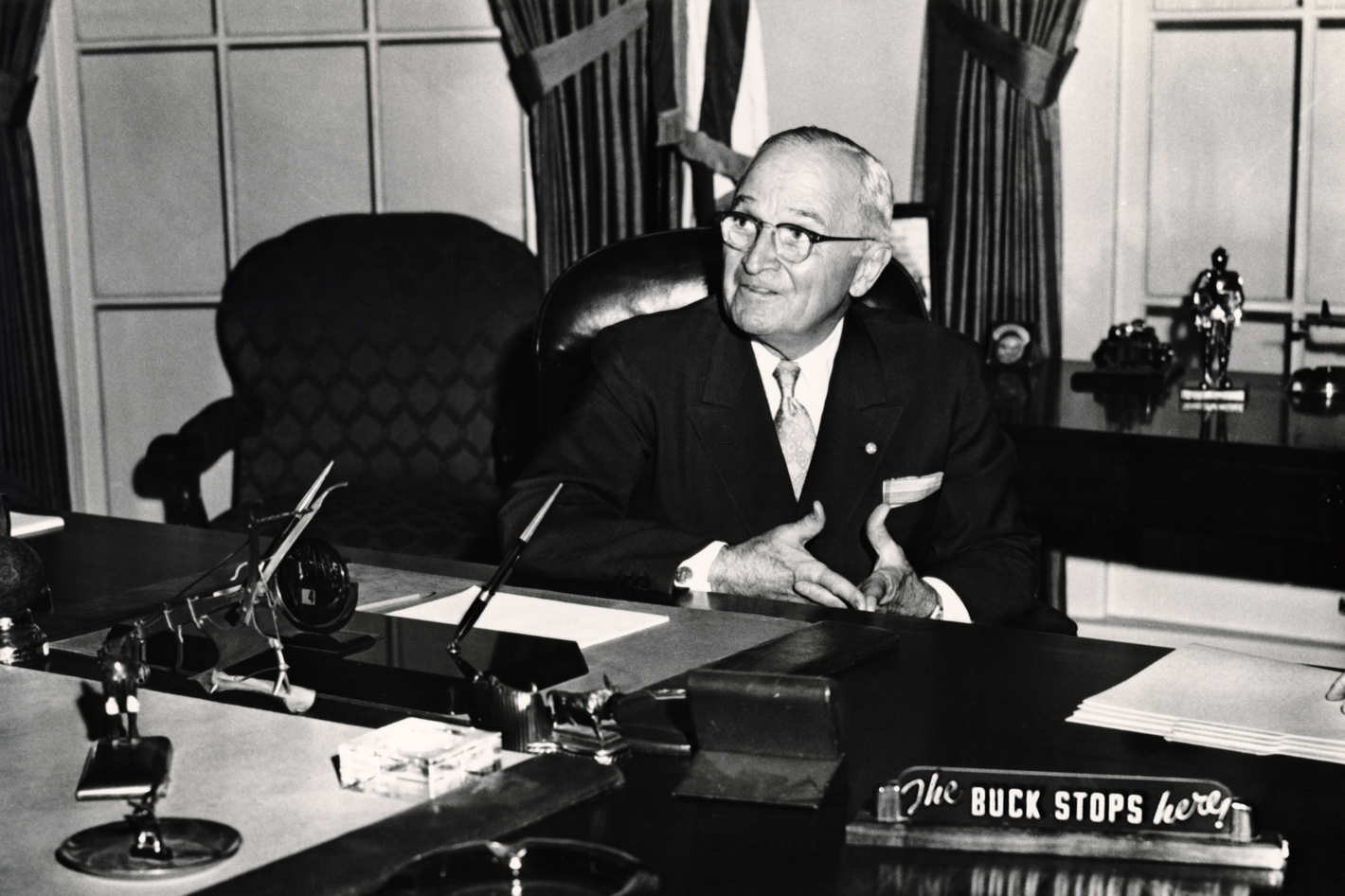
President Harry Truman famously taught the buck stops at his desk. Truman demonstrated a leaders’ strength in being held accountable. When leadership fails to take responsibility the entire enterprise is destabilized, whether in government or business or a religious organization. Leaders too often focus on controlling public reaction rather than being held accountable, which is a failure to lead.  

In parshat Shemini we learn of the various offerings by the priests at the tabernacle or ohel moed. One is the sin offering, slaughtering a goat and giving the meat to the Priests to eat in the sacred space. Moses is scrupulous about this instruction. When he suspects that Eleazar and Ithamar, the sons of Aaron, have failed to punctiliously observe this rule, he becomes angered. Both the handling of the offering and the space within which the offering is eaten are critical to the integrity of the atonement ritual. Moses reproves them for their failure to properly execute these priestly duties. Their father, Aaron, who is the High Priest, offers a thoughtful explanation to Moses, demonstrating his willingness to be accountable for the actions of his sons.

Contrary to our expectations, religious leaders are often averse to accepting responsibility. Moreover, when leadership fails uphold canonical and civil laws, iniquities may go unaddressed: inquiries are deflected and responsibility is denied. The top prelates of the Catholic Church covered up sexual abuse and failed to execute punishment against offending clergy. Recently a leading Jewish philanthropist defended sexual solicitations by asserting it was merely be a form of teasing. A Rabbi who was the founder of a school for special needs children in New Jersey was convicted of money laundering but declared victory, as he was not convicted on theft charges. These are examples of immoral conduct combined with the refraction of responsibility. Sexual abuse, financial improprieties and improper power grabs have devastated the integrity of religious organizations.


Rabbi arrested in Lakewood New Jersey.

Rabbi arrested in Lakewood New Jersey.

Why is it that when addressing errors made, leaders often avoid offering apologies and settle for platitudes? Perhaps legal advisors and marketing professionals discourage messages of contrition or regret. Or leaders fear that any admission of error would cause a loss of power or removal from their job. Clerics, from rectors to rabbis, often engage in “principled obstructionism” (a term coined by Bill Kristol), which deflects rather than atones. The sin offerings of today are about throwing the other guy under the bus.

Judaism is steeped in a legal tradition demanding moral behavior and the acceptance of responsibility for errors. It is time to turn back to the source texts to demand leadership that exemplifies morality by accepting responsibility.

16-truman.w710.h473.2x.jpg

Accountability by our leaders is crucial to sustaining a just and moral society. Every leader should be reminded, whether by the actions of Aaron or Harry Truman, that the buck stops with the people at the top.

R’ Evan J. Krame
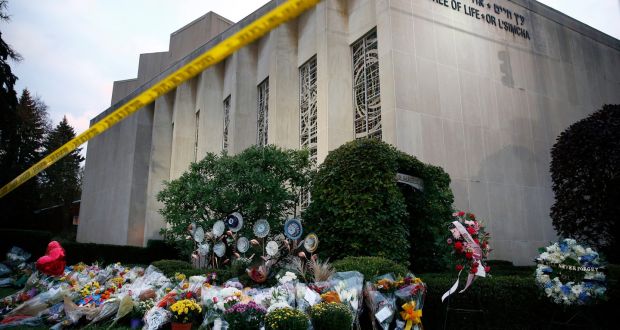
On Purim we read about threatened violence against Jews propelled by one man’s political ambition. There are many examples in history of antisemitism in the guise of politics. Institutionalized objectification sets the stage for violence. The question for Jews in the modern world is whether or not we can come together to forestall the violence that takes root through the abuse of political processes.

A most potent antisemitic canard used for political gain has been the blood libel. Most effectively employed in Europe, the accusation that Jews used Christian blood for ritual purposes gave support to political power plays resulting in Jewish displacement, deprivation, persecution and even murder. As we know from the Torah reading for this week, we do not consume blood. See Leviticus 7:27:

כָּל־נֶ֖פֶשׁ אֲשֶׁר־תֹּאכַ֣ל כָּל־דָּ֑ם וְנִכְרְתָ֛ה הַנֶּ֥פֶשׁ הַהִ֖וא מֵֽעַמֶּֽיהָ׃ (פ)

“Anyone who eats blood shall be cut off from his kin.”

The blood libel, which is the complete opposite of our values and striving for holiness, has served the political purposes of malevolent leaders for longer than a millennium.

False accusations about Jews continue to pump through our polity, even as the United States was supposed to be a haven for Jews. Here we believe that politicians are not to have their long knives drawn. Here we ask that governments combat hatred so that no house of worship becomes a slaughterhouse.


pittsburgh.jpg

Yet, the blood has been flowing in our nation, literally and figuratively. And the daggers are again pointed toward the Jewish throat. And if pointed at the Jewish throat, others are endangered too. The same hatred that resulted in the Pittsburgh synagogue massacre was reinvigorated in Christchurch, New Zealand last week against Muslims. When visiting Charleston, South Carolina, last week I noted that Mother Emmanuel Church is a pilgrimage site to remember the victims of a murderous white supremacist.

I began to read Deborah Lipstadt’s new book, Anti-Semitism Here and Now, to gain a broader sense of our predicament. The newest iterations of anti-Semitism are neither unique to the right nor the left.

Representative Ilhan Omar’s attacks referencing Jewish wealth and “dual loyalty” put a spotlight on the issue. Omar’s anti-Israel sentiment was expressed through dangerous anti-Semitic platitudes.

Take a look across the Atlantic to see what is happening in England. The venerable left-leaning Labour party is being split over the anti-Semitic/anti-Zionist predispositions of its leader Jeremy Corbyn. Will the same happen in America as the Democratic Party struggles to address its own anti-Zionist members?

Anti-Semitic language has infused debate on the right as well, reported former Republican Max Boot this week. Support for United States intervention in foreign disagreements is deemed the work of neo-Conservatives, a code for Jewish influencers. Anti-semitism on the right is tangled up in the bourgeoning white supremacy movement. President Trump, who questioned President Obama’s citizenship, primes the pump of hatred when he stated that very fine people are on both sides of the melee instigated by angry white supremacists in Charlottesville chanting “Jews will not replace us.” And Republicans were slow to condemn their own Rep. Steve King for his outlandish statements supporting white supremacy.

Such blood sport is predictable. Hannah Arendt wrote 60 years ago in The Origins of Totalitarianism that political anti-Semitism is more than Jew-hatred; rather, it is a pseudo-scientific ideology seeking to prove that Jews are responsible for all evils of the world. The elimination of evil is fair game in political realms.

Even condemnations of anti-Semitic statements have met with resistance. There was push back when leaders decried Rep. Omar’s statements. Those condemning Omar were accused of “weaponizing” anti-Semitism; alleging that leadership was looking to score political points rather than truly caring about the protection of Jews. Her defenders tried to refocus the debate toward Jewish political influence.

The Jewish defenders of Omar offered that vociferous critiques of powerful “Jewish” institutions like the State of Israel and AIPAC are not only fair game but obligatory for those who share progressive values. They ignored Omar’s record of repeatedly using anti-Semitic tropes followed by meetings with Jewish leaders that lead to vague apologies. Slurs, rinse, repeat.


bernie-sanders-ilhan-omar-anti-semitism-legitimate-criticism-27319.jpg

I believe that we are inviting dangerous blood libel type accusations if we are divided as a community when we cannot uniformly call out anti-Semitic statements as unacceptable but rather make excuses for those leaders who offer such canards.

The new blood libel is the anti-Zionism that condemns Jewish support for Israel, intersecting oppression with Jewish political movements. The real intersectionality is at the font of anti-Semitism, where racism, fascism, and Xenophobia spew along with hatred of Jews. This new blood libel is dangerous and dehumanizing to all minority groups. As we have seen, attacks on any religious group or minority give license to hatred against all others. The blood is flowing in synagogues, mosques and churches. It is even spilling through the halls of Congress by those who will partake of the blood to gain political ground. Whether by white supremacists or novice liberal Congressional representatives, the Levitical admonition is being ignored. 

The vigilance and unity of the Jewish community is needed to shield all minority groups from the daggers of hatred. We begin by being beacons of civility and caring, exemplars of the world in which we hope to live. We must find ways of engagement and discourse that will put the daggers back into their sheaths. We can’t wait. The time to counter anti-Semitism and anti-Zionism is now, before blood flows again.  

Rabbi Evan J. Krame

Public statements are amplified as they echo through the Internet, as we tweet, post, or share. Among all such declarations, Torah gives sworn oaths special consideration and false oaths are the most heinous.  Today’s news is filled with false statements made under oath.

We complain about those who make such imprecations. But what is our obligation regarding such declarations? The culpability for vows extends not only to those who speak them but also to those who fail to testify against false oaths.

The book of Leviticus, parshat Vayikra, opens with a series of instructions about the offerings brought to the priests.  Among those listed are a variety of sin offerings.  With the range of possible sins to be atoned almost beyond numbering, Torah offers just a select few examples, highlighting the obligation to speak up against false oaths.

וְנֶ֣פֶשׁ כִּֽי־תֶחֱטָ֗א וְשָֽׁמְעָה֙ ק֣וֹל אָלָ֔ה וְה֣וּא עֵ֔ד א֥וֹ רָאָ֖ה א֣וֹ יָדָ֑ע אִם־ל֥וֹא יַגִּ֖יד וְנָשָׂ֥א עֲוֺנֽוֹ׃

“If a person incurs guilt— When he has heard a publicly stated false oath and—although able to testify as one who has either seen or learned of the matter—he does not give information, so that he is subject to punishment; . . .”

The guilt is not in hearing the malediction. The guilt is in a refusal to bear witness as one who has seen or learned of the matter.

Torah could have offered up murder, robbery, or revenge as sins requiring an offering. Instead, the example is the failure to testify as to a public imprecation.  Obviously the failure to be a witness against one who has blasphemed or cursed is of great concern.

I suspect that Torah is not demanding that we all become informers, like a cold war era communist apartment block in Eastern Europe. Rather, Torah is likely urging us to be guardians of justice and defend faithfulness to moral principles.

As I read this verse of Torah I think we are all witness to false oaths of grave consequence made before courts, Congress and the American people. We can retreat to the comfort of our homes with our iPhones and iPads, cloistered as we rail against immoral government officials.  Torah asks this.  Are we equally immoral if we fail to call out the false oaths of public officials? When do we take our disgust from the sofa to the streets, from our couches to the courts? What do you think parshat Vayikra urges you to do?

 Rabbi Evan J. Krame

“A house is just a box where you keep your stuff.” A contractor tossed this comment over his shoulder as he left my new home, clearly thinking that he was dropping a pearl of wisdom.

I looked around. He had come to hang a painting over my bed that is too heavy for me to lift. It’s by an artist who was friends with my family. I’ve long admired her work, and until just a few years ago, the painting hung in my parents’ family room. My mother gifted it to me when she sold the house, after my father’s death.

I slowly turned, looking in all directions as I considered the “stuff” in my home. Art work, furnishings, books. Nearly everything tells me a story; about myself, about people I love, about places I’ve been and years gone by.

And I thought, “He’s wrong.” My house is so much more than a box filled with stuff. It was indeed simply an empty shell when the construction crew left, but now it is a home that is filled with meaning, not only because of the things in it, but because of my relationship with those things, because of the memories and happiness they ignite within me.

So too our houses of prayer. They are more than simply buildings. They are not important because they exist, but because of how they are used. They are places of worship, places that ignite memories, that link us to our tradition and our ancestors, that provide us with a communal space in which we can be in relationship, with each other and with the Divine.

And so too the mishkan, the tabernacle that the Children of Israel built in the desert, following God’s detailed instructions. It provided a sacred space where the people could reach out to their God.

In this week’s Torah portion, the last in the book of Exodus, the people complete the task of building and outfitting the mishkan. The passage in Exodus 39:42-43 echoes the passage in Genesis 2:1-3 when God finished creating the heavens and earth; both use the same verbs, both end with a blessing. God blessed the Sabbath, Moses blessed the people.

What I find most fascinating about both creation stories is that neither ends with the basic construction project. God doesn’t stop after creating the world; God “furnishes” the world with plants, animals, and finally humans. Moses and the people furnish the mishkan with the altar and everything the priests need to perform their sacred duties.

No building is complete when the construction crew leaves. An empty synagogue is no different than an empty office building or an empty store. The task is not done until the requisite materials are brought in – desks for the offices, cash registers for the stores, ritual items for the synagogues.

And still, the buildings are incomplete. Fully outfitted with every “thing” necessary, they are nothing without us. No work is accomplished in an empty office, no goods sold in an empty store, no spiritual connections made in an empty prayer space.

But it’s not hard to turn an every-day room into a sacred space. Bring out chairs and place them in a welcoming semi-circle. Set up the portable ark, take the Torah out of its protective case, take out the candle sticks and Shabbat candles, place the challah on its tray under the embroidered cover, and put out the prayer books.

Then open the doors and welcome in the people who have come to pray in community. And in that moment, an everyday room is transformed into a sacred space, a meaningful spiritual home that is no different from any other synagogue, anywhere in the world. Because an impermanent spiritual home can become a holy space by virtue of the memories, intentions, and actions of the people who inhabit it, even if only for a few hours.

Like the things in my home, the ritual items in our synagogue have deeper meanings beyond their mere functions. The pointer we use when reading from the Torah scroll, called a yad, was donated by a long-time member who died last year just before his 100th birthday. Every time I take it in my hands, I think of him. The scroll itself was donated by a Pittsburgh synagogue that was closing its doors and seeking new homes for its ritual items. The stand on which the Torah rests inside the ark was handcrafted by one of our founding members.

A building is just a box until it becomes something else. The transformation from structure to sacred space takes a two-step process – furnishing it with meaningful “stuff,” and populating it with people who care about each other and who seek meaningful interactions with each other, with the ritual items they use together, and with their God.

Remember the blessings that God and Moses gave after they finished their creations? The next time you walk into the sacred place where you pray, take a moment to bless the people around you. Because like God and Moses, together you have created something remarkable.

Rabbi Jennifer Singer.

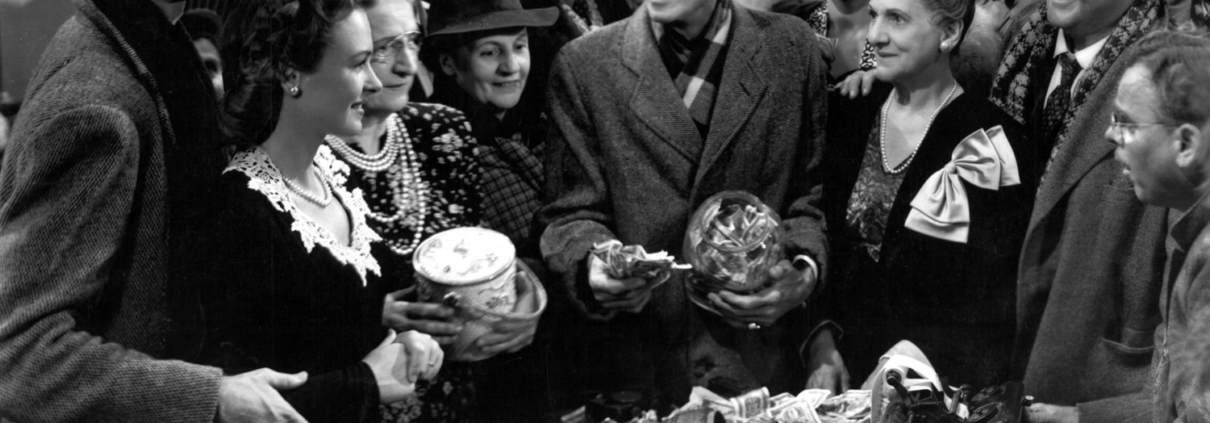
I love the scene at the end of the Christmas movie “It’s a Wonderful Life” when the community turns a plea to save George Bailey from financial ruin into a celebration. In the history of the Jewish people, we find one instance in Torah when the people were giving so gladly that they gave to excess and had to be told to stop. While these two instances may seem extraordinary, they represent an important ideal. The experience of giving should be a cause for joy and not consternation.

As the Israelites wandered through the desert, community was established in response to the trauma of servitude and the experience of fleeing Egypt. In this week’s Torah portion, parashat Vayakhel, we learn more about the construction of the mishkan (the portable sanctuary carried through the desert).

The mishkan itself and all of the elements therein were made from materials donated by the community and crafted by leading artisans of the community. It is as if I.M. Pei, Maya Lin, and Nate Berkus were all engaged in the design and furnishing of a structure for God’s presence to be manifest.

With community donations and the leadership of skilled designers, the whole community is represented in this essential communal structure. While the High Priest, alone, enters the heart of the Sanctuary to offer ritual sacrifices, he enters to perform his duties with the benefaction of an entire people. The mishkan was constructed of communally donated materials but it was sustained by the ongoing financial and spiritual investment of the people.

Today’s Jewish community structures are not so different from the mishkan. Through Jewish organizations we provide the opportunity to make God’s presence manifest. Yet, the fundraisers are troubled and many givers are reticent. What may have been forgotten is that communities bind together in delight when we honor the spiritual pact to support one another. Just as the High Priest symbolically brought the people with him into the Sanctuary, by supporting Jewish organizations in our communities we create a relationship whereby we are brought symbolically into the mishkan, to feel the presence of God.

As my colleague Rabbi David Markus writes: “What happened to a generosity culture so universal that Moses had to say, “No more!”? We must learn the mishkan’s lesson about democratizing generosity. We must reorient Jewish spiritual building to the goal of cultivating a truly universal culture of giving.”

Torah teaches that financial participation in community endeavors is an opportunity for delight rather than dismay. May we continue to grow and deepen our communal responsibility and our commitments to one another with generosity and joy.

Rabbi Evan Krame

Determining who is wealthy can sometimes be a spiritual matter.

This week in Torah reading Ki Tisa, each person over 20 is directed to pay a half shekel as “ransom.” This method of taxation serves multiple purposes: as a census, protection from plague and atonement for sin. Torah goes on to specify that “the rich shall not pay more and the poor shall not pay less than half a shekel when giving the LORD’s offering as expiation for your persons.” And to whom is the payment made? The payment is made to the Lord. (Either the Lord has a paypal account or the Priests were the holy toll collectors). When it comes to this particular “tax” payable to God, all are equal in responsibility. 


taxes+and+jews.jpg

Recall that this direction is given just months after the children of Israel have left slavery in Egypt. It is hard to imagine that any are wealthy.  This indicates that Torah is now forward thinking to what will be the economic conditions of the future. There will be both wealthy and poor within the Israelite community. But Torah doesn’t define who is wealthy.

I was reminded that our post-biblical tradition offers further exploration of what it means to be wealthy. Pirke Avot 4:1 says “Who is a rich man? One who is happy with his portion.” 

Talmud Shabbat 25b offers four more definitions of wealth:

“Who is a wealthy person?

“Anybody who has pleasure (or comfort) in his wealth,” the words of Rabbi Meir.

Rabbi Tarfon says, “Anybody who has 100 vineyards, 100 fields, and 100 servants who are working in them.”

Rabbi Akiva says, “Anybody who has a wife pleasant in actions.”

Rabbi Yose says, “Anybody who has a bathroom (or a privy) close to his [eating] table.”

Wealth may be delineated by the spiritual art of gratitude as suggested by the ethics of the fathers. The additional definitions offered by some of the greatest scholars of the Talmudic era are a little more pedestrian.

Rabbi Meir, who measured wealth as a function of comfort, was among the greatest of scholars. He was married to Beruriah, the only woman mentioned as a sage in the Talmud. Presumably, his comfort came through study and knowledge.


Rabbi Meir and Beruriah

Rabbi Meir and Beruriah

Rabbi Tarfon who measured wealth by agricultural lands, was actually a wealthy landowner. No wonder that he would judge wealth by who had vineyards, orchards, fields and servants.

Rabbi Akiva was an uneducated shepherd who married, Rachel, the daughter of a wealthy man. We do not know if Rachel was pleasant in actions but we are told Rachel’s father disowned her for marrying Akiva. Later, Akiva left her to study Torah for 24 years. Akiva was wealthy later in his life, suggesting that his fortune came by his wife’s industry, as it is unlikely he became wealthy as a teacher.

Finally there is Rabbi Yose. As there are several Rabbi Yose, this is likely Rabbi Yose ben Halafta, a student of Akiva.  Yose was also a tanner.  Work as a tanner was generally reviled as the process of tanning hides required using foul smelling substances such as urine. Interestingly, Rabbi Yose’s definition of wealth involves the proximity of his toilet to his table.

Personal experience will help us define if we believe ourselves to be wealthy. You can take your pick from among the definitions offered by the greatest Talmud scholars or add your own. Ultimately, everyone should be the same in relation to God, just as rich and poor alike must offer the same half-shekel for atonement.

Rabbi Evan Krame

Clothing does not merely make a fashion statement. Nowadays, consumers are more likely to purchase clothes that best enhance experiences, like yoga pants. Moreover, we are approaching a time when clothing is less about standards of style and more about realizing the identity of the person. The new approach to garments may challenge the clothing norms established by religious tradition.

The Torah portion for this week, Parshat Tetzaveh, lays out instructions for the garments to be worn by the priests when offering sacrifices to God. The priestly robes are adorned with bells and pomegranates, blue thread and gold trim. Worn over those garments is a breastplate to which precious stones are affixed. The Priest’s costume was reserved for special sacrificial occasions.


Kohen_Gadol.jpg

If a man were to wear such clothing today, some might question their sartorial choices. By today’s standards, the priestly garb might be perceived on the feminine end of the clothing spectrum. This calls to mind Deuteronomy 22:5, “A woman must not put on man’s apparel, nor shall a man wear woman’s clothing; for whoever does these things is abhorrent to the LORD your God.” Yet, the priestly robes were not about gender but rather about bringing about a sense of awe and wonder. 

No one expects the Rabbi or Cantor today to ascend the bimah in a decorated robe. The garb of those who fill priestly functions these days would likely be the tailored suit, whether the Kol Bo is a man or woman! 

The “rules” that govern what men and women should wear are actually fairly arbitrary. We know that because they keep changing. In her book Cut My Cote, author Dorothy Burnham reports that clothing was initially based on the shapes of the animal skins or fabrics it was fashioned from. In fact, men and women in Europe and other cultures wore more or less the same garments for centuries.

Eventually clothing became more sophisticated and gendered. Yet, the standards of gender identification through clothing were ever changing. For example, in the early 20th century, the colors that delineated gender among children were the reverse of our expectation. Society considered pink the more suitable shade for boys, and blue was better for little girls.

The differences in the way men and women dressed in the 20th Century symbolized the supposed differences in the sexes: Men, like a suit, were to be serious and practical; women, like a flouncy dress, were to be frivolous and superficial. Clothing choices today better reflect social norms and gender identity.

With the rise of feminism, gay rights and other human rights movements, a push for genderless dressing has arisen. Genderless dressing doesn’t erase gender identity from clothing. It just loosens the constraints on what people should or shouldn’t wear.   

Oft stated these days is the mantra “clothing has no gender.” NPD, a fashion industry consulting firm, reported, “Half of [millennials] believe gender exists on a spectrum and shouldn’t be limited to male and female. So retailers and manufacturers with their eyes on this most valued of consumer demographics started thinking of shoppers as more complex and varied. They’re more than just male or female.”

Change has begun. The world’s first gender free clothing store, the Phluid Project, opened in downtown Manhattan in 2018.  Department stores across Europe have gender-neutral floors or departments.

We still live in a gendered society. But in the context of the history of clothing, how can we understand a commandment for dressing according to gender? Perhaps Torah’s intention is to state that we not dress to deceive, neither the world nor ourselves, with clothing inappropriate to our identity.

The questions being asked about garments today are “does the person feel comfortable?” and “does the person feel natural in their clothing?” I’d add this question, “by selecting clothing to honor individual identity, do we also honor God?” A religion that sees each person as created in the divine image should support those whose clothing choices reflect their God-given identity.

Rabbi Evan J. Krame (for my friend and teacher Rabbi Mike Moskowitz)


The obituary of the synagogue keeps being written and rewritten.  Thousands of churches and synagogues close each year. Yet there is a different report that deserves equal attention. The repurposing of holy space.

Torah portion Trumah begins with God’s directive to build a mishkan “so that I might dwell among” the people. From the time the Jews entered the land of Canaan until now, it seemed that Jews would continue to build places for us to approach God’s presence. Today we call them synagogues. But in the 21st century the construction has seemingly ended. With demographic shifts, societal changes and disillusion with organized religion, on the whole synagogues are closing. 

Here’s an alternative. The Wilshire Boulevard Temple of Los Angeles built a magnificent structure in 1929. The synagogue is located in what is now known as Koreatown. The Jewish population has moved away.

The synagogue did not close. In 2016, under the leadership of Liz Ross, the building was repurposed as the Karsh Center. Please read this inspirational description from their website.

“The Karsh Center is designed to provide the fundamental necessities of local residents by offering an array of direct social services through a multi-organizational collaborative approach and a state-of-the-art volunteer engagement program. Our objective is to accomplish this with no restrictions, no judgments, and no barriers regarding who can receive support and care.”

“The Karsh Center is the physical expression and vision of how a faith-based institution like Wilshire Boulevard Temple (WBT) invests in the community in which it resides.”


Volunteers serving food at the WBT food pantry.

Volunteers serving food at the WBT food pantry.

While the building no longer hosts religious services, Hebrew school or life cycle events, it remains fully a place where God can dwell among us. The WBT congregants remain essential to the center’s vitality. Volunteers from WBT travel to Koreatown to cook or teach or counsel or volunteer at the dental clinic.

The Jewish Studio is built upon another model. Almost any space can be transformed into a place for God. Sometimes it on a hike by the Canal. Other times it is at a women’s club. And there are times we even rent space from synagogues!

It is inevitable that there will be synagogues that close as centers of prayer and study. Yet, there are other opportunities for us, collectively, to sustain God’s presence among us if we have the vision. It might take the hard work and dedication to redeploy synagogues from houses of worship to houses of service. Or it might require imagining existing spaces as places of worship. We just need to understand “building” in new and dynamic ways.

Rabbi Evan J. Krame

A recent exhibit at The Brooklyn Museum reminded me of the potent spiritual power in building things, and how powerful the details can be – like color.

The featured exhibit was Infinite Blue and included diverse works of art – ancient Egyptian blue pottery, a 13th century altarpiece of Madonna draped in blue, and contemporary glass sculpture.  Each work of art demonstrated how the color blue can evoke a spiritual and powerful response.

Perhaps this is why blue is significant in Jewish tradition.  Blue was Creation’s first color: Creation’s first day was just light, but Creation’s second day brought sky and sea, both shining blue.  Blue was God’s first building block.

Blue treads through Jewish spiritual life.  Blue is the color of the thread (t’chelet tzitzit) in the prayer shawl (tallit).  Gazing on the blue thread reminds us to connect with Creation and Creator: the blue dye is an aide-mémoire of the bond between the Jewish people and the Holy One.

Blue’s most beguiling reference comes in Parshat Mishpatim, just after the Ten Commandments of Sinai.  Moses, Aaron, Aaron’s sons and 70 elders ascend the holy mountain. There “they saw the God of Israel: under [God’s] feet there was the likeness of a sapphire brickwork (livnat ha-sapir), like the essence of sky in purity” (Exodus 24:10).

The “brickwork” links back to the Exodus story, with Hebrew slaves stooped in mud pits making bricks to build storehouses for Pharaoh.  Mystics tell us that their muddy bondage was the 49th level of descent, just one level up from being forever lost.  From this low place, their cries drew God’s attention and ultimate liberation.

Ten plagues, three months and twenty-four chapters later, Israel’s leaders now stand in God’s presence.  Beneath God’s “feet” is blue sapphire brickwork.  Pharaoh’s bricks became God’s bricks: mud became light.  All at once, the image reminds them of the depths from which they came and the spiritual heights to which they have risen.

The sapphire brickwork is rigid and fixed in place.  It serves as a liminal boundary, a separation. Yet the sapphire brickwork (livnat ha-sapir) also is translucent, letting in divine light filtered through to us as if through a prism.  In Hebrew, we can readlivnat ha-sapir as l’vanat ha-sapir – the whiteness of the sapphire.  The blue of spiritual building transmits the white light of holiness.

Every activity in this physical universe potentially refracts this divine light.  When living our lives in divine service, we can achieve a satisfaction and pleasure we cannot achieve by our own self-serving efforts.

It was on Sinai that Moses and his cohort gazed on God’s likeness, reminding us also that many find spiritual connection in nature, whether viewing the sky from a mountaintop or watching waves reach the seashore. The challenge is to find spiritual connection in the works of our hands beyond the vistas of mountains, sea and sky.  Torah’s vision of sapphire brickwork urges us to find connection beyond God’s original creations.  Livnat HaSapir reminds us to discover our own transcendent connections in how we fashion Creation’s elements.

Whether our spiritual structures are sapphire stone, wood, metal or brick, every structure can serve – must serve – to remind us of the Source of All, the First Builder, and ancient bricks of mud transformed into bricks of light.

Rabbi Evan Krame

The most frequent question people ask me is: “how do you do all that you are doing?”  I suspect that there is a measure of concern behind the question.  My friends and colleagues don’t want me to burn out.  In fact, burn out is as ancient as Torah and sometimes just as baffling. Yet, we might find in our texts ways to overcome such fatigue.

Just as the year 2019 was ushered in, there was a Buzzfeed article about burnout that went viral. “How Millennials Became the Burnout Generation” won a lot of admirers for its deep analysis of the internal processes that keep Millennials from performing tasks promptly or efficiently. Of course, there was also much criticism.  In the New Republic, author Jonathan Malesic responded that burnout “isn’t a generational epidemic; it’s a societal one.” 


Burnout2.jpg

Actually, burnout is a historically recognized problem.

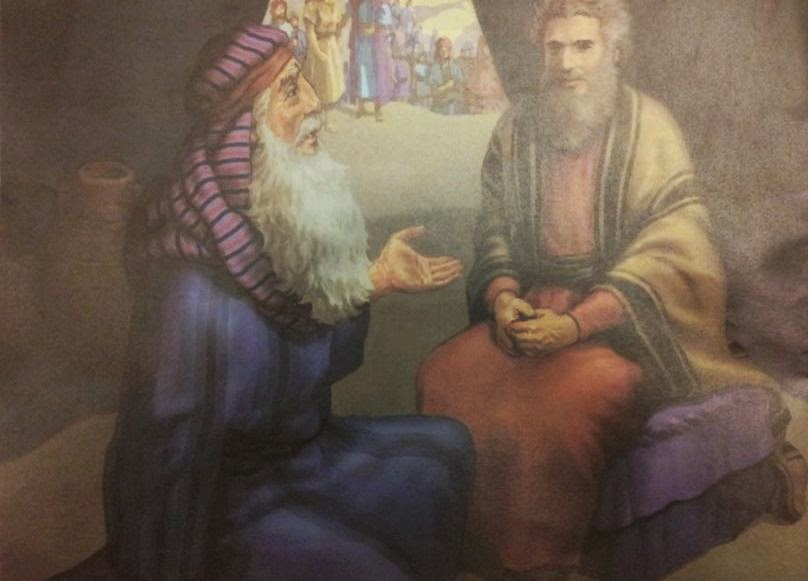
After crossing the Red Sea, Moses is reunited with his wife, children, and father in law, Yitro. Moses is busy day and night adjudicating disputes among the people.  In Exodus 18:17 – 18, Yitro offers Moses the following advice: “The thing you are doing is not right; you will surely wear yourself out, and these people as well. For the task is too heavy for you; you cannot do it alone.”


Burnout3-Moses and Yitro.jpg

The solution Yitro proposed was to delegate certain tasks (such as hearing disputes) to other wise people. If a dispute became increasingly complex and required an appeal, then Moses would rule on the case.

Even as burnout is applied to describe the millennial generation, those born after 1982 lead the way in the delegation of tasks. Using the internet millennials are likely to outsource a project or burden. Uber drives, Amazon delivers, Venmo pays, TaskRabbit employs, and the list goes on. 

And yet, the millennial generation that has mastered the iPad and the Smartphone feels burned out. I suspect that the ability to delegate is not sufficient in relieving that sense of burnout. Other factors must be at play.

Perhaps the corrective for burnout is a different sort of connectivity, one that is not dependent on wifi. What would Moses do beyond delegating judicial roles, as recommended by Yitro? In addition to depending on other wise leaders amongst the people, Moses had much support from his family members, including his brother Aaron, his sister Miriam, and his nephews. Moses also drew strength from God, the ultimate source of support.

Millennials are often described as lacking social skills and avoid participating in faith-based activities. Perhaps personal connection and spiritual community are the most important factors in alleviating burnout for anyone.

Back to concern for the pace of my life and the responsibilities I undertake: I don’t delegate very well. I am learning how to delegate, bringing on an assistant to help administer the Jewish Studio. Perhaps more importantly, I have an amazing supportive community and spiritual practices that sustain faith. I may be tired and sometimes discouraged but I am not burned out. To sustain myself, I’ll just keep asking WWMD – What Would Moses Do?

Rabbi Evan J. Krame