
The comedian George Carlin once did a routine about what people consider to be “essential stuff.”  When you go on a trip, you select from among your possessions only what you need for the trip.  If during that trip you decide to take a short overnight excursion, you might pack a day bag with only the items that are truly essential.  Carlin’s humor points us to an important question: what “stuff” is essential in your life?

Luggage.png

Oddly, I thought of Carlin’s comedy when reading the parsha this week.  In Parshat Beshalach, we are given a few hints as to what the Israelites carried as they escaped from Egypt.  Keep in mind that they did not travel lightly and they had no SUVs to load for the drive across the dessert.
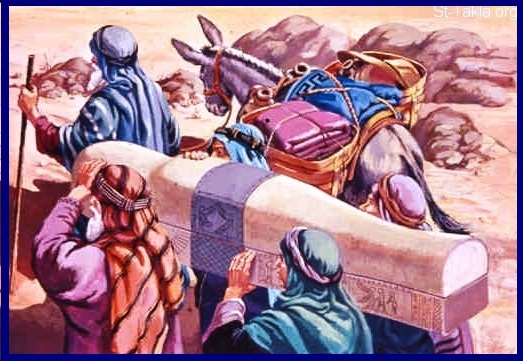

So what did they carry on their journey? They took livestock with them. They carried materials to make booths or tents. They had “borrowed” jewelry from the Egyptians. Certainly, other things had to be left behind.

Carlin’s comedy foreshadowed the current rage: decluttering. Marie Kondo is the queen of love it or toss it, with a book and now television show on the topic. The Hebrew slaves may have had to declutter to begin their journey. Did they lift up that extra pair of sandals and ask themselves: “love it or leave it?”

While Carlin’s humor and Kondo’s guidance focus on individual needs, they haven’t addressed the spiritual component to de-cluttering. That’s why we need Torah, where we learn Moses’ choices on what to carry. Moses took with him the bones of Joseph. Joseph exacted a promise centuries earlier to be buried in Canaan. Moses was not even alive to have made that promise but he honors it nonetheless.

I wonder what choices Moses had to make in order to make room for a reliquary of bones, instead of essentials like food, building materials, or clothing for the long trip? From his choices, what do we learn about how to value the physical items in our domain to be preserved.

Torah is teaching us we need to honor promises, even if made centuries earlier to a deceased ancestor.  A people that would honor an ancient pledge demonstrate particular characteristics of duty and loyalty that uplift their lives and refine their souls.

Moses knew that carrying forward the past was an important lesson for the future. Moses not only upheld a promise, but also demonstrated the importance of foundational Jewish principles: preserving memory and sustaining a legacy.


Life Choices.jpg

As you travel through life, what items are essential for you to bring forward on your journey into the future? The selection of important tangible items can demonstrate a measure of value beyond a price tag. What we find essential to carry forward speaks to the values we choose to espouse in our lives. When it comes to tangible items, the relics of the past we carry with us can be reminders to stay true to important principles.  

Imagine you are about to embark on a journey and you might not ever return: what must you carry with you to protect a promise, preserve memory and sustain a legacy?  Notice that in making those selections, you can be affirming or declaiming important Jewish values. 

Rabbi Evan J. Krame

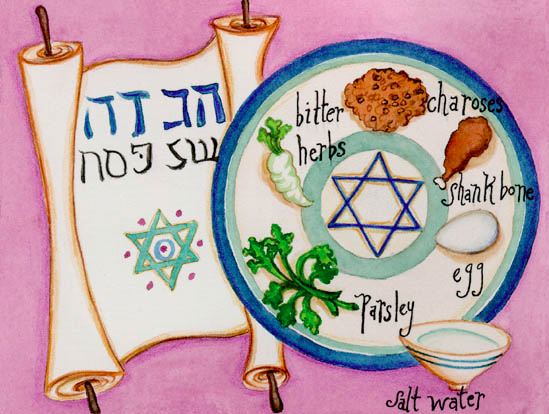
The secular New Year signals a significant Jewish calendar moment for me. January is the time to start reminding the children to make travel plans to come home for Passover seder. The seders are on weekend nights this April, so there should be no excuses about missing work or school. Once the anxiety about travel plans is addressed, the more demanding questions children pose about Passover and Judaism will soon arise.

This week we read in Parshat Bo about the obligation of the Passover offering.  The festive meal is a ritual to mark how the angel of death passed over the homes of the Israelites.  After the people enter the Promised Land, they will observe a seven day Passover holiday. 


Passover Holiday.png

With great insight, the Torah then predicts the way the children will approach this ritual.  In Exodus 12:26, we read: “It will be that your children will ask of you what do you mean by this service?” 

The Torah already predicts the tension to come.  The children may be skeptical and many parents will be anxious about passing along our traditions to the dubious members of the next generation.

If we expand upon the rituals, we can better connect with the greater meaning of the holiday and better engage the next generation. An ever evolving passover seder is proof of attempts to innovate and those innovations may be part of the reason that the seder is the most widely observed of Jewish rituals.

Today it seems like every seder has to have a requisite amount of creativity to be engaging – from parodying the musical show Hamilton to Jeopardy-style quiz shows. The underlying goal remains to help all of us appreciate the essential themes of Passover using whatever methods will resonate best.  

The seder format has also been refashioned to address political themes. For example, this year marks the fiftieth anniversary of the first Freedom Seder. Originally held on the one-year anniversary of the death of Martin Luther King, Jr., hundreds of Jews and Christians gathered together at a Washington, D.C. church to send a message of cooperation and liberation. Later groups created women’s seders, labor seders and social justice seders. The over arching message of these alternative seders is that freedom is not merely for one group and it cannot be assumed to be permanent for any group. And once one group of people have their freedom they have the obligation to liberate others.


FourGlasses.jpg

The next generation is perhaps a bit savvier than its elders. Younger people today are asking questions about more than the purpose of a seder.  They want to know the effective meaning of Judaism as expressed through it’s rituals and prayers. Without meaning rituals and prayers are mere activities and words. But their impact upon each of us should be to serve as reminders to advocate freedom, spread kindness, and pursue peace. It is incumbent upon us to recast Jewish traditional practices to highlight the ways in which our religion can improve the world – bringing hope to all.

Marking calendars and booking tickets are only a start on the Jewish journey. Every generation can adapt Jewish traditions to connect with the interests and sensibilities of future generations. Torah predicted that our children would be asking as much of us. Now is the time for those of us with the interest, the resources and the skills to figure out the ways to make relevant the Judaism of the future. The Passover seder is just one place to start.

Rabbi Evan J. Krame

I don’t think I make it through any given day without some kind of support from others. From reaching out to tech help lines with computer problems to calling a Butterball Hotline to learn how to cook a turkey, much of our support today comes from anonymous persons in short order. 


Support_System2.png

But what about when we need support to sustain spiritual life? All too often, we wait for a crisis to suddenly look for meaning or spiritual support. But in this case, the call to a spiritual “tech” help line is not likely to yield particularly satisfying results. 

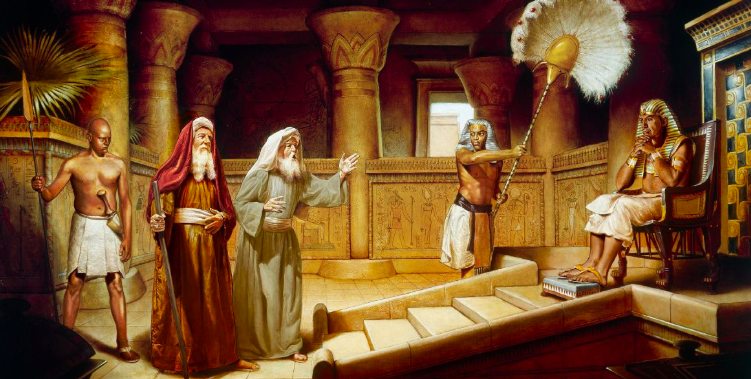
As I read through Parshat Va’eira this week, I’ve been thinking about the nature of supportive relationships. Moses is instructed by God to address Pharaoh in order to demand the release of the oppressed Israelites. Moses responds to God that he is concerned that his speech impediment will get in the way of being an effective advocate for the people.

God advises that Moses’s older brother Aaron can stand by his side and convey his messages, assuring him that “Aaron, your brother shall be your spokesman” (Shemot 7: 1). As the action unfolds in Egypt, Aaron’s ongoing supportive presence makes it possible for Moses to be an effective leader.


Moses_Aaron_Pharoah.png

Later on, Aaron will take on the role of priest. Aaron, as a spiritual leader, is very warm and attentive to the people. Even though at times he makes flawed choices, the Israelites still love Aaron and seek his guidance. 

When we are unsure of our ability to download an app or cook a turkey we can contact a support line and get quick advice. But what about when we are unsure of how to address our spiritual needs? How can we “download” the transcendent or access what is soulful? What kind of support system do we have in place to make sense of challenges or to move deftly through the arcs of life? 

For many centuries in Jewish history, rabbis traditionally served as the spiritual help line for a community, assisting individuals in navigating their life’s journey. But as the role of religion and its leaders has devolved rapidly in past decades, many Jews have found themselves disconnected from a meaningful spiritual support system.

A new rabbinate is emerging to meet the on-demand needs of a greatly curtailed modern spiritual life. For the majority of Jews who are unaffiliated, their spiritual connection has been reduced to hiring a rabbi to officiate a life cycle event or provide quick emotional support in times of crisis. 


Support_System3.png

I believe that such limited contact with spiritual leadership is neither fully satisfying nor effective.  Individuals need ongoing meaningful conversation, sustained learning, and regular rituals to help address life’s ups and downs.

Just as Aaron stood by Moses’s side, empowering him with both his availability and his assurance, so too do each of us need an ongoing relationship that provides genuine support. When it comes to spiritual guidance, an ongoing relationship with a fully present, compassionate and empowering religious leader can have more of a positive impact than a brief meeting.

I chose the role of rabbi so that I could support my community, providing guidance to individuals as they navigate the intricacies of their life journey. My invitation is for you to call on me not merely as a “help desk,” but to create a relationship that provides ongoing spiritual growth.


Rabbi Evan J. Krame


Social connections are important to the quality of one’s life.  As the saying goes, it’s not about what you know but who you know. This adage has been proven true in many settings. When personal connections are absent, life is more precarious.


Alone.jpg

In Parshat Shemot, the first parsha of the Torah’s second book, we are told that “a new king arose over Egypt who did not know Joseph” (Shemot 1:8). Without a personal connection, the new Pharaoh has no appreciation for the person who saved Egypt from starvation. In a similar vein, this new Pharaoh has no regard for the foreigners who live among the Egyptian people. Joseph and his descendants were not merely strangers but “other.”

Interestingly, the name “Joseph” is formed from the same Hebrew root letters as the verb to gather or to take in. The verse seems to tell us that not only did Pharaoh not know Joseph, but also that Pharaoh did not know how to take in the “other.” This new Pharaoh neither wanted to be inclusive of or even know the others in his land.

I was reminded of another story of a powerful leader in Egypt. In 1219, toward the end of the Crusades, there was a meeting between St. Francis of Assisi and Malek al-Kamil, the sultan of Egypt. The monk and the ruler had a conversation under the tent of the sultan that left both men completely transformed. 


Source: “Saint Francis and the Sultan” by Giotto di Bondone

Source: “Saint Francis and the Sultan” by Giotto di Bondone

Impressed by the friar’s message of peace, the sultan sought an end to the fighting with the Crusaders.  Inspired by the regular prayer of the Muslims, including their meditation on the 99 names of God, St. Francis returned home to urge reform of Christian religious practices modeled after his encounter with Muslim customs. Each man took the initiative to know the other and take in their truths and their rectitude.

Personal relationships, both casual and consequential, have the potential for positive impact. Social interactions approached with an open mindset expands our ability to see a different perspective and gain a new understanding.

When we view the stranger as “the other,” we may be hostile, acting out of ignorance and fear. When we take time to know the stranger, we enrich our world with kindness and shared wisdom. 

Rabbi Evan J. Krame


You are likely angry with someone right now. How long have you been harboring that anger? Anger often persists long after the offense that caused the discord.

Even more damage is caused when we fail to acknowledge, examine, express and resolve our displeasure. Both Torah scholars and medical professionals offer some insights into releasing the toxicity of anger.

Anger can be a positive force if expressed in the context of trying to affect positive change.  When used appropriately we can express anger in a way that calls attention to a problem and points to a solution. Unaddressed, anger becomes more harmful because containment of strong emotions festers and can lead to untimely expressions of ire or even rage. 

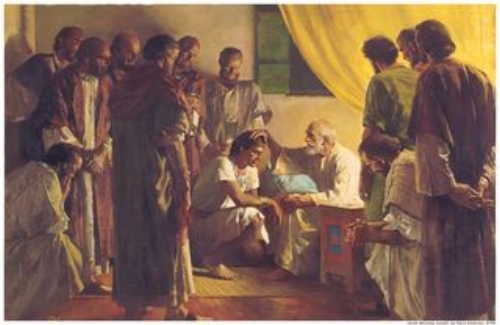
In Parshat Vayechi, at the end of the book of Genesis, on his deathbed Jacob calls his sons to task for their past offenses. Many of these events occurred decades earlier: Reuven slept with Bilhah, his father’s concubine. Shimon and Levi massacred the men of Shechem.  Nine brothers conspired to sell Joseph into slavery. They are an undignified lot.


“Jacob Blessing His 12 Sons” by Harry Anderson

“Jacob Blessing His 12 Sons” by Harry Anderson

At the end of his life Jacob gives expression to this pent-up anger. Often Jacob’s end of life soliloquy is described as blessing his sons. In fact, Jacob is admonishing his sons. At a time when one might expect reconciliation, the acrimony within Jacob is given full expression. I wonder about the efficacy of the late-in-life rebuke, given the decades since the offenses and the fact that his sons are now mature men. Yet, in this instance, these rebukes serve as admonitions. They portend the tainted legacies these sons will leave but offer a tinge of hope that succeeding generations will learn lessons of civility and responsibility.

For Jacob and for us, the healthier alternative is a calm yet pointed expression of disappointment almost immediately following the offending conduct. Along with expressions of concern should be a discussion of how to repair relationships, restore trust, and build confidence.

There is a concept in transpersonal psychology called “compassionate wrath.”  Compassionate wrath guides the transformation of anger into creative energy. Compassionate wrath is exhibited by leaders like Emma Gonzales survivor of the massacre at her Parkland Florida High School who helped organize the #saveourlives movement to end gun violence. With timely self awareness and focus, we can turn anger into a useful tool for change.


Reconciliation.png

Unlike Jacob, we shouldn’t wait too long to address what angers us. Furthermore, we should seek to release our anger constructively and with compassion.

Both individually and as a nation, we must strive to engage each other on the issues that challenge us, before we erupt in ill timed and unhealthy anger. Both our individual health and perhaps the future of our nation are dependent upon prompt engagement on the conflicts that trouble us most.

Rabbi Evan J. Krame


I embraced turning 60 years old by celebrating with friends and community. In doing so, I confirmed that the enduring relationships of family and friends would continue to enhance the quality of my life. I unwittingly had identified a better way to approach aging.

This week’s Torah portion, Parshat Vayigash, reminded me of the challenge of maintaining a positive attitude as we age. Jacob arrived with his sons and their families in Egypt, where God has promised him, “I will go down with you into Egypt, and I will also surely bring you up again.” (Genesis 46: 4)

This relocation to a foreign land was certainly a challenge for any older person, and God had assured Jacob accordingly that he would surely be brought “up” again.

Pharaoh comes to meet Jacob and asks Jacob his age. Rather than offering just a number (he was 130 years old at the time), Jacob completes the thought with the following commentary:

Few and bad have been the days of the years of my life, and they have not reached the life spans of my forefathers in the days of their sojourns. (Genesis 47: 9)

The quality of Jacob’s life is subject to some debate beginning with Jacob’s highly negative self-assessment. Taken in context, Jacob’s gloominess is understandable. After a life marked by getaways and deceptions, violence and mourning, he has left his homeland and came to Egypt to see the favorite son he thought dead for many painful years.

Jacob was emotionally traumatized when asked about his age. In response, he offered commentary suggesting resentment and contrition. 

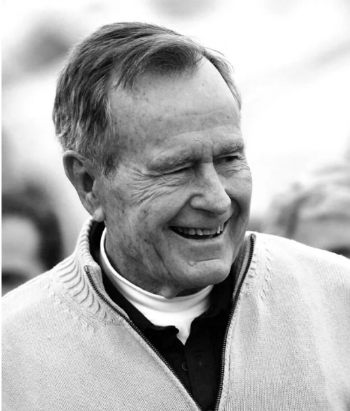
I’ve been thinking about Jacob’s assessment of his life in contrast to the attitude of former President George H.W. Bush, who passed away last week. Pundits delivered expositions on Bush’s character and achievements. As opposed to bitterness, much of the reporting focused on the graciousness with which Bush aged.

Image Source: Texas Daily

We saw Bush skydiving at age 90 and photos of him holding grandchildren. I was personally most impressed by his deep and long-lasting connections with numerous friends until the very end.

Bush was also a diarist and frequent letter writer. He wrote to his family in 1998 about getting older:

I don’t expect to be on the A team any more, but I want to play golf with you. And I want to fish or throw shoes. And I want to rejoice in your victories be they political, or business, or family happiness.

He adapted to aging by connecting through activities. Moreover, he shared his thoughts with the people he loved. His strong sense of connectedness was sustained by frequent and heartfelt communication.


Old friends.png

In this case, it seems we can learn the “Torah” of George Bush. Bush demonstrated that an outward positive focus is critical to satisfaction in later years of life. Rather than focus on what is lacking when thinking about age, we can aspire to building meaningful connections through activities and communication that add quality time to our lives.

Rabbi Evan J. Krame

The Torah is full of stories of conflict that echo many of the political issues that we are grappling with today. The more parallels I see while reading through the parsha, the more I realize that every political choice we make is also a moral and ethical choice.

If we read this week’s Torah portion carefully, we can see the applications for our modern national landscape. The Torah presents the following political dilemma in Parshat Miketz, in a meeting between Pharaoh and Joseph:

Joseph is called from prison to interpret a dream for the ruler of Egypt. (Until now, no one else has been able to provide a satisfactory interpretation.) Pharaoh has dreamed of seven fat cows and seven sickly cows that devoured the healthy cows. Then he dreamed of seven healthy ears of corn followed by seven gaunt ears of corn, which in turn devoured the healthy corn.  


wheat-crop-uk.jpg

Joseph’s interpretation of the dream was that seven years of bountiful harvests would be followed by seven years of famine. He suggests to Pharaoh the following solution:

Now let Pharaoh look for a discerning and wise man and put him in charge of the land of Egypt. Let Pharaoh appoint commissioners over the land to take a fifth of the harvest of Egypt during the seven years of abundance . . . This food should be held in reserve for the country, to be used during the seven years of famine that will come upon Egypt, so that the country may not be ruined by the famine. (Genesis 41:33-36)

Pharaoh understands the implications of Joseph’s dream: without a plan and without a “wise” leader to execute this plan, Pharaoh risks his country falling to ruin. With this in mind, he appoints Joseph himself to put a plan into action that will save Egypt from an environmental disaster. 


Famine.jpg

Where do we see this very dilemma unfolding today? Recent climate change reports predict the disruption of food production. To me, this doesn’t seem very different from Pharaoh’s foreboding dream, except that here we have more of a scientific foundation to stand on.  

From devastating fires to mass flooding, from rising sea levels to lethal hurricanes, it doesn’t take an expert to see that without a plan to address our environmental issues we are at risk to falling into ruin, just like ancient Egypt.

We can’t ignore the signs. To pretend that God’s creation is not at risk, that human lives are not imperiled, is a passivity that should be viewed with moral outrage. We must take responsibility for our environment, with proper planning and wise leadership.

Judaism is not a religion of passivity. When we see something that is not right, we should seek ways to take responsibility and enact a practical plan for success. Pharaoh made the right decision in recognizing the signs and appointing Joseph as a capable leader to save the land before it was too late.

Rabbi Evan J. Krame

Can brothers who have been in conflict bridge the divide between them? Torah offers a lesson on how to quell rivalries and disguise plans to achieve a separate peace. What the story doesn’t include is how to evaluate the real opportunities for reconciliation.

Brothers Jacob and Esau are reunited in Parshat Vayishlach וישלח more than two decades after Jacob wrangled for the family birthright and then fled from Esau’s wrath. Jacob returned to Canaan with his wives and children. Yet, Jacob feared a reunion with Esau, a man inclined toward violence now surrounded by a powerful coterie.

On the way, Jacob encountered an angel with whom he struggled all night long. In so doing, Jacob acquired a new name, Israel, meaning one who struggles with God. Angel wrestling posited as a tangible struggle might be the spiritual climax of the story.  But a fateful and poignant internal struggle within Jacob was yet to be resolved.

The story sets out a schematic of how to act when confronted with someone we distrust. Jacob engaged Esau through bribery, flattery and excuses. As Jacob approached Esau’s camp, he sent gifts ahead to appease his brother. Upon reuniting, Jacob flattered his brother saying that seeing Esau is like seeing the face of God!

If Esau was still hostile to Jacob, that negative emotion was sheathed. Esau greeted Jacob tearfully, hugging and kissing Jacob and welcoming him back. Esau even offered to share his land with Jacob. In reply, Jacob remained diffident and offered excuses to avoid accompanying Esau, careful not to be offensive.

Jacob must have been confused by Esau’s effusively warm greeting. Earlier threats to Jacob’s life were not addressed and have not been forgotten. And there was no apparent recourse for resolving their prior conflict.

After this reunion, Jacob enters an internal struggle on how best to reboot a relationship with a brother he still does not trust. Jacob’s resolve is to keep the peace first by appeasement followed by separation. Neither Jacob nor Esau pursues teshuvah, a turning of their hearts with regret, recompense and resolve to self-improvement.  Perhaps neither man was capable of atonement.

The tradition has been to demonize Esau not allowing for the possibility that he has changed. Perhaps Jacob is also flawed. Jacob wasn’t an angel – he just wrestled them. Jacob might not have had the capacity to be transparent and to be accountable for his own misdeeds. By failing to engage in a process of teshuvah both brothers demonstrate that neither is prepared for a real reconciliation.

There are two reasons I can offer as to why there was no true reconciliation between these brothers.  First, as flawed humans, some adversaries are ill-equipped to be decent or well-mannered such that the better resolution is appeasement and separation.  Taken a step further, Teshuvah is not always a viable option for every person – there are psychological impediments we must acknowledge.

The second reason why reconciliation may not have happened is our inclination toward reactivity to past events. In this case, it may have been that reconciliation was not possible because of lingering doubts and persistent mistrust. In the long shadow of Esau’s bellicosity, Jacob chose protection as a first course of action. Restraint engendered by fear is a legitimate choice even as we might desire reunion.

There are times when caution may be preferred to collaboration and even guile is acceptable in pursuit of peace. The trick is figuring out when reconciliation is not possible, and the need for separation outweighs the possible benefits of cooperative coexistence. By merely posing this scenario, Torah offers that not every dispute will be resolved but, at a minimum, steps to avoid violence are always obligatory.

In life we sometimes must struggle with opponents who have competing values and aggressive natures. The best we can do is to integrate Godly values into our thinking, like preventing violence, pursuing justice, and practicing teshuvah. The search for the right path might be to require us to balance laudable goals of protection and tranquility with difficult processes of engagement and reconciliation.

I wish I had more guidance to offer and that this Torah portion posed definitive ways to resolve conflicts. For myself, the dissonance between protection and longing for reconnection is a painful place to remain. Ultimately, we are each left to choose how to navigate contentious relationships from among psycho-spiritual maps of emotional struggles and competing values.  But there seems no chance for actual reconciliation without a process that begins with our own willingness to be transparent and account for our own mistakes.

Rabbi Evan J. Krame

Women in the Torah often got a raw deal.  The Torah reading for this week includes stories of sexual discrimination, oppression and victimization.  Rather than scroll past, we can use a challenging text as an inspiration to promote liberation, self-determination and individual security.

Torah portion Vayetze tells the story of how Jacob fled his home, dreamed that he met angels along the way, and then “acquired” his wives. Sisters Leah and Rachel were given to Jacob. Handmaids Zilpah and Bilhah were given to each of Leah and Rachel, and they in turn were given to Jacob as sexual surrogates without any indication of their consent.  Women treated as chattel may have been the norm 3,500 years ago and it remains a disturbing story to read in 2018, as it should.  Especially after I met Reverend Dr. Que English this past week.

Reverend English’s work is inspirational. Her passion is to empower, train and educate houses of worship to establish much needed strategic partnerships in their neighborhoods and cities. Reverend English chairs the New York City Faith-based Coalition Against Human Trafficking and Domestic Violence and is the co-founder of the New York City Clergy Roundtable.

Her current project is to open a facility to shelter and support victims of sex trafficking. Reverend English estimates that trafficking enslaves tens of thousands of women, just in New York City. The residence Reverend English dreams of will be unique because it will provide on site services such as job training, family education, and mental health counseling.

With the sky high cost of real estate in New York City, who could imagine finding and acquiring a building to serve indigent, abused women? Reverend English did. While speaking at a conference about her work, she met the owner of a hotel in lower Manhattan. The hotel owner offered to donate use of his building for Reverend English’s project. And I took tribal pride in her mentioning that the donor was Jewish.

I believe that the broad lessons of Torah inspire Jews to be charitable and pursue justice. Even as Torah discomforts us with its stories, Torah inspires us to both care for those abused and work for justice. As Rabbi Harold Schulweis explained, “morality comes from reading the tradition in its entirety” and not from a heightened negative focus on a particular verse.

Here’s the rest of the story. Torah mentions three dozen times that we must care for the widow and the orphan. As Genesis 1:27 teaches we are all made in the image of God, then we must also heed Torah’s imperative that “you shall have one law for the stranger and the citizen alike: for I Adonai am your God” (Leviticus 24:22). Laws are insufficient without advocacy and so we are instructed “justice, justice shall you pursue” (Deuteronomy 16:20). The admonitions continue on.

The difficult stories of Torah, like those of Rachel, Leah, Zilpah and Bilhah, should be reminders that there are injustices we still need to correct. Jewish values repeated throughout Torah compel us to right these wrongs. In this way, the angels of our time will be advocates like Reverend English or her supporters like the donor of a Manhattan hotel.

Rabbi Evan J. Krame

Persistence is an essential ingredient for success. There will always be challenges and we will make lots of mistakes in our lives. Persistent people are able to regroup and refocus. They have the creativity and the energy to try, try again. Persistent people have a better chance at success, but their persistence is not in isolation.

Take the story of Isaac when he was challenged to maintain a water supply for his family’s survival. During the first such challenge, a drought, he moved his family. When Isaac returned to his land, he searched for water. Isaac’s men opened new wells and dug again the wells previously opened by his father, Abraham. Yet, Isaac’s control of these many wells was challenged by neighboring tribesmen. So, Isaac moved yet again. Finally, the persistent Isaac dug a new well in Rehovoth that remained uncontested and a constant source of water.

Eventually, Isaac brings his family to Beersheva. The name Beersheva literally means seven wells. That name connotes that Isaac was willing to try seven times until he found a safe haven with a protected water source. And after Isaac settled in Beersheva, God appeared to him and blessed him.

In our lives, just as in Isaac’s life, we face challenges after triumph, there are stumbles after leaps, and we suffer losses after gains. After each trial, we may be blessed with the opportunity to acquire wisdom and restore strength. In this way, I see persistence as a holy endeavor. Staying engaged in this world, even when challenged, coopted or defeated, is an affirmation of faith.

As we learn from Isaac’s example, it may require digging again and again until we reach our goals. Persistence is also a demonstration of our faith in the potentiality of our efforts. Dig deeper and you may find something new.

Persistence requires more than patience and more than physical energy. In Isaac’s case, it meant conflict avoidance and humility. Isaac represents the faith of persistence. We can best acquire that faith when we see ourselves as God’s partners in this world.

Persistence does not exist in a vacuum. God commands us to care for our families and be responsible members of our communities, to be engaged in the world. True success requires that we need to unearth more than a source of sustenance. To settle into our success we must prime the pump of compassion, humility, justice, peace and, ultimately, Godliness.

Isaac’s lesson for us is that we can accomplish much with persistence. Even when the challenges keep coming, we can keep on digging, follow our passions, and remain caring of those around us. Like Isaac, we too may eventually find peace, comfort and blessings.

Rabbi Evan J. Krame