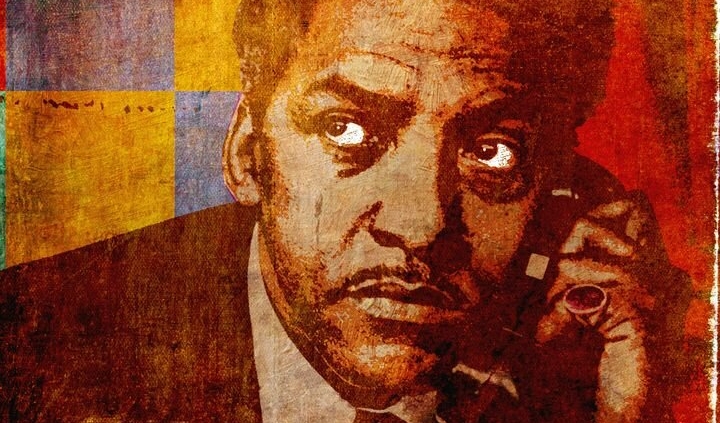
Bayard Rustin was one of Dr. Martin Luther King’s early advisers. He organized the freedom riders of the 1940s and 50s and the historic 1963 “March on Washington.” In the late 1960s, however, he came under savage attack from a new generation of young black leaders who felt that he was a “sell-out” because he urged blacks to support the labor movement and the Democratic Party. I was reminded of Bayard Rustin by this week’s Torah reading, Korach.

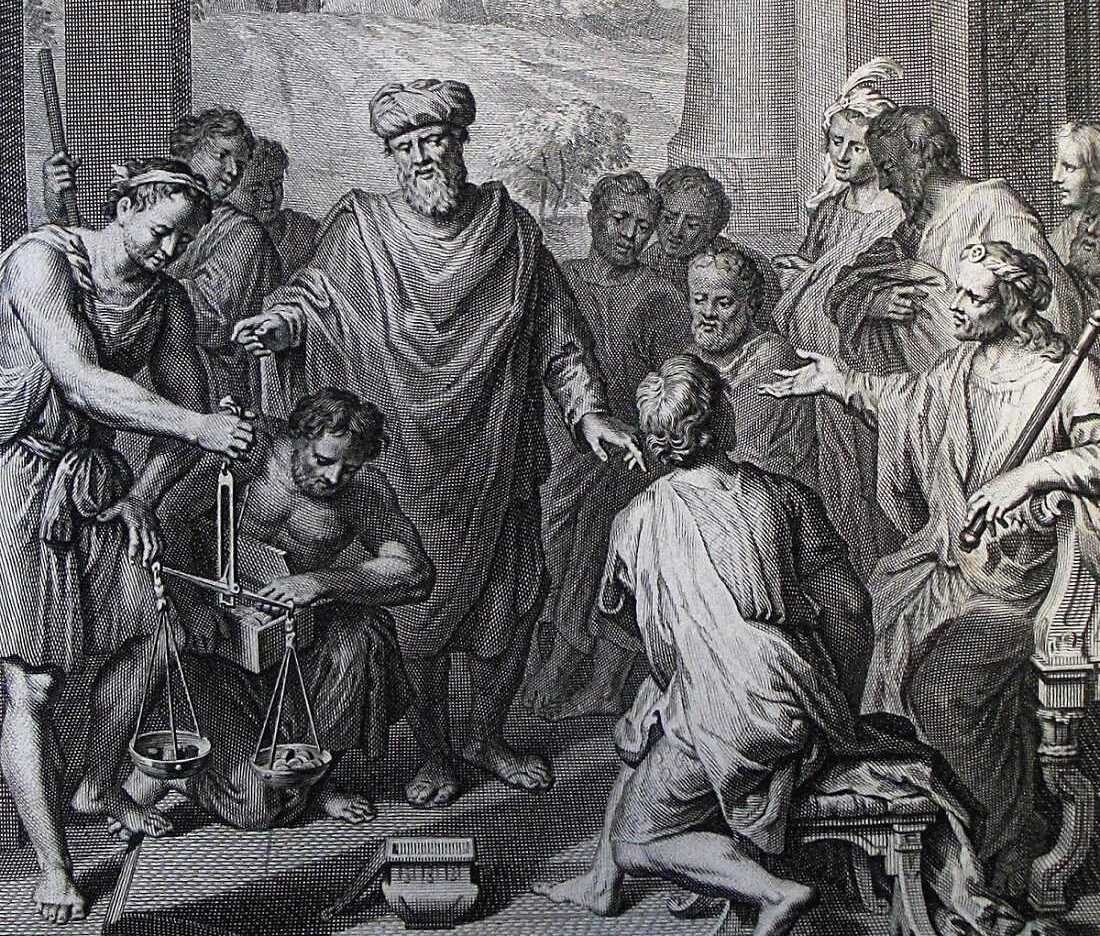
Korach was a Levite of the priestly clan. He and 250 of his followers verbally assault Moses and Aaron, then the old guard leadership.  Moses had long led the people out of slavery to Sinai. But his successes and humility seemed to have been forgotten.  Korach challenged Moses as if Moses were a demagogue asking, “why do you raise yourself up above others?”

Bayard Rustin also led Americans up from oppression toward promised freedoms. Bayard Rustin was old enough to have heard firsthand reports of how Blacks in the South lost their rights in the late 19th century by the actions of white supremacist legislatures. In response to the Jim Crow South, Rustin became a champion for civil rights.

Bayard Rustin’s efforts through non-violent action began in the 1940s. By the mid-1960s and the Civil Rights Act, Black Americans had made substantial advances. But Rustin feared a similar backlash against those civil rights gains.  Rustin astutely recalled that history tends to repeat itself, just as Blacks had lost rights first gained after the Civil War.

Mr. Rustin saw the Democratic Party and the labor movement as bulwarks against any effort to repeat such a roll back of civil rights. He urged Black Americans to be active participants in these organizations. However, newer and more aggressive leadership rejected mainstream approaches as too much of a compromise. They attacked Rustin much the way Korach upbraided Moses.

Rustin’s faith in democratic systems was strong. It formed the basis of his support for Israel.  He was perhaps the strongest African American friend of Israel ever to take a leadership role in progressive political circles. Just like Moses, he understood the promise of that land.

Moses soon prevailed over Korach and his followers. Bayard Rustin’s legacy is also a triumph over the radicalized approach toward advancing civil rights.  We enjoy a much-improved America due to his devotion to democratic principles and legal processes.

Rabbi Evan J. Krame

Falling into a Facebook trap, I recently got ensnared engaging, if not fighting, in a cascade of political posts. The problem is not Facebook. The problem is thinking that there is value to a heated public debate to successfully pursue how we improve this world.  Upon reflection, I found that Jewish wisdom teaches us better ways to engage.

If you are even a casual Facebook participant, you will have likely become dyspeptic over the political vitriol being expressed.  One “Facebook Friend” posted if you don’t agree with my views, you can unfriend me!”  I obliged him. Farewell Facebook Fanatic! That is when I realized that Facebook presents a case for why we need Jewish wisdom.

Here’s my take on how to engage on Facebook, and keep it become Fa(r)cebook. The first step is to begin any exchange by asking questions. That insight comes from Parshat Sh’lach, Chapter 13 of the Book of Numbers. God instructs: “Send men to scout the land of Canaan, which I am giving to the Israelite people;” The first step to a meaningful online conversation is to be a seeker of information. Don’t be satisfied with first impressions. Act as if you are taking notes for other people.

The second step is a collaborative approach to resolve issues. The Torah continues: “send one (wo)man from each of their ancestral tribes, . . .” In this simple directive, there is a better approach. If there is a challenge to be investigated, view your conversation as a collaborative effort, even as representatives of various interests.

The third step is to ask good questions.  You have probably heard the story of Isidor I. Rabi, the Nobel laureate in physics who died Jan. 11, who when asked by Arthur Sackler, ”Why did you become a scientist?” answered ”My mother made me a scientist without ever intending it. Every other Jewish mother in Brooklyn would ask her child after school: ‘So? Did you learn anything today?’ But not my mother. She always asked me a different question. ‘Izzy,’ she would say, ‘did you ask a good question today?’”

What we see on Facebook are oft-repeated violations of these simple rules.  Either we post conclusory statements, or we respond with demonstrative language. While Facebook may have taken on a more common place for debate during the pandemic, these insights are not just for Facebook. Our face-to-face interactions are rebooting. So let’s prioritize the exploration of facts and the pursuit of truths that matter with genuine inquisitiveness. Let’s practice by having conversations where we ask questions that lead to collaborative reasoning.

I am learning how to make asking good questions my default response. It will take some effort. And I’m not giving up Facebook. I’m just trying to stop engaging in Fa(r)cebook!

Rabbi Evan J. Krame

This year, count the plagues of Covid-19:

the red runny nose,

the frog in the throat,

the scratchiness,

stinging irritations,

loss of taste and smell,

the choking sensation,

body swarmed by fever,

a hailstorm of disease,

the confusion of darkness, and

the loss of life.

Recalling the plagues reminds us that a better future is often accompanied by pain and loss. In every generation we are required to feel as if we too were Hebrews in Egypt, being enslaved and witnessing plagues. Perhaps that task was made easier this year by the pandemic. Many of us felt trapped by Covid-19. The seder of 5780 last year was about enduring challenging times.  While stuck in our homes, as the angel of death circled like a vulture. We longed for escape from the confinement.

Four seasons have passed. The pandemic still binds us. But these plagues must be a memory that compel us to expand health care and bring healing. We will tell our children’s children to see themselves as if they lived through a pandemic, so that this lesson will never be lost.

This Passover, emerging from the narrowness of our quarantines, we are not quite liberated. The joy of getting vaccinated is tempered by the confusion of how we regain our pre-covid freedoms. Can I get together with friends? Can I walk slowly through a mall? Will we sing and dance again? Can we sit shoulder to shoulder in prayer?

The Jewish answer is to have hope. Our religious traditions are born of optimism that even from the darkest yesterdays come the brightest tomorrow. The essence of Passover is about courage and faith to move forward from the greatest of challenges.

In the spirit of hope, let’s try something special this Passover. The first seder is our seder of the past. We will remember and we will celebrate. Then, on the seventh night, we will gather again to plan our re-emergence. This will be our seder of the future, a seventh-night seder.

The idea is not original. There is already a tradition of a seder at the start of Passover and another at the finish. The first one is called Pesach Lishovar, the Passover of the past, and the other is called Pesach Latid, the Passover of the future. This seder of the future has been called the Moshiach’s seder, a seder anticipating a messianic time.

The messiah concept is difficult for many because the messiah is associated with an after-life. That is not the only understanding. For the prophet Isaiah, the messiah comes to liberate and re-soul the living, not raise the dead.

Our hope for a messiah is engrained in Passover celebrations. Toward the end of the Seder we open the door for Elijah, the prophet who was thought to herald the messianic time. We close the seder with a foreshadowing of the future.  And now we add the national anthem of Israel, HaTikvah, which means “the hope.”

The seventh-night seder is about preparing ourselves to welcome a better world. On that night, we see ourselves as if we are at the edge of the sea, ready to leap into the future.  We can anticipate a better world with our whole selves and our holy selves. We will sing out our hopes. We will celebrate our love.  We will rejoice in our freedom.  And we will plan for tomorrow.

Please join us on April 2 at 6:30 p.m. as we welcome Shabbat and a better future. ZOOM HERE!

May we find inspiration in a seder of liberation and potentiality.

Rabbi Evan J. Krame

On Thursday we emailed a survey to hundreds of our supporters. We received over 100 responses in a mere 24 hours. You helped us to shape the future.

We envision most adults having received a covid-19 vaccination by the end of summer. So what activities should we plan? You told us to focus on the outdoors.  As a group, we just aren’t ready to crowd into indoor spaces just yet. 80% said no or not sure to indoor High Holiday services.  Remember when your mother told you to go play outside? It was good advice.

Outdoor High Holidays? Check! We’ve reserved the tent at the Bender JCC in Rockville.  Shabbat services? Outdoors weather permitting! Jewish Studio activities? Let’s go for a hike or a picnic. Nearly 50% of you were positive about joining us as soon as you’ve had your shots.

Are you done with Zooming? Not quite yet. As we can offer high quality online events, Zoom will remain a part of our activities. Look forward to a series of discussions with Women in the Literary arts – authors, playwrights, and poets.

There was a very mixed response to a Zoom Seder. If you are eager to join Cantor David and Rabbi Evan for a second seder, please let us know.  Your encouragement will be the key to making sure it happens.

We had hoped to plan a retreat for the fall. You aren’t quite ready for that. Retreating is a great way to renew relationships and make new friends. Let’s look forward to gathering again, just not quite yet.

We still want to hear from you.  Please share any ideas about programs to offer, topics to discuss, texts to learn or people to invite – info@test.thejewishstudio.org.

Rabbi Evan J. Krame

There is a way to prevent future plagues. Just read the Torah. In the opening of parshat Ki Tiso we are told that the prescription to ward off plague is to support government.

5fac04a0b714e54bf71513ac_Silver.jpeg

Having encamped at Sinai, the Israelites are commanded to participate in a census and pay a tax. The purpose is clearly stated: “so that no plague will come upon them through their being enrolled.” Exodus 30:12. How prescient!

On its face, the formula works. We tally the citizens and tax them appropriately. In this way the government has sufficient funds to make repairs after natural disasters or fund vaccination programs.

For me, this passage begs a deeper question. What would our nation be like if we understood that the proper function of a government is a spiritual question as much as a political question. The coinage of our nation already states, “in God we trust.” That’s only a start.

Torah challenges us to infuse government with holy intention. Of course, that concept is fraught with danger in a world of manifold theological traditions. In a theocracy like ancient Israel, one religion controlled the political system. For them, the merging of spirit and governance was a simpler process.

religion.jpg

Here in the United States, as a nation of immigrants, we have representation of all of the world’s major faiths. How could we ever achieve an acceptable definition of holiness to apply to the operation of our government? I imagine holding a conference of religions to debate the qualities of holiness. I wonder what tenets of each religion would align with all other religions. What are the universal truths that engender holiness? Is it preservation of life? Love of the stranger? What are the essential elements of holiness that every person would hold inviolable no matter what their religion? And could we apply those to the functioning of a government?

Perhaps my imagining is of a messianic time, when all endeavors will be permeated with sanctity for all people and all religions. Until then, there’s no harm in bringing sacred musings into the political discourse.

Rabbi Evan J. Krame

Some of us have spent the last 12 months at home, wearing black yoga pants. I go to my office each day and seeing nearly no one, I dress in business casual. I wore a suit once last year to attend a funeral. So I’ve been wondering, in a post-covid world, will we dress “well” again?

Our clothing choices reflect a variety of practical considerations. How will we spend our time? What’s the weather like? I would suggest that our clothing choices are also a statement about our values; among them respect for the dignity of each person.

In Torah, Parshat Tetzaveh, we read a detailed explanation of the priestly wardrobe. God instructs Moses,

וְעָשִׂ֥יתָ בִגְדֵי־קֹ֖דֶשׁ לְאַהֲרֹ֣ן אָחִ֑יךָ לְכָב֖וֹד וּלְתִפְאָֽרֶת׃

“make sacral vestments for your brother Aaron, for dignity and adornment.”  The adornment may be a bit baroque, but the intention is important. How should we dress given our roles? Aaron is a representative of the people. Aaron is a religious leader. Aaron is the High Priest offering sacrifice. His garments reflect his vocation and his spiritual aspirations.

What will we wear when returning to work in the office or attending services in our places of worship? Many will hesitate to set aside their stretch fabrics. But Torah asks us to consider dressing for dignity, not just for comfort.

It is natural that those generally staying at home want 24/7 personal comfort. Sweatsuits are certainly more comfortable than wool business suits. Athletic wear in community settings is a statement that my personal preference is of paramount importance. I would suggest that there is a reason to shift back to button-down shirts and tailored pants.

Can a society or a religious group agree that certain clothes express healthy pride, decorum, propriety, and even a pursuit of excellence?  Such a suggestion will fall upon deaf ears of those who prioritize their desire for comfort. They will reject the need to conform to “outdated” societal norms for attire. They will argue we should not judge a gift by the wrapping.

We should make room for the fact that clothing norms will change over time. One need not wear a necktie or oxfords to perform well at their workplace. And some can get stuck in a false clothing narrative. For example, the Hasidic garb of fur hats and long black coats was the dress of nobility in the Austro-Hungarian Empire of the 18th century.

My concern is how clothing choices reflect how we understand our role in society and how we value humanity. People are created in the image of God and our clothing can reflect that essential truth. While comfort may be important, is that how do we dignify one of God’s creations? Especially after a year of mounting covid deaths, our clothing should reflect a reverence for life.

I think God and Aaron had it right. I’ll advocate for wearing dignified clothing in a post-covid world.

Rabbi Evan J. Krame

The most beautiful city in the world is Washington, DC. 40 years after arriving here, I still thrill to see the monuments and, most especially, the dome of the Capitol building. It isn’t just the edifices that make this city beautiful. What happens inside those structures heightens the splendor.

Torah reminds us that no matter a structure’s facade, what occurs within is even more important. The Israelites in the desert were instructed to build a portable structure called the Mishkan. The Mishkan was the precursor to the Holy Temple.  God said, “let them make for me a structure so that I can dwell among them.” The Hebrew is wonderfully vague so that it isn’t clear whether the mishkan is where God dwells or is the structure serving to remind us to make room for God in our lives.

newscrednationalguardmarchcapitol1800.jpeg.jpg

As a temple of democracy, the United States Capitol is also a holy structure. While it is a most beautiful building, what happens within is what makes it extraordinary. Up those steps and down those halls, representative democracy advances. Recently, those steps and halls were the scenes of an insurrection. Because most of us cherish our republic, the January 6 attack on the Capitol is all the more disturbing.

The ultimate objective of democracy is to secure individual rights as a counterbalance to the authority of a ruling government. Our democratic government balances the individual pursuit of happiness with the needs of the people as a collective. The goal of democracy is not to reelect our representatives.

The Jewish religion functions by similar principles. Torah teaches us to cherish both the dignity of the individual and the needs of the community. While democracy per se is not the goal of Judaism, the parallels are striking. The aspirations of any individual are to be balanced against the needs of the entire people. Both Democracy and Judaism sanction any person or group that seeks to imperil that stability.

With a Jewish appreciation for buildings that espouse godliness and processes that expand holiness, I am distressed by the events of January 6. The Capitol must be scrubbed clean of its defilement by the invaders. The physical cleaning is done but that only takes care of the building. The governmental cleansing process will take years. The courts and the electorate will be the final judges of what must be rejected and removed.

The alabaster Capitol dome is a beacon reminding us to be faithful to the goals of democracy. What happens beneath that hallowed dome, must live up to the promise of the building itself.  And our vigilance for sustaining democracy must last as long as the headstones of the capital.

Rabbi Evan J. Krame

The modern-day lament of aging parents is often, “My children don’t call and don’t visit.” While this package of emotional detritus comes wrapped with a bow of guilt, the lament may be misstated. Perhaps the better question is, what happened to respect for parents?

The fifth commandment given to the Israelites at Sinai was to respect parents. Immediately thereafter, additional laws are stated. The penalty for striking a parent is death. The penalty for insulting a parent is death. While death seems preposterously harsh as a punishment, the basis for the prohibition is to elevate the parent-child relationship. Torah focuses our attention on how we interact with others rather than upon our individual aspirations.

Rabbi Jonathan Sacks, z”l, in his last book “Morality”, offers his fourth chapter to this issue. Sacks understands that the foundation of a civil society is in the structure of a two-parent family. The commitment between partners is not merely a contract but a covenant.  The construct of “we” instead of “I” also provides a safe and nurturing environment for children to grow up.  While I may quibble with Sacks’ proscriptions on forming the ideal family unit, I agree with his thesis.  Forming a healthy family is best achieved when a covenantal relationship is created, partner to partner, parent to child, and child to parent. The construct of “we” and “us” works because it engenders the interpersonal processes of caring and respect.

Respect is both an emotion and an action, wrote Tina Gilbertson in Psychology Today. From a Jewish perspective, Torah spotlights the action. Whatever one’s opinion of their parents, civility and God demand that you demonstrate respect. As a fundamental building block of society, the committed relationship between child and parent is elevated as a commandment by our tradition.

20th Century “me-ism” has shifted the question to “have my parents earned my respect?” Torah rejects that approach. Our tradition recognizes that “we” is the cornerstone of a civil society. Our dedication to others is the structure of a stable and productive family. When it comes to parents, we should not say “I will demonstrate respect as I want” but rather say “as I am able.”  To be clear, I am not excusing physically abusive behavior or diagnosable psychoses by parents.  But Torah doesn’t ask if your parents make you feel guilty or inadequate before demanding you respect them. By demonstrating respect through actions, we are setting an example for our own extended families, children, nieces, nephews and such.

As an adult child, I have empathy for the frustrations of adult children.  We live crazy busy lives and elderly parents can be tedious or demanding or offensive. Adult children have every right to feelings that may even include disdain for the actions or beliefs espoused by parents. Yet, our tradition asks that your emotional response to parents not be the guiding principal for your relationship.

Respect may not be something you feel, but our tradition demands that respect for parents is something you must demonstrate as you are able.

Rabbi Evan J. Krame

Parents just want to help.  At least that’s what we call sharing our opinion.  It’s an ancient habit and one that is risky, especially when talking to a son-in-law or daughter-in-law. The key to being heard? Respect.

In Torah, after Moses brought the Israelites to their encampment at Sinai, his father-in-law, Yitro, visits. They have a nice long chat and a very civil meeting. The next day, Yitro notices that Moses is acting as the sole judge to hear all of the disputes among the multitudes. Yitro says, “Moses, you will wear yourself out! There’s a better way.”

If a stranger had approached Moses to offer a critique, Moses could have easily dismissed the interlocutor.  With a family member, an additional dynamic is at play.  Moses demonstrates his great character once again, recognizing his father in law’s wisdom and instituting his suggestions.

The dynamic of a parent or in-law offering an opinion is universal.  I recently read Hillbilly Elegy. That exploration of Hillbilly culture focuses on the family matriarch, Mawmaw, who freely interjects her foul-mouthed and harshly worded criticisms.  And yet, the author, her grandson, admires and loves her.  His affection is not despite her coarseness but in appreciation of her deep caring.  How does he see past her assertiveness and foul-mouth? He admires her respect for education, which becomes a key to his own success as an adult.

We live in a time when people are not inclined to listen to each other. Our egos, honor, and identity are too easily influenced by the opinions of others, and in particular, family and friends. I wonder what has become of civil society – are we too thin-skinned and brittle to listen without offense?  Or have we forgotten how to speak in a way that others might hear? There’s another possibility – lack of respect.

We fail at offering respect.  The process of listening is a demonstration of respect.  But we don’t listen very well to each other.  People are too eager to offer their own thoughts, speaking over each other and becoming aggressively defensive. If we have forgotten how to be respectful, then we won’t be able to receive the opinions of even the people closest to us.

Respect is a policy of reciprocity. We get respect when we give it. To give deep respect, we must be in awe of the human being with whom we are engaged. Each one, created in God’s image, has the potential to add goodness and challenges to overcome. As Aretha Franklin said, find out what it means to me! Let’s practice this with our families. The words don’t have to be perfect, but the sentiment must be holy.

Rabbi Evan J. Krame