
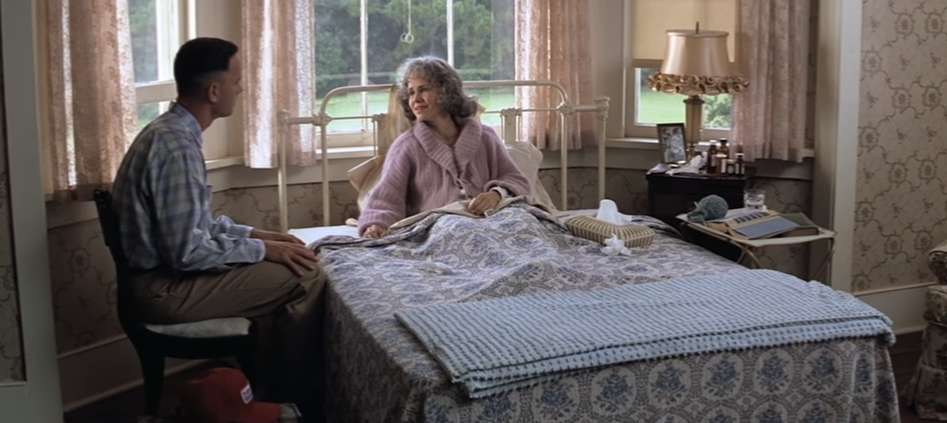
Mom and I watched the movie Forrest Gump the other morning in her hospital room. I presume that everyone has seen this movie many times. In the middle of the film, Forrest’s mother dies. Toward the end, he loses Jenny, his wife. Despite having seen this movie before, I still cried. This time I was sitting beside my 92-year-old mother in a hospital bed. I was not just grieving a movie character.
I have some experience with death having lost my father 20 years ago. Moreover, much of both my legal career and rabbinic work has focused on end-of-life planning. As a lawyer, I prepare legal documents. As a rabbi, I offer end-of-life planning. I understand that whenever someone dies, no amount of planning fully prepares those left behind. I also try not to judge how people mourn their losses.
In the Torah portion, Chukat, we read, “The Israelites arrived in a body at the wilderness of Zin on the first new moon, and the people stayed at Kadesh. Miriam died and was buried there. The community was without water, and they joined against Moses and Aaron.” Miriam, mother to the wandering Hebrews, was dead. How did the people react? They became a heated mob.
Yet, the story is more complex than the script. Kadesh, where Miriam died, was an oasis. If Kadesh was an oasis, why then would the community be without water? Perhaps the people were not without water at that moment but deprived of Miriam, the guiding matron of the Exodus.
The people did not know how best to express their anguish. Grief is a complex set of emotions. As Rabbi Jennifer Singer shared, “Sometimes we grieve the wrong thing because mourning the real loss is just too hard.” Yet, common to all grief is a thirst for comfort. Moses and Aaron could not provide the tender consolation that Miriam would have offered. Perhaps that is why they became the target of their grief.
During a break from the hospital, I thought more about how we behave when someone dies. As both rabbi and lawyer, I’ve seen families ripped apart when a parent dies. Often the anger is misplaced, with arguments about burial plans or jewelry.
When I returned to the hospital the next day, the nurse said Mom was rallying again. The doctor finished the discharge order, prescribed more medicine, and suggested we hire at-home aides.
I finished writing this blog from mom’s apartment, while she reads the New York Times and fusses with her hair. I’ve seen this movie before.
Through the lens of the Torah, I learned a cautionary tale about how to behave when someone dies. The Hebrews wrongly expressed grief through anger. I can’t predict my reaction will be when Mom dies. But, after the credits roll, I will long to watch the movie again.
Rabbi Evan J. Krame

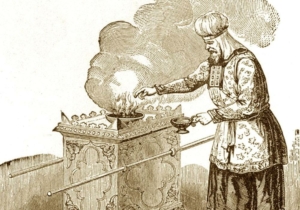 incense. God rejected their sacrifices, and the earth consumed the rebels. The biblical story ended with justice and an affirmation of God’s chosen legacy.
 They support the boycott, divestment, and sanction movement to constrain Israel and joined protests decrying Israel’s actions in Gaza. They wrapped themselves in a cloak of moral superiority. We can debate whether or not Israel as a nation has overly expanded upon the Zionist dream. But the anti-Zionists ignore the other moral values that speak to security and survival.






 Within two days of her demand, the parliament banned semi-automatic weapons. Describing the victims, most of whom were immigrants to New Zealand, Ardern said: “They are us. The person who has perpetuated this violence against us is not. They have no place in New Zealand.” Ardern later remarked that “the characteristics we should necessarily deploy in troubled times are defined by the kind of humanity” we should always bring to leadership.



 Evan J. Krame was ordained as a rabbi by the