Part of a yearlong series on resilience in Jewish spiritual life.

This year’s Passover seder is history. Cups were filled and drunk and filled and spilled and drunk and filled again. Matzah was broken, crunched and crumbled. Soup was slurped. Stories were told. Songs were sung. A marinade of elation, pride, afterglow, exhaustion and indigestion remains.

And, Passover isn’t over. Now what?

Passover is the resilience holiday. In countries worldwide, in dozens of languages, seder gatherings recited these ancient words of continuity and memory:

“We were slaves to a Pharaoh in Egypt.” (Despite centuries, the resilience of identity and spirit were not totally crushed.)

“God led us out of there with a mighty hand an outstretched arm.” (No earthly power, however formidable and seemingly insurmountable, can match the potency and resilience we call God.)

“Had God not redeemed us from bondage, we and our children and our children’s children still would be enslaved.” (Negative patterns, both individual and societal, also are resilient and suffer the inertia of continuity unless and until we actively change them.)

“We all are to regard ourselves as if God personally liberated us from Egypt.” (We carry this resilient imprint deep within us: it is part of our identity and spiritual lodestar.)

“You will tell your child on [Passover]: I do this because of what God did for me when I came forth from Egypt.” (Liberation continues: it reaches forward in time and place, inside and out, toward ever more complete inclusion.)

Passover’s resilience is precisely that this history isn’t just history: it’s now. Our calling, our spiritual opportunity – even our duty in this broken, topsy-turvy world – is to make Passover’s words resiliently real in our day.

Understood this way, the 49-day Omer count now beginning – from Passover (liberation) to Shavuot (revelation) — is about continuing what we just began at the Passover seder. It’s one thing to celebrate history’s liberation: it’s another to make liberation real today and tomorrow.

The Netivot Shalom (1911-2000) taught that Passover’s over-the-top majesty and celebration seek to awaken in us our own embodied feeling of freedom, so that this feeling can impel us to walk the path of continuing liberation under our own power. We’re lifted up to see freedom not as a mirage or a distant vista but as here and now. Only by renewing our own vibrant individual sense of freedom’s aliveness, here and now, can we make it real – and teach it to others by living it in every tight place.

As Abraham Joshua Heschel wrote:

“We are God’s stake in history. We are dawn and dusk, the challenge and the test. How strange to be a Jew and to go astray on God’s perilous errands.  We have been offered as a pattern of worship and as a pray for scorn, but there is more still in our destiny. We carry the gold of God in our souls to forge the gate of the kingdom. The time for the kingdom may be far off, but the task is plain.”
Happy freedom. Happy journey. Happy Passover.

– Rabbi David Evan Markus
Part of a yearlong series about resilience in Jewish spiritual life.

The teacher of my teachers, Reb Zalman Schachter-Shalomi z”l, recounted that one of his children asked him about waking and sleeping. The child asked, “If we can wake from sleeping, why can’t we also wake from waking?”

In essence, can we wake more? What might it mean for us to wake more?

This kind of question repeats in this week’s Torah portion (Vayikra), the first of the Book of Leviticus, whose first word (vayikra) means “[God] called (Lev. 1:1). This first word ends with an aleph (א), first letter of the Hebrew alphabet, which is silent. In a Torah scroll, this silent aleph is printed smaller than all others.

How can a silent letter be shrunk smaller? How can silence be more silent? How can we wake from waking?

These questions are koans. Playfully, they challenge our assumptions and focus the mind onto itself. Paradoxical questions really delve into our consciousness.

Our text-savvy ancestors, however, tried to answer these questions literally. Of the shrunken alephRashi and Jacob ben Asher imagined a self-consciously humble Moses trying to diminish focus on himself: why should God speak only to Moses when, at the end of Exodus, “the eyes of all of Israel” could see and follow God’s fire and cloud (Ex. 40:38)? Nachmanides saw in the shrunken aleph a patient Moses passively waiting for God’s call. If I step into this brainy textualism, I might read out the shrunken aleph – rendering vayikra (“called”) as viy’kar (“honor”) – the word that Esther 8:16 evokes along with light, joy and gladness as our spiritual inheritance. If so, then God was honoring Moses and all who step forward (or feel dragged forward) into spiritual service.

These kinds of brain games are fun, but at best they’re only pointers to a deeper point. Koans like these point the rational mind at itself precisely to teach that there is far more than the rational mind. If we can slow the momentum of our rational minds, we might experience that silence can be more silent and waking can be more wakeful. We might sense that reality and consciousness are more textured and nuanced than our left brains alone can think on their own terms.

Perhaps you’ve noticed that not all silences feel the same. Some silence is sweet; some silence is bitter. Some silence is stable and unchanging; some silence is pregnant with power, poised to pop into sound. Some silence is energetic; some silence is tired. Some silence is healing; some silence feels like an affliction. We experience these distinctions, but we can’t think them rationally.

This shift of awareness, from left-brain analytics to right-brain knowing, opens a fount of resilience that the world is far more than we rationally can know. Even the mere theoretical possibility can empower and uplift us. And if we dare to enter the right-brained realm of koan, paradox, more silent silence and more wakeful waking, we might find a whole spiritual landscape just waiting for us to explore.

Just ask the shrunken silent aleph, this week’s resilience teacher.

– Rabbi David Evan Markus
Part of an ongoing series on resilience in Jewish spiritual life.

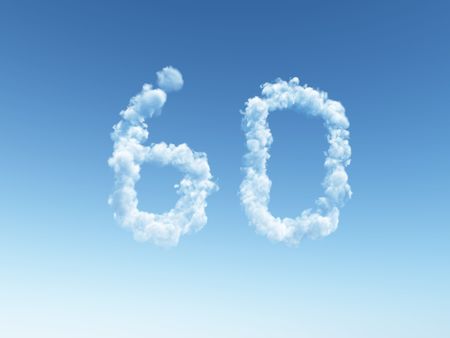
I am determined to greet my 60th birthday with excitement. I am not merely counting the years that have passed but I am anticipating the days to come. And so I want to set out a goal for myself for further personal growth. I hope to restore some of that wide-eyed childhood excitement about life and experience the miracle that is each and every day, what Abraham Joshua Heschel called “radical amazement.”

The rational mind, modern technology, and to-do lists all direct my focus away from an appreciation of the wonders we can experience. It’s hard to live in radical amazement while the smartphone is buzzing, traffic is maddening and bad news is constantly breaking.

Our spiritual ancestors wandering the desert saw daily miracles. Maybe it was easier for them without modernity’s distractions. Or maybe they knew how to look! The Torah reading this week ends with the verse “God’s cloud was on the Mishkan (tabernacle) by day, and fire was in it by night, visible to the whole House of Israel, in all their journeys” (Exodus 40:38). Today we see plenty of clouds and fires – be they natural wonders or modern creations – but can we discern God’s presence within?

Rabbi Noa Kushner wrote: “What would happen if we started looking for God’s presence in fire and clouds once more? How much do our relationships with God stand to gain from our actually seeing what may have been there all along?” Said differently, what would it take for us to acknowledge the miracles of our daily lives even if they seem obscure like a cloud or burning like fire?

If a similar pillar of cloud and fire that contained God’s presence appeared today, would I be saying “the cloud is blocking my view”? Would I be worrying “that fire is burning too hot”? Or might I understand that this particular cloud does not obstruct and obscure. God’s cloud forms a pillar of protection and direction. And could I discern that the fire contained within does not destroy but rather lights the night with God’s reassurance and radiance?

Whether I have 60 days or 60 years more, I am eager to wake daily to experience awe and wonder. Sometimes my vision will be troubled and a cloud will seem merely to block the sun. Other days, I might have faith that a cloud will lead me over uncertain turf. Some days “fire” might scorch with loss and disappointment. Other days, “fire” will light my awareness that my life is full of love and capacity for caring.

At 60 years old I am still learning how to navigate the path of life whatever clouds may appear or fires may burn. To ease the journey, I hope to recapture the childlike joy that comes with an appreciation that what might seem ordinary is really miraculous.

Rabbi Evan J. Krame

Part of a year-long series about resilience in Jewish spiritual life.

The latest school shooting, in Parkland, Florida, got me thinking about the need for connection and those who feel cut off from society.  The tragedy of the victims and their loved ones – and, yes, the tragedy of the shooter – reminds about the critical link between resilience and connection.

In Jewish tradition, the consequence of certain sinful behaviors was to be cut off, – to be karet – not the diamond-size karet, but being separated from community.  The idea was that some behaviors so detract from holiness that they rupture a bond between us and God.  The result is being cut off from the community whose totality is called to represent the sacred.

How well does this karet idea work in our modern world?  What does being “cut off” mean in this internet age of connectivity?

Today’s cyber-world – seemingly obsessed with feeds, tweets, likes and swipes –sometimes seems to connect avatars more than it connects real people in their wholeness.  For all the internet’s awesome capacity to inform and bridge gaps, how often does the latest post so absorb us in our smart devices and click counts that we get cut off from real people, real communities and real emotions?  Count the number of times you check your devices at dinner and see for yourself.

On the other hand, technology powers real connections of transformation.  The internet made the #metoo movement possible.  It broadcast to the world last week’s news that Florida students bolted classrooms to lobby state lawmakers on gun control.  It helps people to share emotions and ideas that maybe they aren’t easily able or safe to share by other means.  By making communication possible as never before, technology makes connectivity possible as never before – and with connectivity comes the power of numbers and thus social transformation.

The issue is that connectivity and connection aren’t the same thing.  The internet invites trolling for victims, posts to build weapons, conspiracy theories and fake avatars spreading fake news designed to destroy, not create.  We forget that the internet – like any machine – has no values.  Its values are in how we use it (not how it uses us).

Someone who aims to abuse, mislead or destroy might be capable of connectivity – but that’s not real connection.  That person already feels cut off psychologically, emotionally and spiritually – but they still can troll online for victims, spread fake news, build bombs, buy guns and more.  In the digital age, more and more people feel cut off, but how possible is being karet if someone can get online?

The key is that community implies covenant.  We covenant to live basic ideals, and community responds by abiding basic standards.  So too in Judaism: karet (to be cut off) comes from koret, to “cut” a brit (covenant).  Our society, our technology, our tools, our machines, our devices – all ask a covenant of real connection and real values.

Resilience arises not in connectivity but in real connection, real community.  The price of breaking the covenant we cut is to feel cut off – but when the web links us all as never before, we all pay the price when someone feels disconnected.  No longer is antisocial behavior easily seen and contained: it can build an avatar, build a fake news site, build a bomb, buy a gun and kill.  And the price is so painfully high.

At the societal level, this new reality means that society must invest more (and more wisely) in people – and especially younger people.  We must trace causes of social disconnection to their sources and keep the covenant with them.  We must track down and actively fight the online hate mongers that gave succor to the Parkland shooter.  We must keep building healthy communities so that people feel more connected and less need to seek radical online hate.  In short, the internet age challenges us to renew the resilience of our social covenant.

At the individual level, we must reclaim our power over technology so that it serves us – not the other way.  Too often we are slaves to our devices.  We’re not supposed to be slaves to anything, and compulsions sap resilience.  Join me in the National Day of Unplugging, corresponding with the Shabbat of March 9-10.  Put down the cell phone, close the computer, unplug from the web, give all of these technologies a Shabbat, and see for yourself how real connection is so much more than connectivity.

We don’t have to be karet.  Nobody needs to feel cut off.  The power, so to speak, is literally in our hands.

– Rabbi Evan J. Krame & Rabbi David Markus

Can you pray for people who have done harm? The question seems absurd to me. Why would I turn to God on behalf of such people? What is the purpose of placing them on my heart?

These past weeks have been particularly challenging for all Americans: last week’s shootings at a Florida High School, the failure of Congress to secure a place for the “dreamers” in our country, and a President who flaunts the rule of law and due process. That’s just a start. Do I pray for those who perpetrate heinous crimes? Do I ask for grace for leaders who fail to protect? Do I ask God’s blessing for a President who divides and damages our nation?

In Torah, there is a hint of the efficacy of prayer for everyone – those we love and those who challenge us to the depths of our sensibilities. At Exodus 28:29 we read that Aaron the High Priest wears a breastplate with 12 stones, one representing each of the twelve tribes. In other words, he places over his heart the totality of the Israelite community. All people, good and bad, caring and callous, are in the prayers of the High Priest. “Aaron shall carry the names of the children of Israel on the breast piece of decision over his heart, when he enters the sanctuary, for remembrance before the LORD at all times.”

From this I glean a lesson of resilience. When I am mired in hate and anger, I cannot move forward. When I can see the whole picture and offer prayer that is inclusive, I can better act toward reconciliation and resolution. This is not to say that I diminish my resolve toward combatting hate, lessen my support for those in danger, or limit my advocacy for our nation’s future. In fact my resolve is greater when I remain aware. Torah teaches us to place the totality of peoplehood upon our heart –  but not all goes in our heart. A breastplate of gold and decorated with stones is heavy to wear, heavy like the worries of this crazy world. But placing such gear on one’s heart keeps the disparities and disputes in view while not taking them into our essence. Speak of them as we breathe out, but do not absorb them as we breathe in.

Placing the entirety of society on my heart takes me out of my narrowed perspective. It brings me awareness and humility. These attributes help me to better connect with the highest good and discern the best way forward for our world.

I’ll keep the 17 who died last week in my heart. I’ll keep the NRA on my heart. I’ll keep the dreamers in my heart. I’ll keep the fear mongering xenophobes on my heart. I’ll keep this wonderful country’s future in my heart. And I’ll pray about our President. God help me in this endeavor because the breastplate is heavy to hold and my patience is waning.

Rabbi Evan J. Krame

Rabbis by the dozens were arrested this year at a Senate office building. What was their crime? They sat to protest on behalf of the dreamers, the young men and women whose families brought them to the United States illegally.  What was their message? America was a sanctuary for Jews in peril, and Jews will continue to make America a sanctuary for others in need.  In fact, their cause is not merely the holiness of protecting lives but also the strength and resilience building of this country resulting from our standing as refuge.

The word sanctuary means a holy enclosure such as the Temple in Jerusalem. It also means a place of refuge and peace.  Essentially there is not much difference between the two as they are both places where God dwells.  In Exodus 25 verse 9, God says “build for me a sanctuary so I might dwell among the people.”  That sanctuary or mishkan, was a place to keep the tablets of the ten commandments in a holy ark. The mishkan was also a place of protection and peace where no one but the High Priest would enter. Shalom, peace, is another name for God (Judges 6:21).

Creating a space for God such as a mishkan is the equivalent of a safe haven for those in peril or beleaguered.  In this way, the United States is a good and Godly nation when it is a welcoming safe place. Such Godliness should be sufficient reward for opening our doors to refugees and sustaining the dreamers who have already arrived.  Yet there is further benefit.

A nation that is sanctuary is enhanced by the determination of the people arriving on its shores. Their energy and their perseverance add to our industry and fuel our economy. Refugees who have risked life and fortune to escape danger are often the risk takers who open new businesses and value higher education. Opening our doors builds a resilient country.

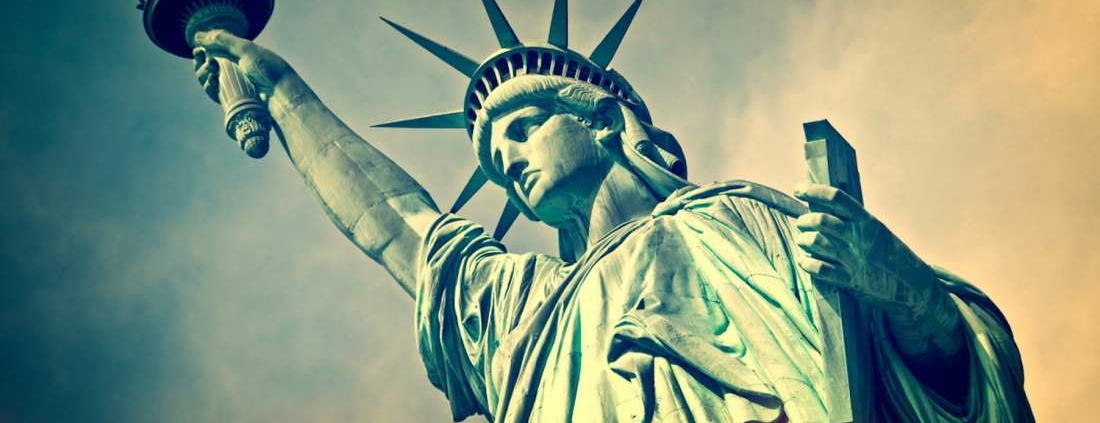
I learned from Rabbi David Ingber that New York Harbor is like a doorway to freedom from those in peril. By that reckoning, the Statue of Liberty is the Mezuzah on that doorpost.  The inspiration embodied by Lady Liberty remains as the energetic fuel for the resilience needed to build a new life in this country.  And the contribution of these newcomers makes America more resilient as a nation of opportunity for all.

God dwells among (בתוכם) the nation  when we make a sanctuary.  After all, Torah says that our ancestors who built that original sanctuary and gave the gifts to build it, were of the a mixed multitude.  As then, so now.

for Rabbi Mike Moskowitz and Kerry Brodie.

R’ Evan J. Krame

Part of a yearlong series on resilience in Jewish spiritual life.

Long before Frank Baum imagined Munchkins and “The Yellow Brick Road,” Jews had a “Sapphire Path” that, according to Torah, Moses and 70 elders saw ascending skyward (Exodus 24:10).  While mystics and rationalists might part ways about these kinds of visions, the hope of an unseen spiritual path is a keystone of resilience.

There’s comfort in knowing the world for what it is. At the same time, if the world is only what we know, then what kind of world is this and what kind of life do we live? The human condition impels us to wonder, seek, hope, reach, dream and create. By definition, we only can wonder, seek, hope, reach, dream and create beyond what we think we know and past the perceived limits of the world as it appears.

Understood this way, the unknown is the only true path to growth, betterment, creativity and the future. There’s no forward and no future without the unknown.

That’s how I understand Torah’s mystical scene from this week’s paresha (Mishpatim). After the Children of Israel famously agreed to receive the Covenant, Moses and 70 elders of Israel ascended. There, “they saw the God of Israel, and under God’s feet was like a pavement of sapphire, like the essence of sky in purity” (Exodus 24:10).

Oh? How could they see God if “none could see God’s face and live” (Exodus 33:20)? To Rashi, they saw God but didn’t die because God didn’t want to mar the joy of giving Torah. To Ibn Ezra, they didn’t see God but rather became prophets. To Ramban, they only thought they saw God but instead saw the holy seat of divine glory. To the Sforno, they didn’t see God or a sapphire path but rather a spiritual essence that both absorbed and transcended all spirituality.

If you’re left feeling like none of this makes rational sense, you’re right and in good company.  It can’t make rational sense. Sometimes life defies words: words are limited, while some experiences evoke the transcendent. Good luck finding the right words to describe seeing an awesome sunset, or witnessing a birth, or having an orgasm, or saying “I do,” or being present at the moment of death.

When life transcends words, naturally we reach for metaphor and allegory (it was “like” this or that) or we say “Oh God!” (a common refrain even for devout atheists). Words are just pointers: sometimes the point is beyond all words.

That’s Torah’s lesson. The people didn’t see a sapphire path but rather something “like” a sapphire path.  What they saw wasn’t “of” the essence of sky in purity but rather “like” the essence of sky in purity. Torah readily admits that our ancestors had no idea what they were seeing, and neither do we. There were no words. There are no words.

It was the same for the prophet Ezekiel. In his mystical vision, Ezekiel saw things that were “like” the “appearance” of a “vision” of a “semblance.” He described the same gleaming sapphire, but words were failing him (Ezekiel 1:26).

That’s the Reality – with a capital “R” – that sometimes hides in plain sight. It’s the Reality that takes our breath away, that scrambles our minds, that leaves us tongue tied lacking for words, that we can only sing or paint or dance. Call it a sapphire path, or the Light, or the throne of glory, or the breath of life, or God, or countless other synonyms to describe the undescribable.

Call it anything or nothing at all.  Reality is beyond all words, ideas and images. The unseen hides in plain sight. We only think we know: all spirituality, all creativity, the entire future, the universe and everything are in the not knowing.

“Like” resilience itself.

Rabbi David Evan Markus

Part of a series on resilience in Jewish spiritual life.

The older I get, the more willing I become to admit that I don’t know it all and can’t do it all.  Life experience teaches all of us what the brilliant Albert Einstein recognized: “The more I learn, the more I realize how much I don’t know.”

Our resilience journey asks us to learn this lesson well enough that we open – truly open – to receiving and accepting advice from others. In turn, we must become inwardly vulnerable, which means holding onto ourselves a little bit less.

This is Moses’ resilience lesson from this week’s Torah portion (Yitro), named for Moses’ father in law.

Yitro was Priest of Midian, where Moses had sought refuge from Pharaoh. After the Exodus, Yitro saw Moses overwhelmed resolving the people’s disputes – all of them, by himself, day after day.  Yitro saw Moses burning out and stepped in to give Moses unsolicited advice to delegate.

So was born western civilization’s first judicial system and first governance system.  And spiritually, so was born the sacred tradition of giving and receiving advice.

It’s telling that this tradition arises from someone unlike Moses.  Yitro wasn’t from Moses’ tribe.  He didn’t share the people’s experience of bondage.  He didn’t experience or witness the liberation.  In all of these formative ways, Yitro was an outsider.

That’s key: sometimes the best advice comes from outside.  When we surround ourselves with people like us and listen only to them, we’re likely to hear only the “groupthink” of that echo chamber.  It took an outsider to reach Moses, shift his momentum and change him.

Of course, Yitro was no stranger.  He was Moses’ father in law and kind protector.  Like Moses growing up in Pharaoh’s court, Yitro was affluent and worldly.  And like Moses from the Burning Bush forward, Yitro was spiritual leader of his people.  Yitro and Moses shared enough common attributes that they could empathize with each other.

That’s key also: natively we might not trust outsiders too unlike us.  As with many things, our task is to seek balance in our circles – people enough like us that we can hear them, but not so like us that we merely echo each other.  That’s exactly what Moses did, and thus was able to hear Yitro’s advice to delegate leadership to others, raise others into leadership and not burn out himself.

When we evolve this kind of balance, we surround ourselves (and help bring to others) the full palate of qualities needed for wisdom, self-reflection, course corrections and collective goodness.  We become practiced in opening ourselves to other perspectives.  Over time, we become ever more able to fulfill the wisdom of the sages: “Who is wise? One who can learn from everyone” (Avot 4:1).  In short, we become resilient.

Just ask Yitro and Moses, this week’s resilience teachers.

R’ Evan J. Krame and R’ David Evan Markus

See Your Way to Freedom

Part of a yearlong series about resilience in Jewish spiritual life.

Freedom! For many, freedom is the spiritual goal – to be free of suffering, free of burden, even free of the travails of earthly life. For many, freedom is the political goal: think FDR’s Four Freedoms, Dr. Martin Luther King’s “Free at last!” refrain of his “I Have a Dream” speech, or a modern political party’s partisan gerrymander to free itself of the other party’s existence.

Freedom, it seems, is in the eye of the beholder – but so too is the key to freedom.

This week’s Torah telling of Judaism’s master story of freedom – the Splitting of the Sea and liberation from Egyptian slavery (Parshat Beshallach) – hints that we truly sing our freedom only when we learn to see everyone as potential liberators.

We rarely live that way. Unconsciously we divide the world into friend and foe, folks with us and folks against us, people with something to teach and people who don’t. Helpful and hurtful, caring and uncaring, good and bad – these categories are mental shortcuts (psychologists call them cognitive heuristics) that are efficient to live by.

That’s the rub. Category thinking is natural, but not infallible and never freeing.

Torah’s liberation story records that after the Sea of Reeds split to open an escape path for our fleeing ancestors, they “had awe for God and believed in God and Moses” (Exodus 14:31). Torah continues, “So Moses and the Children of Israel sang this song [of freedom] to God” (Exodus 15:1).

Look again. The people believed in Moses, so Moses could sing his freedom. Oh? Read this way, Moses is a narcissist – like many spiritual and political leaders who need universal adulation. Such persons can’t ever be free: they’re shackled to their inexhaustible need to be loved, followed, obeyed and even feared.

But Torah names Moses the world’s most humble person (Numbers 12:3), so there must be another lesson here. It’s Torah’s perhaps most potent teaching on resilience.

Moses did indeed look to the people – and what he saw was people full of grace. No, everyone wasn’t perfect: some were whiners, selfish or even sinful. Even so, Moses saw them in a way that saw them into their best selves, and so he sang.

This is tradition’s consistent refrain. Who is wise? One who can learn from everybody (Avot 4:1). Who is worthy? Even potentially the most sinful, for we must see them as full of mitzvot (worthy deeds) like the seeds of a pomegranate (B.T. Eruvin 19a).

Freedom means seeing everyone as their best selves and into their best selves, not in rigid categories good and bad, with us or against us. Only then can we sing in freedom. When we learn to see this way – not with naïveté but with audacious spiritual vision – then by definition we become free.

But what of people who act with malice, like the enslaving Pharaoh? Nachman of Breslov taught that Torah’s words “I (God) hardened Pharaoh’s heart” (Exodus 10:1) also can mean “I (God) am in Pharaoh’s hardened heart.” Somehow, somewhere, the potential for holiness hides everywhere, even in the hardened heart. Sometimes it may seem super-human to find it, but it’s within us and for us to look for it.

This kind of vision sets us free, and it can’t be taken from us. It’s a fount of resilience, an inner inclination that can free us from constricting thoughts and see everyone into their best selves – and thus help that kind of world become visible to everyone.

Just ask FDR. Just ask Dr. King. Just ask Moses – our resilience teachers.

– Rabbi David Evan Markus

Part of a continuing series on resilience

Did you ever wonder why there are so many New Years Days? Who decided that January 1 is the first day of the year?  Isn’t the Chinese New Year around this time? While most Jews identify Rosh Hashanah as the Jewish New Year, the Talmud says that Jews have four different new year days to celebrate. In addition to Rosh Hashanah there is one for animals, one for trees, and one more for our redemption from Egypt. What is the reason that we create multiple New Year days?

New Year’s celebrations are more than a song of remembrance and a stem of champagne. There is a combined psychological and spiritual boost to celebrating a New Year. We get to leave the past behind, put it in a box and place it on a shelf. With the New Year we open a door to possibilities.

One of the very first declarations made in the Torah was setting a New Year’s day. The commandment comes just before the tenth and final plague descends upon Egypt.  Imagine, you’ve been enslaved for a long time. A promise of redemption is made. Before your troubles are over, the occasion is declared a New Year holiday, this one coming in the Hebrew month of Nisan which always poetically falls in the springtime.

הַחֹ֧דֶשׁ הַזֶּ֛ה לָכֶ֖ם רֹ֣אשׁ חֳדָשִׁ֑ים רִאשׁ֥וֹן הוּא֙ לָכֶ֔ם לְחָדְשֵׁ֖י הַשָּׁנָֽה׃

“This month shall mark for you the beginning of the months; it shall be the first of the months of the year for you.” Exodus 12:2.

Feels a little chutzpadik, no?  We aren’t free yet and already we’ve been commanded to mark the calendars to celebrate our escape.  Which actually demonstrates the psycho-spiritual genius of the story: hope. Hope is the enzyme that catalyzes the transformation from enslavement to freedom. Hope is the fuel that propels the engine.

Has there been some episode or condition in your life that has you stuck and unfulfilled? Can you simply try to envision celebrating its end with a New Year celebration? Stepping into the realm of possibility, being hopeful, is necessary to make the transition.

To be resilient in this world, even from the depths of despair, we need to find hope. And hope can be enlivened with the plans to celebrate our transformation as if the beginning of a new year on our life’s journey. Start planning a New Year’s celebration of your own making. It is an entirely Jewish way to find resilience in your life.

Rabbi Evan J. Krame

PS – While Tu B’shevat, the New Year for Trees, is on January 31 – and the Jewish Studio celebration will be on Friday Night February 2, with a four cups of wine tasting.